
This is the third time the Madhes has been engaged in a movement in the last ten years. The first time was in 2007 just after the interim constitution was proclaimed by a reinstated parliament. Violent protests broke out in the Tarai.
A year later, when the main parties announced elections, the Madhesi parties once more took to the streets. It was only after an agreement was reached that the Madhesi parties took part in elections of 2008.
Last year, after the major parties pushed through a fast track constitution, violent protests broke out once more in August 2015 in which nearly 60 people were killed and the country had to suffer a six month blockade. The Madhesi parties boycotted the promulgation of the new constitution.
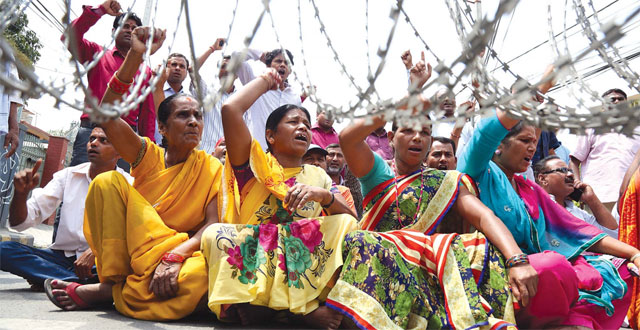
This week’s protests in Kathmandu with mass sit-ins in Singha Darbar and Baluwatar by the Federal Alliance are an extension of the border blockade, and an attempt by the Madhesi leaders to change the nature of their protests and bring it to the seat of power in Kathmandu.
For Madhesi leaders, the Kathmandu-centric agitation is also a psychological war. And they believe they have already achieved what they wanted to: make the KP Oli government take them seriously. The fact that the buses carrying Madhesi protesters to Kathmandu were stopped by security personnel at the Nagdhunga check point shows that Oli has realised the power of Madhesi parties.
Early this month, the government invited Madhesi leaders for talks. But the Federal Alliance has concluded that Oli is not serious about dialogue, and it wants to continue with Kathmandu-centric protests, at least until Oli shows genuine concerns for a breakthrough.
The Madhesi leaders are saying that since Kathmandu did not listen to them during the border blockade last year, they have brought the protests to the central administration.