

In 2017, Nepal’s tourism arrival figures nearly reached 1 million for the first time. But Nepali outbound tourists spent more than what foreign tourists spent in Nepal last year.
Like everyone else, Nepalis love to travel, see exotic places, enjoy good food and drinks and shop till they drop. A Hong Kong immigration official once asked me politely: “Nepal is supposed to be a poor country. Yet, why is it that we see many passports in which the occupation says farmer and yet the purpose of visit is tourism?”
Nepalis have historically always been on the move, whether to trade, work, to fight world wars, or for pilgrimage. They brought back stories and gifts, encouraging more to travel. With ever-greater disposable income, mobility and social media posts, we can expect word of mouth publicity prompting more Nepalis to travel abroad in the years to come.
The tourist spending figure also does not take into account what Nepali domestic tourists spend within Nepal for food and drinks, which is often more than foreigners. But they do not like to pay for the room, because historically we never paid for the ‘floor’, or straw mat or rug on the floor.
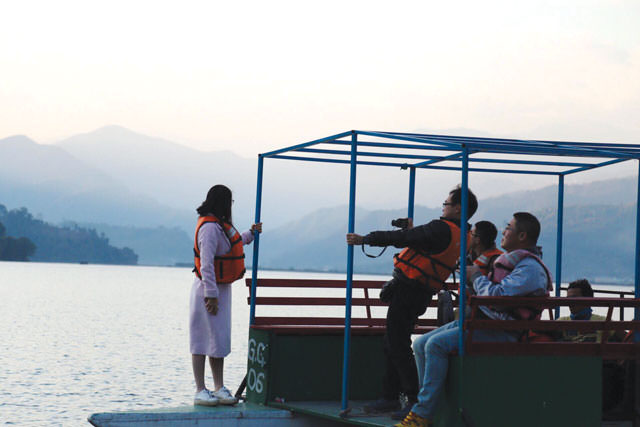
Given that Nepali tourists outnumbered foreigners in Pokhara this holiday season, there is a ripe opportunity for hotels and lodges if they want numbers to grow. The two-rate system for Nepalis and foreigners is also an issue: Nepali passengers are regularly off-loaded from flights and tourist buses. Yet a country of 30 million with nearly 2.5 billion people right next door, tourism has huge market potential.
At a recent interaction in Bhaktapur we explored how the three markets could build more synergy. How can a Chinese or Indian tourist be convinced to spend more time in Nepal? When the new Bhairahawa and Pokhara airports are completed, tourists can be more spread out, and the sky would literally be the limit.
Nepal is not land-locked, but land-linked, and we can get far more tourists coming by land as highways linking the country to China and India are upgraded. Millions of tourists can arrive by bus, rail, car, motorbike, or simply walk across.