
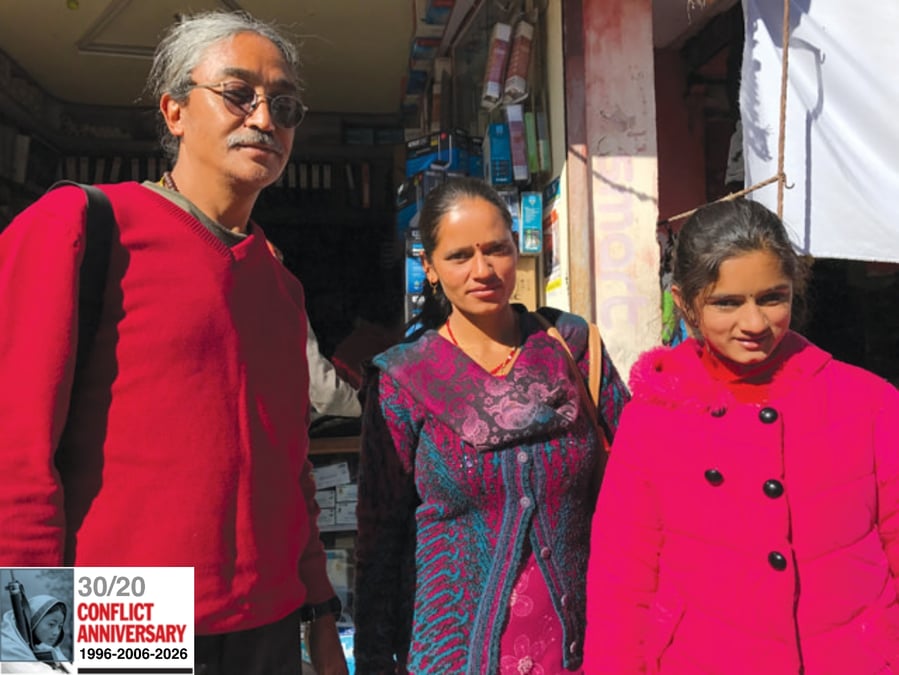
Early one morning exactly 22 years ago, school teacher Sobendra Kafle, his wife Nanimaiya Dahal, their baby daughter Sona and mother-in-law Krishnamaya boarded a crowded bus in Jiri.
Unbeknownst to them, there were soldiers in civvies also in the bus as it drove off on the 8-hour journey. As they descended down to the Tama Kosi, there was a roadblock in a forested stretch. It was there that Maoist guerrillas ambushed the bus.
The passengers were caught in the crossfire, and in just 15 minutes on 9 May 2004, eight soldiers and guerrillas were killed, along with six people on the bus, including Sobendra.
Nanimaiya and her mother, who hid under the seat shielding Sona from the ricocheting bullets, survived. Even by the standards of the Maoist war, the tragedy highlighted the brutality of an insurgency that had already lasted eight years. It made headline news on FM radio stations, and in Kathmandu newspapers the next day.
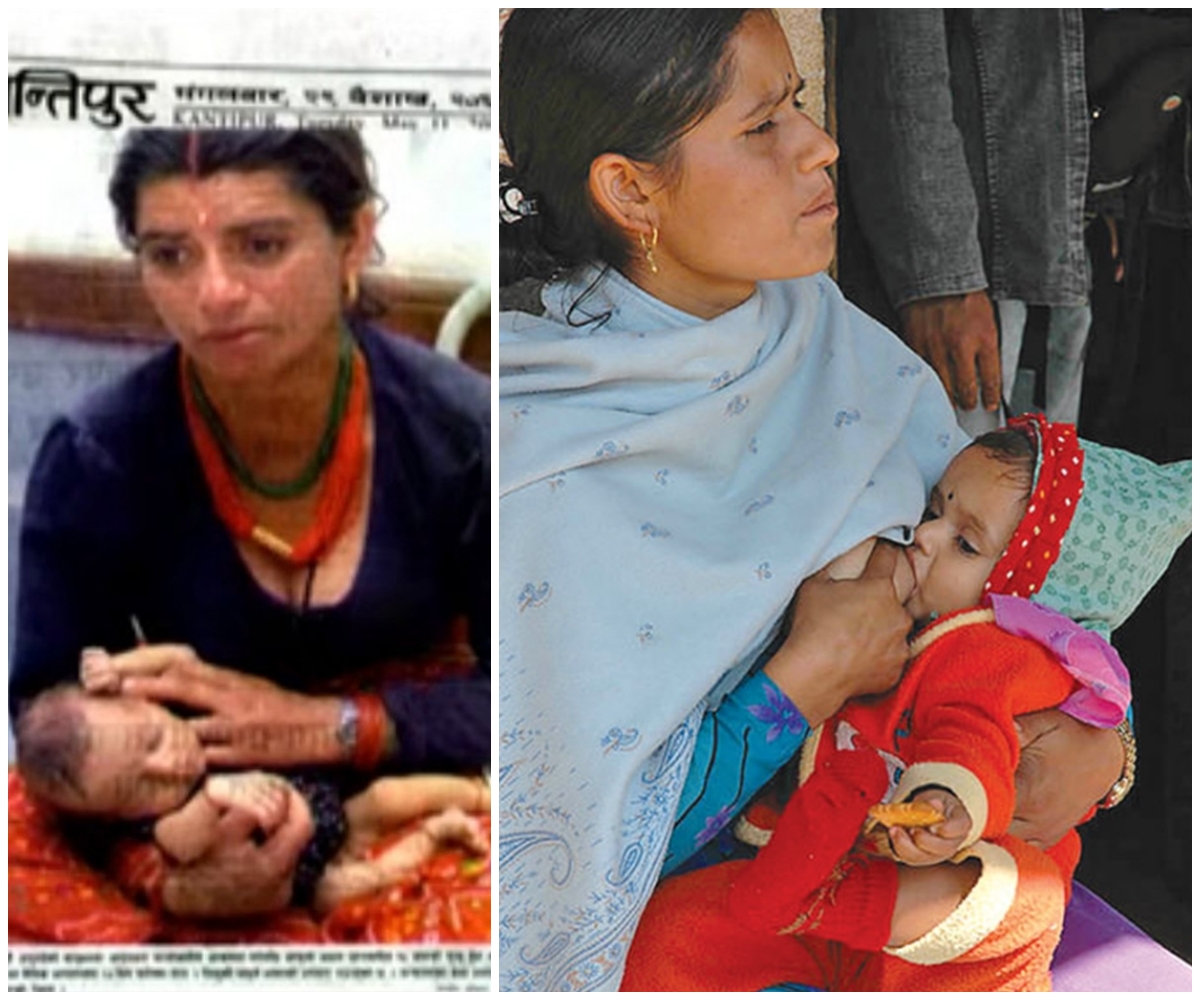
Kantipur and The Kathmandu Post printed a heart-rending picture by photojournalist Gopal Chitrakar of a weeping Krishnamaya holding her 19-day-old grand-daughter Sona in her lap at Chhauni Hospital where the critically wounded Nanimaiya was being treated.
The story and photograph shocked the nation, and among those who was moved to tears was Nepal’s most famous folk-rock singer and composer, Amrit Gurung. He told us at the time: "That tiny girl symbolised for me the Nepali nation itself, orphaned, terrified of the future ahead of her.”
Amrit Gurung travelled to Mainapokhari a week after the firefight to see for himself where it happened. The blood stains were visible on the road, and villagers were still traumatised by what had happened.
During the conflict, Amrit Gurung’s band Nepathya used to go around the country singing at peace concerts, and he immediately started composing a rock ballad in Nepal’s gaine troubadour style. The 25-minute piece was the title track of his album Ghatana, and Nepathya performed it live at the exact spot of the battle that year, and in another concert tour of the country.
The song would never be a hit, and it was not intended to be. It was an almost journalistic reportage in music with a heavy metallic sound, the powerful lyrics documenting blow-by-blow what happened that day. There had never been a composition like this in Nepal’s musical history both in style and format.
“Ghatana was meant to memorialise and communicate what the conflict was doing to Nepalis, especially civilians caught in the crossfire in a war in which they wanted no part,” recalls Kiran Krishna Shrestha, the force behind Nepathya. “The war has been over now for 20 years, but the trauma and loss is still there in survivors like Sona and Nanimaiya.”
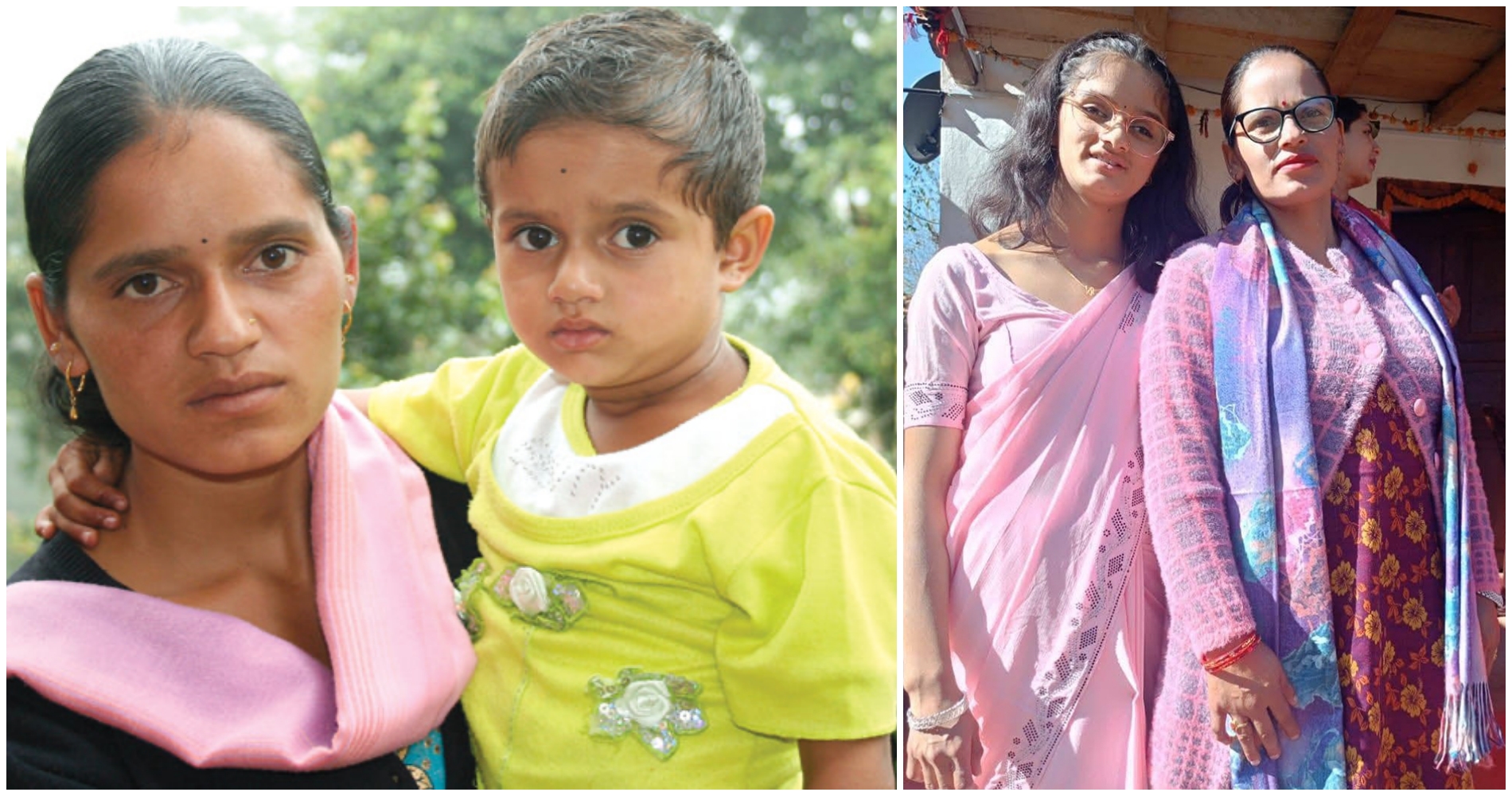
Nanimaiya teaches in a school in her village of Yarsa in Dolakha, and says she still has post-traumatic stress with frequent headaches and insomnia. She has sought treatment, but nothing has helped.
Soon after her husband was killed she stayed with her in-laws for a year, but because of the stigma of widowhood moved to her parent’s home. She did get a compensation package from the government, but not as much as the Maoists who were declared ‘martyrs’.
Nepathya helped Sona finish her 10+2, and she is getting a pharmacy degree at a college in Kathmandu. She is now 22 years old, and feels remorseful and lonely whenever she sees her friends go out with their fathers. She hopes to get her license and open a pharmacy, or get a government job.
“I hope no Nepali mother, father, brother or sister will have to bear a tragedy and loss like I did,” says Nanimaiya. “I hope parents do not lose their children, and children do not become orphans. They should not have to live their lives in a flood of tears.”