

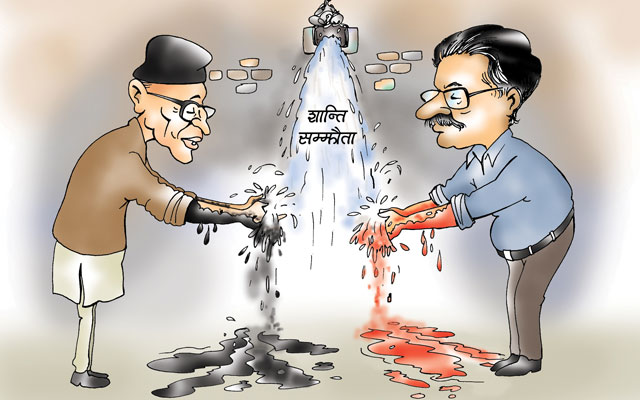
On October 16, Nepal became a member of the United Nations Human Rights Council (HRC) for a two-year period beginning January. The Government, reeling from accusations that it had stalled on human rights commitments, welcomed this development as signaling ‘the international community’s acknowledgment of Nepal’s passionate efforts and accomplishments in the field of promotion and protection of human rights and fundamental freedoms’.
The HRC, established in 2006, has become an important institution for holding countries to account on human rights issues. During what are known as Universal Periodic Reviews, all UN member states submit reports and updates, respond to criticism, and make commitments to reform. The council also has the capacity to appoint special rapporteurs and other independent experts to ensure effective investigation into alleged abuses in specific countries, even when the country concerned refuses to cooperate.
Perhaps the Council’s most significant contribution has been in its capacity to appoint commissions of inquiry specific to particular countries – and these have included North Korea, Syria, Burundi and Sri Lanka. While the establishment of such commissions requires strong political will within the larger international community, the voting members of the HRC decide whether a specific commission of inquiry will be established, and what its contours will be.
Thus, Nepal’s membership in the HRC will mean that it can meaningfully shape the human rights discourse over the coming two years. The question is: how well will it exercise that responsibility? How will the Government of Nepal vote when faced with serious human rights crises around the world?
It is important to remember that it was not that long ago that Nepal itself was the object of scrutiny, both before the Council and its predecessor, the UN Commission on Human Rights. There were well-documented allegations of serious human rights and international humanitarian law violations by both government forces and those of the Communist Party of Nepal-Maoist (CPN-M). The war between 1996-2006 raised international alarm. More than 13,000 people were killed and thousands were forcibly disappeared, sexual violence and torture were used by both sides.
Even as the conflict escalated, the Nepal Government, confronted time and again in Geneva over the allegations, continued simply denying and obfuscating, and telling the international community that its internal affairs were none of its business. However, international persistence paid off.