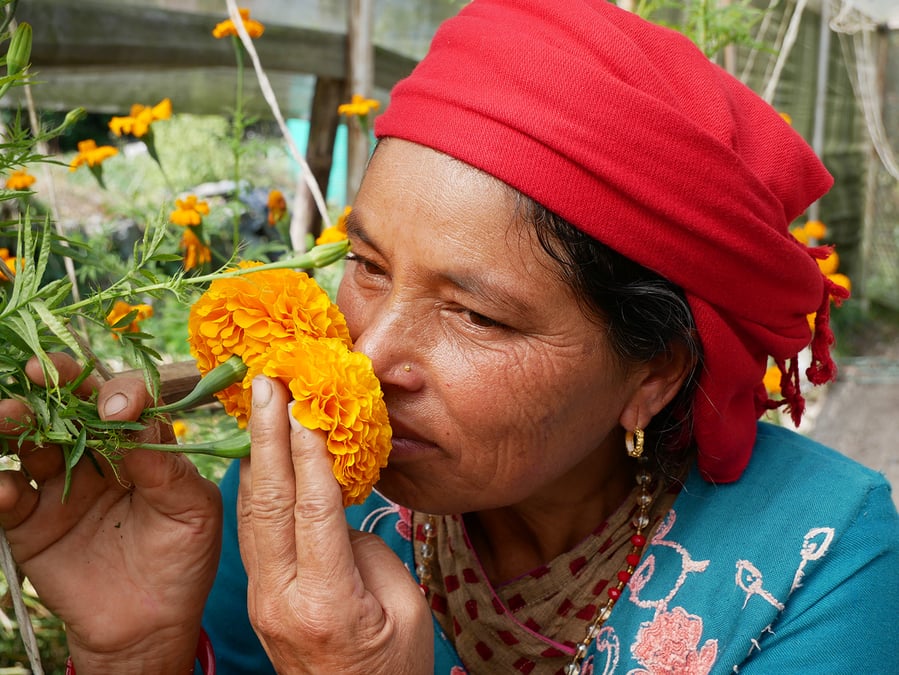
Marigolds are cherished in Nepali culture as symbols of energy, enthusiasm, and creativity. Guests are greeted with garlands made from these bright orange blooms, and they are also draped over doorways during Tihar.
But marigolds (सयपत्री) are surprisingly utilitarian for Nepali farmers too, who use the flowers in their fields as natural bug repellant. Marigolds give off a musk-like odor that drives insects away from crops.
“I plant marigold in rows around my tomato crops instead of using insecticides,” says Kamala Khadka, 52, who has been farming the mountains near Pokhara for 16 years. A mother of three, Khadka also makes a tidy profit selling the flowers during the festival season.
As well as intercropping marigolds, Khadka practices other regenerative techniques that increase soil fertility. She now produces biochar, a soil supplement, by heating organic material in an oxygen-starved pit in her garden.
She spreads the charcoal-like substance into the soil of her crop rows to increase its water-holding capacity, prevent nutrient loss, and provide a transport structure for microorganisms.
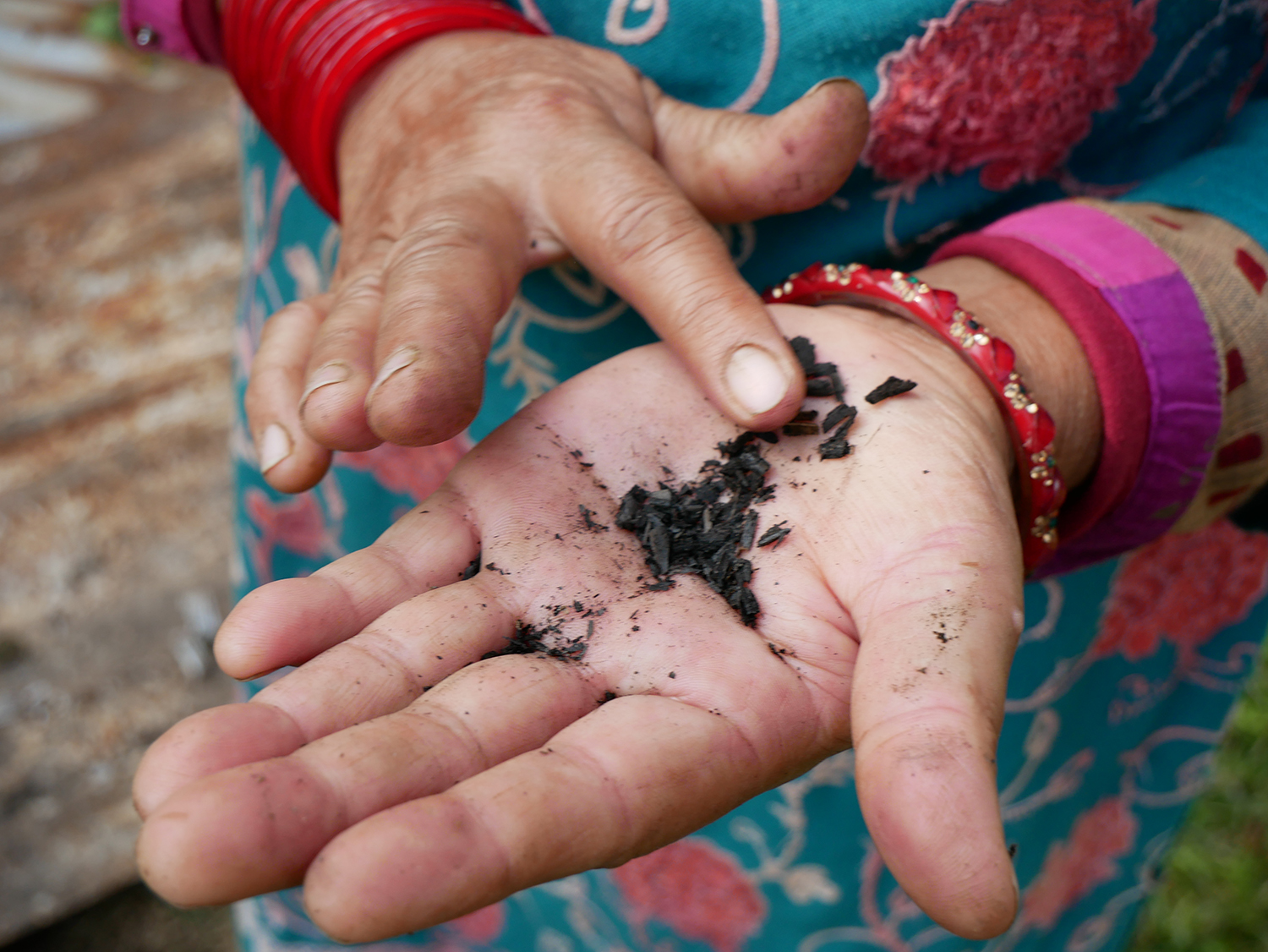
“I’m optimistic about biochar since soil health is very important. We should use chemicals only as a last resort,” says Khadka.
In recent years, Nepal’s farms have been substantially impacted by infestations of pests such as fall armyworms. These bugs threaten food security across the country by destroying staple crops such as maize. Scientists say higher temperatures, caused by global warming, can prolong infestations.
With 80% of Nepal’s population engaged in farming, and 20% living in poverty, farmers need to have access to the knowhow and tools that enable them to produce more food more sustainably.
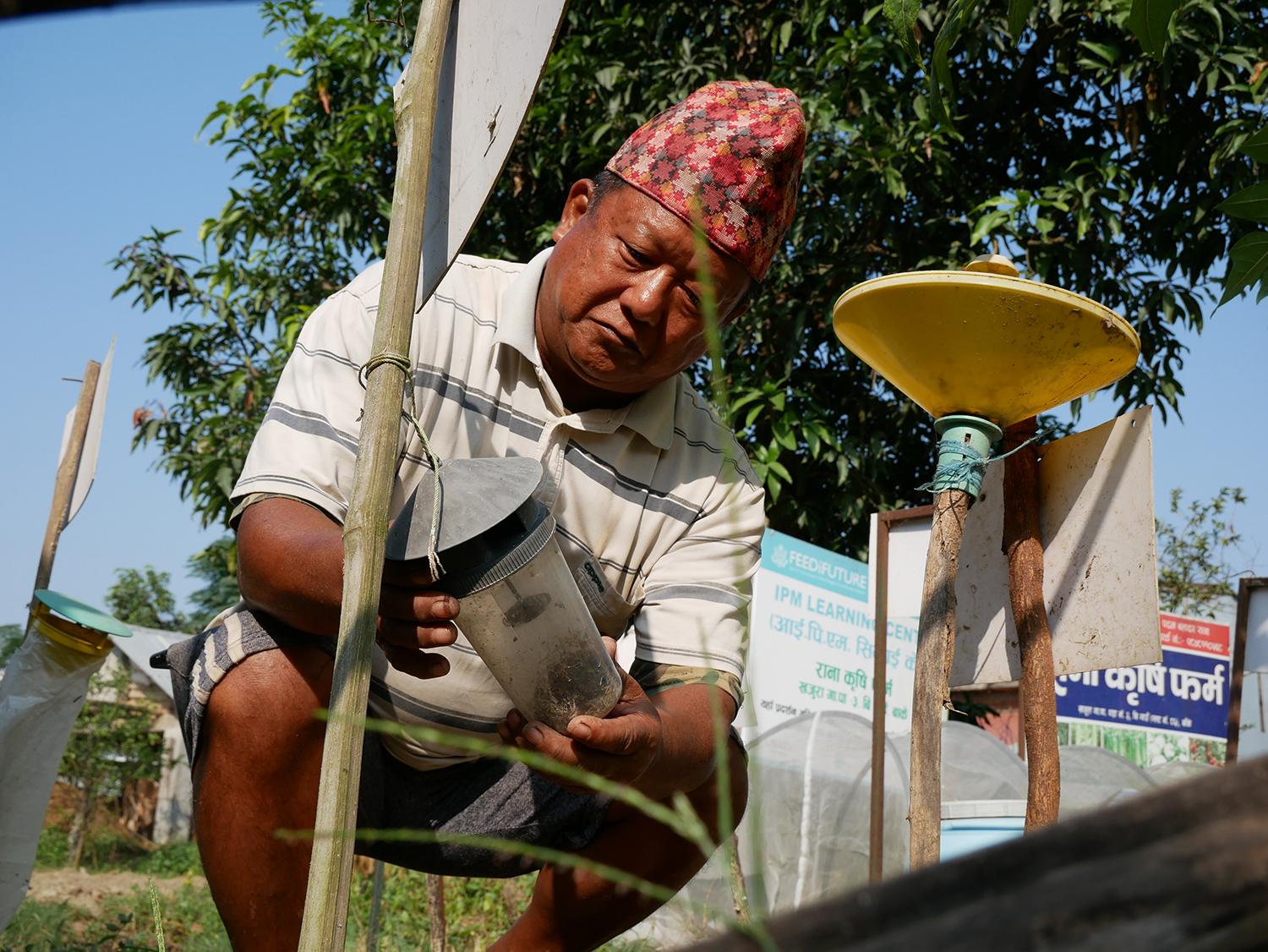
Many farmers are now returning to traditional remedies instead of chemical pesticides and herbicides which pollute by leaving behind heavy metals and acid in the soil.
The International Development Enterprise (iDE) is assisting this switch by intervening at critical points within the agricultural market system, helping small scale entrepreneurs prosper on their own terms. The organisation works closely with the government and community partners to promote changes in farming culture.
Making farmers aware about topsoil nutrition and alternative income streams are essential in raising the living standards of farmers like Khadka.
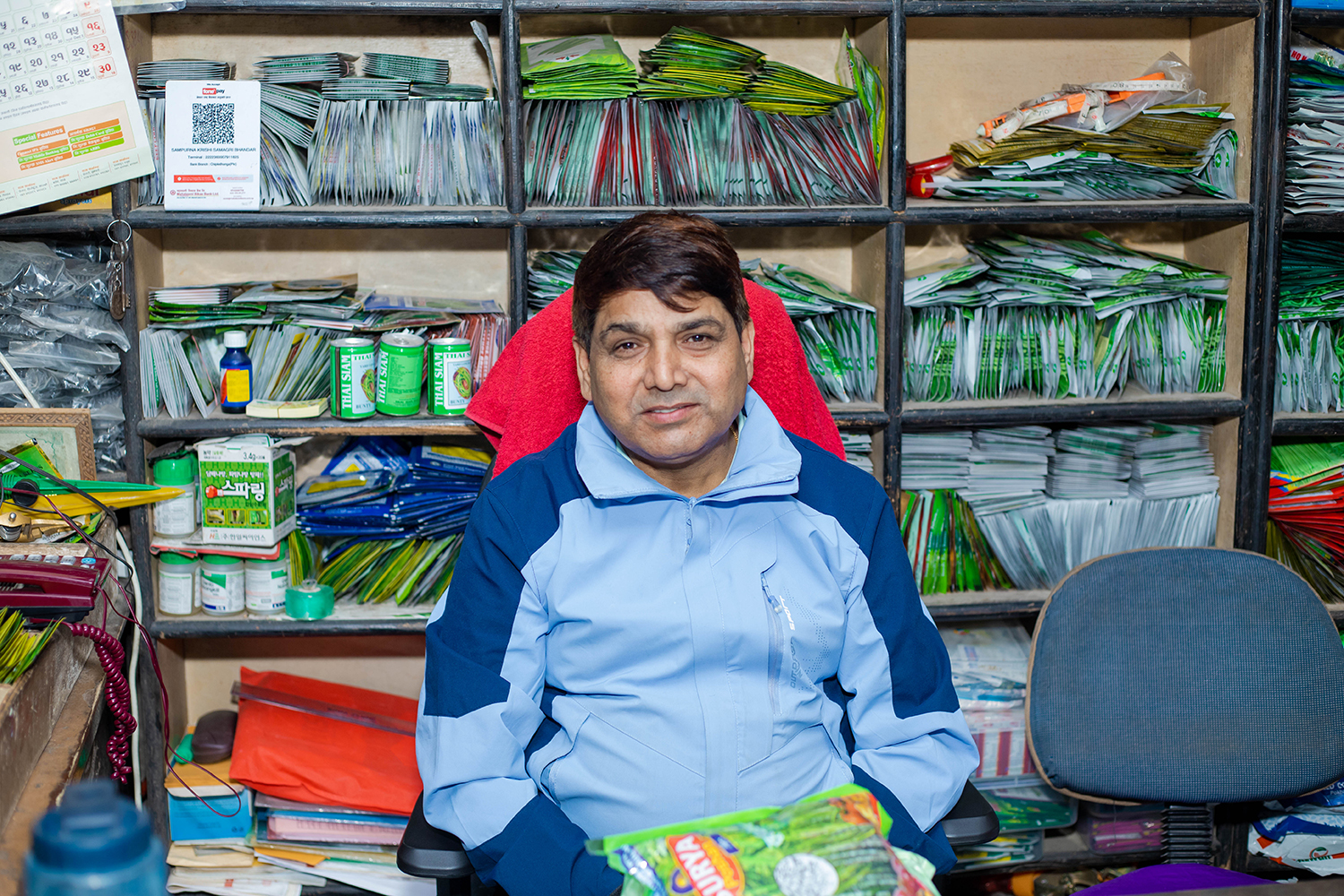
Getting organic supplies from store owners known as ‘agrovets’ directly to farmers is also crucial. One way this happens is through outreach workers who sell necessary agriculture products door-to-door.
Farm to lab
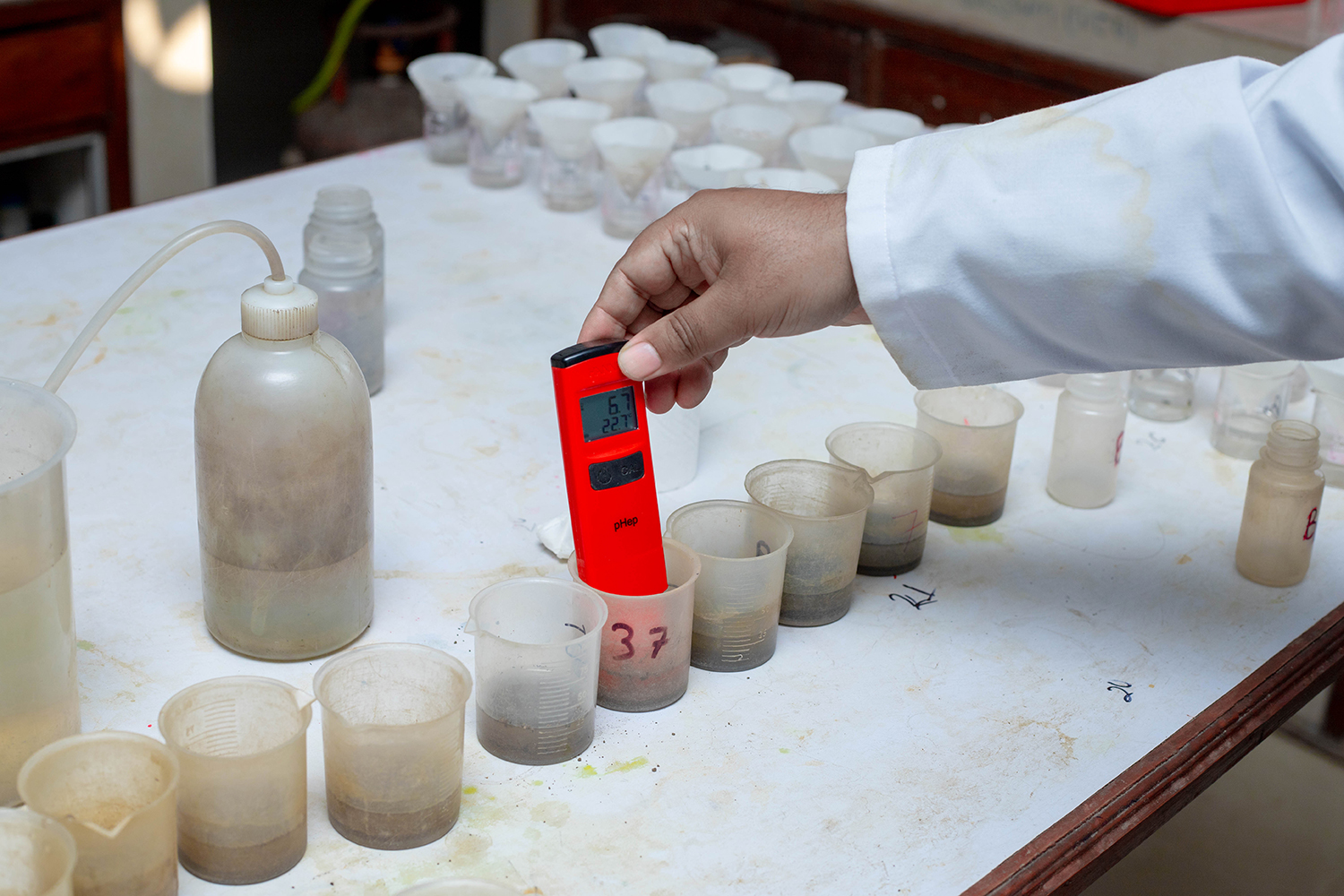
In his white lab coat, government soil scientist Sunil Pandey runs soil samples through a battery of chemical tests. The samples come from farms across Gandaki Province, some collected by technicians and others delivered by farmers themselves.
Pandey is testing for a range of variables: micronutrients, pH level, texture, and moisture. But mostly he wants to know the parameters of the three key elements: nitrogen, needed for growth; phosphorus, required for grain formation; and potassium, essential to plant respiration and hence sugar production.
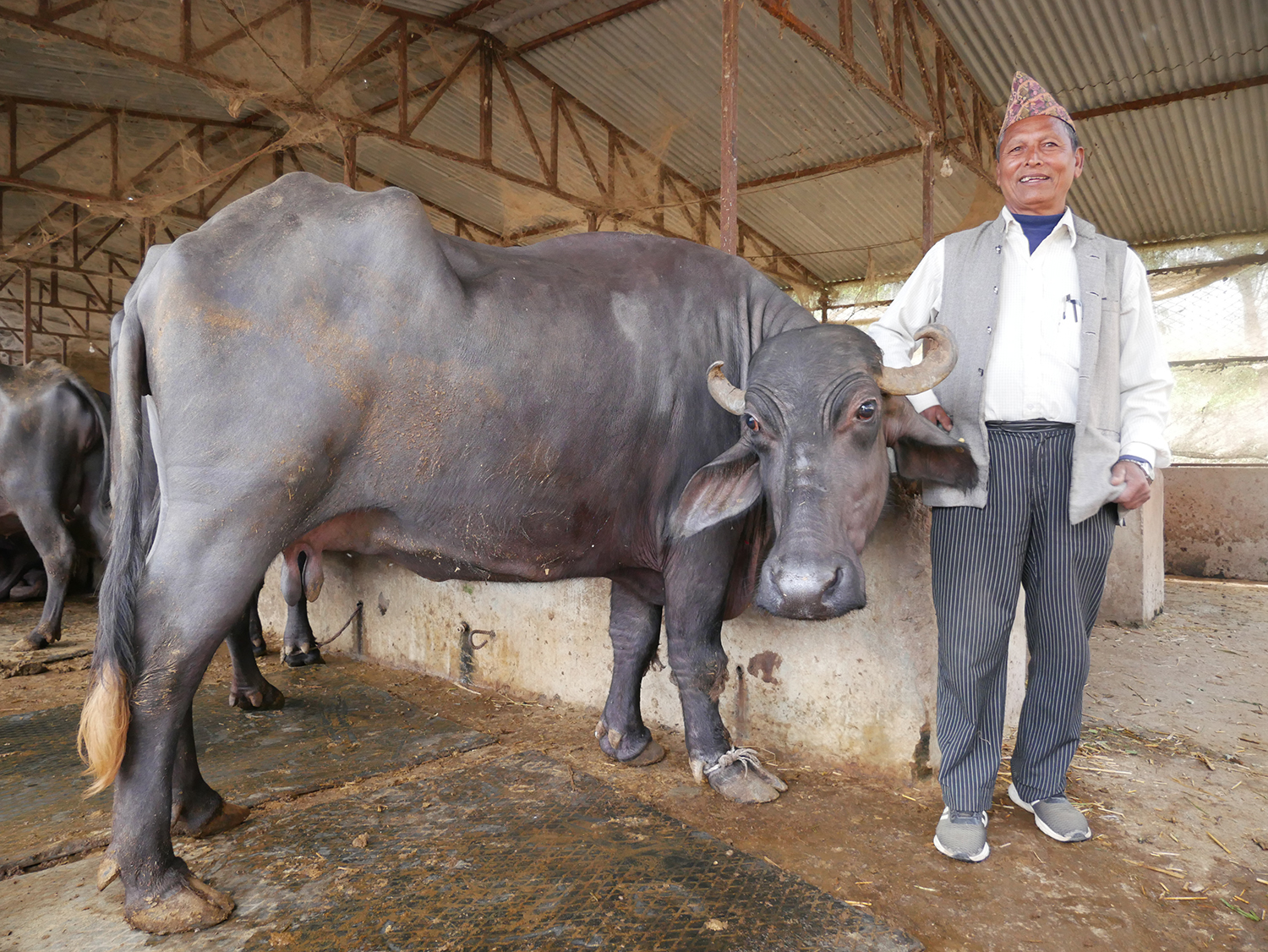
But in recent decades nutrient levels in soil across the province have degraded. Pandey explains: “Farmers have fewer animals because they don’t need oxen to pull plows anymore. There is less compaction and less compost in the fields. Many farmers today use chemical fertiliser, leading to high soil acidity, which causes big problems.”