
 BIKRAM RAI |
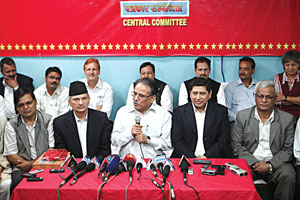
The seventh plenum of the UCPN-M, which concluded in Kathmandu last week will be remembered for all the wrong reasons. But besides the chair chucking, fist-fighting and ugly factionalism, the meet was historical in terms of the decisions that were taken: most significantly to hold a general convention in February next year.
For the first time in its history, the party which waged a decade long war against the 'feudal and corrupt' state is on its way to fight democratic deficit and weed out corruption within its ranks. The largest party has been rattled by revolt and the leaders seem to have realised that there is an imminent existential threat to the party if they don't mend their ways.
After the party joined formal politics in 2006, cadres have complained about financial and moral corruption among their leaders, but the leadership had not allowed an open debate on the issue. The taboo was finally broken on the third day of the plenum after members of youth wings and ex-combatants demanded that party reveal details of income and expenses of the last six years.
An ex-brigade commander Kamala Naharki raised ethical questions over the character of the leaders. "Why is the party sheltering corrupt and morally bankrupt individuals? Is this what our friends and families died for?" she asked.
Naharki's statements reflect a general perception within the Maoists that the 'air-conditioned lives' of the top leaders in Kathmandu have conditioned their way of thinking, that the leaders have abandoned the true purpose of getting to power and made it into an end, instead of a means to a larger good. As a result, a party which calls itself the vanguard of the peasants and working-class may slowly be eroding its legitimacy among the people it claims to champion. Last month's split had immediate political reasons, but Mohan Baidya was able to cash in on the seething anger within the party against the luxurious lifestyles of the leaders and the establishment faction's one upmanship.