
 SAM KANG LI |
Nepal's prime crops are wheat, corn, millet, rice and barley. Although these are not produced in Karnali and the far-western districts, buckwheat, potatoes, sweet potatoes, walnuts, milk products, meat and other vegetables are found in ample amounts. It is hard to believe that people here die of starvation.
Last year, Dolpa produced 2,000 metric tonnes of apples, 5,000 tonnes of potatoes, 500 tonnes of walnuts, 800 tonnes of milk products, 300 tonnes of meat, 900 tonnes of eggs and 800 tonnes of vegetables. These are as nutritious as any other food. The list of produce from other districts of Karnali is also similar. But we still hear of people dying of rice shortages in these districts.
There are rich European nations that have less wheat production than Nepal. While they have comfortably survived on potatoes, the people of Karnali are still chasing after rice.
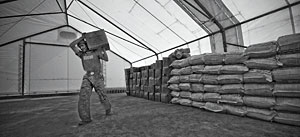
Actually, it hasn't been long since this rice culture took hold. When the government and WFP started flying in rice to ease the food crisis in Karnali, it became the staple food there. Food experts claim that this is why Karnali suffers from food shortages for 9 out of 12 months a year. In addition, the state bears the expense of transporting rice to Karnali. This year alone, Rs 450 million has already been spent on transportation. President of Rural Reconstruction of Nepal, Arjun Karki, says, "The food policy of the state is responsible for making the people here depend on relief packages of rice instead of being self sufficient by cultivating what can be grown locally."