
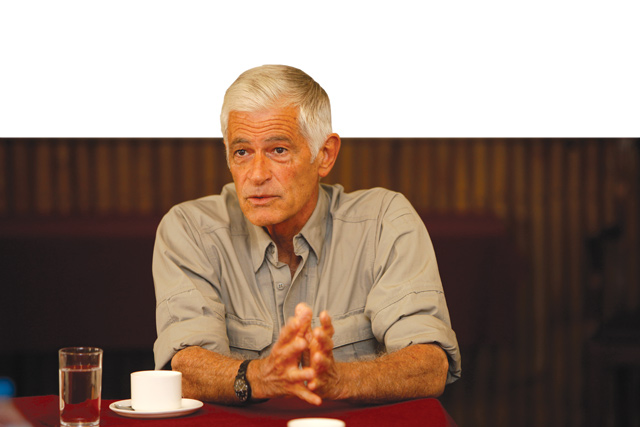
What award-winning war photographer James Nachtwey thinks about the role of journalists in an unjust world would violate the basic tenet of the American media: reporters must not get too deep into a story, lest their emotions cloud their judgement.
While shooting on assignment in Kosovo, Rwanda, and other infamous theatres of conflict, Nachtwey was appalled by the cruelty and pain one human being was capable of inflicting on another. He gave vent to his outrage through his photography, documenting in powerfully stark black and white images the scars of multiple machete cuts on the side of a Rwandan man, or depicting a woman carrying scythes walking past burnt out homes in Kosovo.
“It’s our job to tell their story to the rest of the world, people need to know what is going on, however horrifying,” Nachtwey told reporters attending a talk organised by Nepali Times in Kathmandu on Saturday. The World Press Photo and multiple Robert Capa Gold Medal awardee has returned to Kathmandu after photographing the aftermath of last year’s earthquake for a cover story in Time magazine.
Asked if such disproportionate coverage by the international media of death and destruction after a disaster bent the truth because 85 per cent of the houses in Kathmandu Valley were intact, Nachtwey was unapologetic. “A lot of people died, houses came down and a journalist’s job is not to go around delivering just feel good stories,” he said.
This unwillingness to accept that the greater prominence of the negative distorts reality, and that a more nuanced coverage is required after disasters was perhaps the only discordant note from a photographer known for the sensitivity and empathy with which he treats and portrays victims of manmade conflict and natural calamities that are often his subjects.