 |
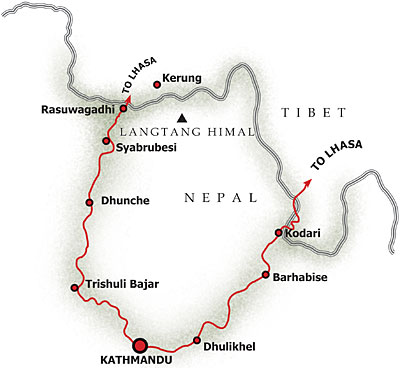
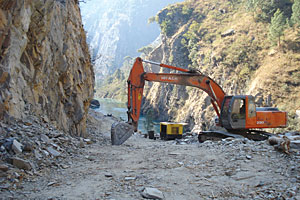
Nepal-Tibet border. The mountains here are some of the most remote and inaccessible in the world. But deep in the valleys next to the green, flowing waters of the Kyirong River, Chinese construction workers are blasting through the jagged landscape to turn an ancient trading track into a modern road.
This small stretch of road - just 17km long - from the border to the Nepali town of Syabrubesi is costing the Beijing government almost $20 million. But it's an important investment because this mountain pass not only connects Tibet to Nepal, it's also the most direct land route to India's capital, Delhi.
 JOANNA JOLLY |
"There is an old Chinese saying, 'To get rich, build roads first'," says the Chinese team's engineer Zhang Peng. "When this road is ready, living standards and the economy around here will improve," he says. "Nepali people will be able to visit Lhasa, in Tibet, and other parts of China, and Chinese tourists and businessmen will come here."
The road will make a huge difference to communities on both sides of the border. Traders still walk the old path that runs alongside the new road - an ancient thoroughfare across the roof of the world that connects Nepal to the historic Silk route.
Thirty-five-year-old Mingma Dorje Ghale has walked this small, rocky path since he was a child. He and his friend have just trekked back from Tibet, a day's walk away, carrying bottles of Chinese brandy on their backs. They plan to sell their goods in Nepal's border towns.
"When this road is built, I won't have to carry this heavy backpack up and down," he says. His friend's five-year-old daughter leads their yak. Until now, yaks and mules have been the only way to transport heavy goods across the border and children often take the job of leading them.
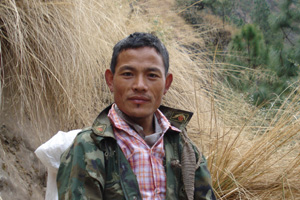 JOANNA ROLLY Mingma Dorje Ghale thinks the road will make life for the next generation easier. |
Mingma hopes that the new road will mean he can drive in and out of China and that his children will be spared the journey, so they can stay at home and attend school. "Life for the next generation will be easier," he says.