
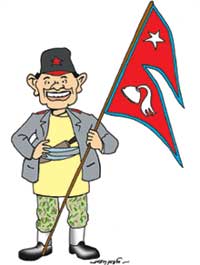
 Many of us are dazed by the dramatic changes in the political landscape post-ceasefire, and especially after top Maoist leaders surfaced last week. To focus our minds on the task of peace-building that lies ahead, there is a need to look step-by-step at where we are and where we want to go.
 The existing power balance between the king, the Maoists and the parliamentary parties will form the basis for a peace dialogue to craft a future polity. The timeline will depend on the sincerity of all parties towards peace, development and protection of human rights. The main issues to be resolved are:
Is the monarch the source or patron of the constitution?A lot will depend on the pattern, process and facilitation of the future dialogue. Click for the flowchart of the road ahead.
. Is there a way out of the constitutional deadlock?
. Can a roundtable conference play the role of an “interim parliament”?
. What happens to the Maoists' 'people's liberation army'?
. Are a constituent assembly and referendum the way out?
. Who and what will decide on the government of national unity?
. How can peace be institutionalised and sustained?
(Gauri Pradhan is director of the human rights group CWIN.)