
Around the world, women’s sports are consistently thought of as subpar to the games men play. Female athletes are relegated to the sidelines of national conversation. They get less coverage in the media, are treated with less respect and receive smaller paychecks than their male counterparts.
On the occasion of International Women’s Day, Nepali Times caught up with a few female athletes who have done the nation proud in recent international tournaments.
The wushu warrior
“My gold medal is a message for girls who think they are not as good as boys”
Sahina Shrestha
Pics: Gopen Rai
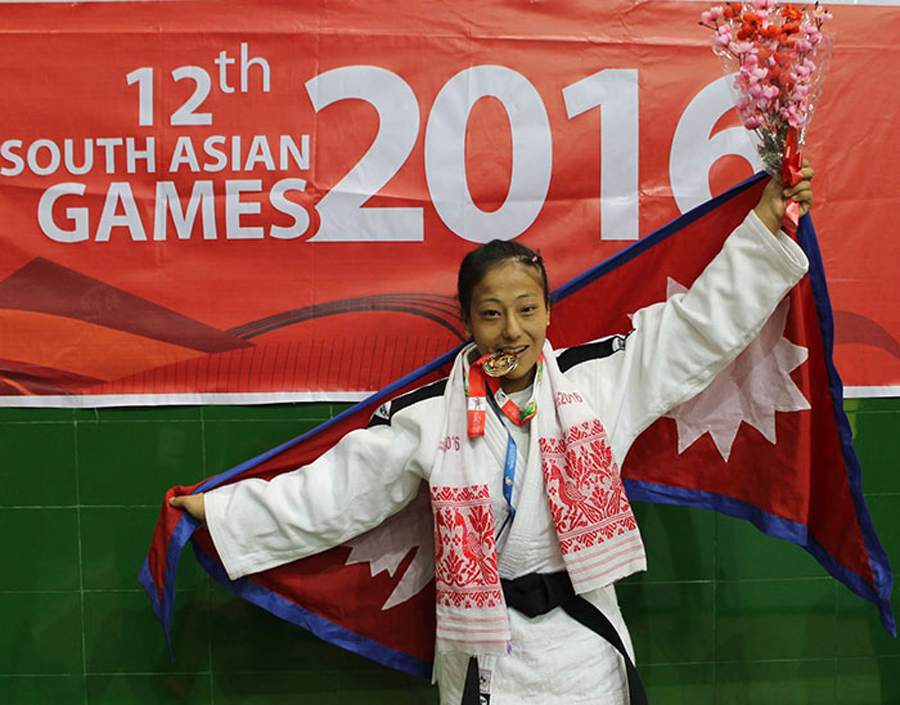
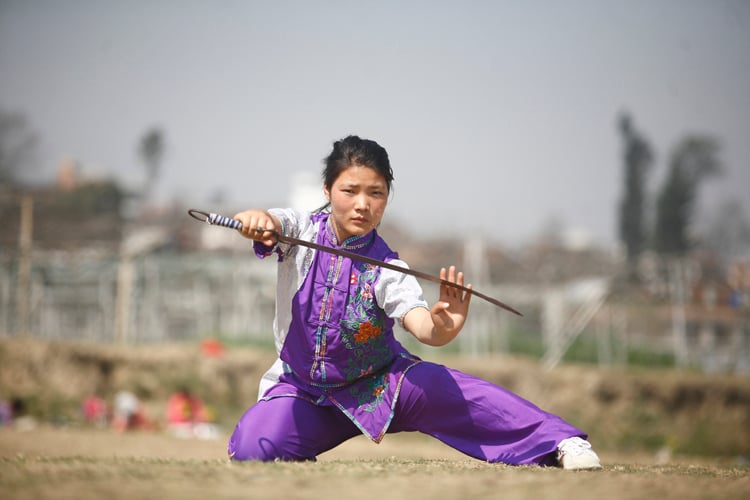
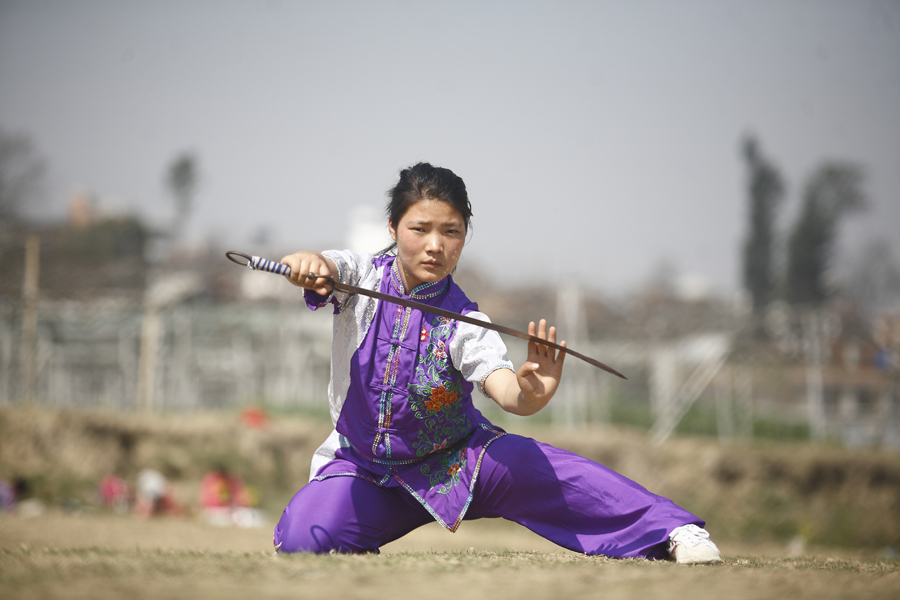
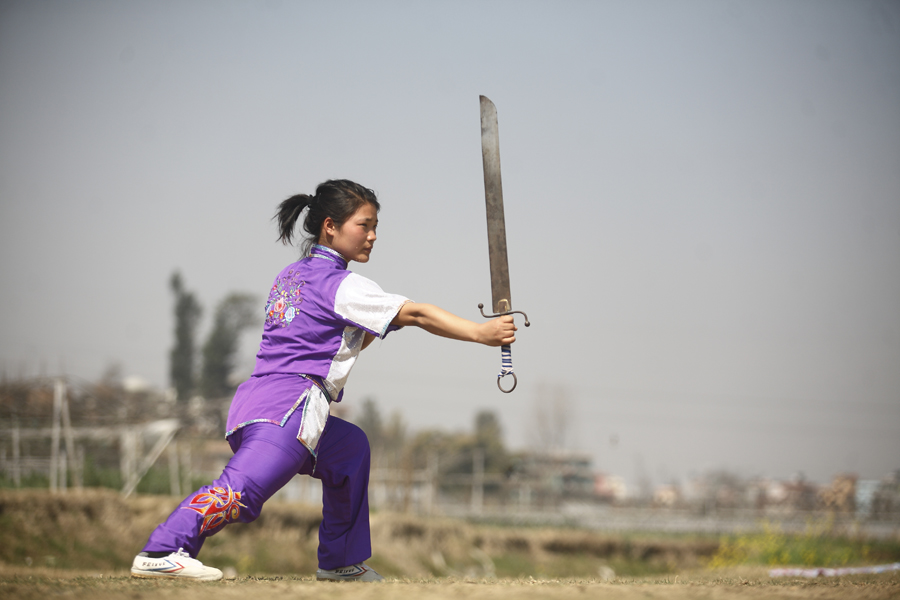
Watching Nima Gharti Magar's intense concentration while performing nanchuan (a form of wushu practiced with a sword), it's hard to believe that the teenager gold medalist from the South Asian Games took up the sport only four years ago.
The movements are graceful yet powerful as she effortlessly maneuvers the heavy sword with an air of confidence that belies her young age. In a field still dominated by men, the 16-year-old is determined to break barriers and gender stereotypes.
"My gold medal is a message for everyone, especially girls who think they are not as good as boys when it comes to physical tasks," says Magar, sitting on the banks of Godavari river, where she first began her wushu training.
Many of her friends who began their training with her have quit and her friends at school are also not interested in sports, and Magar says she is frustrated with the attitude among her female friends.
Those close to her know Magar as someone who’d always stand up for herself. She'd beat up her older brother when he tried to look down on her. Father Mansur Gharti Magar encouraged both his children to try out the sport when they showed interest in joining the local Ninja quan.
His son dropped out but Nima continued training. "Look at her now. She has earned a name for herself and done us proud," says Mansur.
Nima always enjoyed watching players of the Ninja Wushu Quan train beside the river from her house in Tikathali. So when a friend suggested they join together one day, she jumped right in.
Soon after, she made it to the national team, securing the second position in the 9th National Wushu Championship, but lost her spot when she came in third in the Lumbini Championships. Remaining confident, she trained even harder and qualified for the Asian Games in Incheon, South Korea.
But her form wasn’t included in the final list. "She cried for days," remembers Mansur. With only three spots in the SAG closed camps, Nima's worries were compounded since she also missed her exams while training. But when she called to say she made it on the team, her father told her to concentrate on wushu and not worry about her exams.
"If she has to, she can always give her SLC next year," says Mansur, who had moved his family to Kathmandu from Rolpa in 1999 to escape the conflict.
Video by Gopen Rai and Ayesha Shakya
For now, the 10th grader is concentrating on her studies. "My first goal was the SAG and now that I have achieved it, my next goal is clearing the SLC," says Nima.
When she is not busy studying and training, Nima enjoys drawing and with her new-found popularity she has found another hobby.
"I enjoy photo shoots," says Nima as she poses for the camera.
Read Also:
Downplaying women’s football
The subdued welcome for the female football team after SAG shows that women still have to play defense
Tsering Dolker Gurung
Pics: Dhruba KC
When Nepal’s men’s football team beat India in a tightly contested match to take gold in the 12th South Asian Games in Shillong last month the whole country erupted with joy. The last time Nepal had won was 23 years ago in the 1993 SAG Games in Dhaka, Bangladesh.
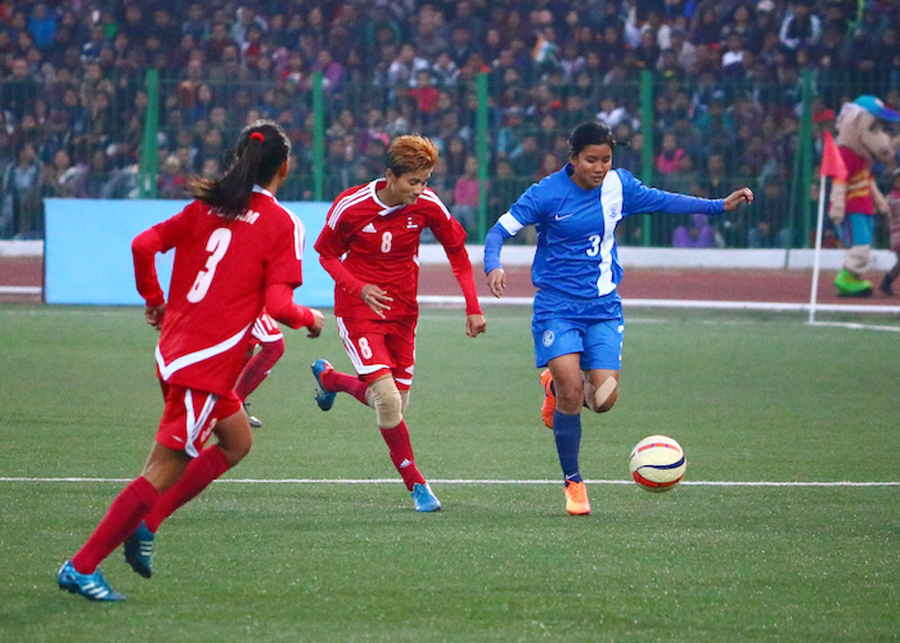
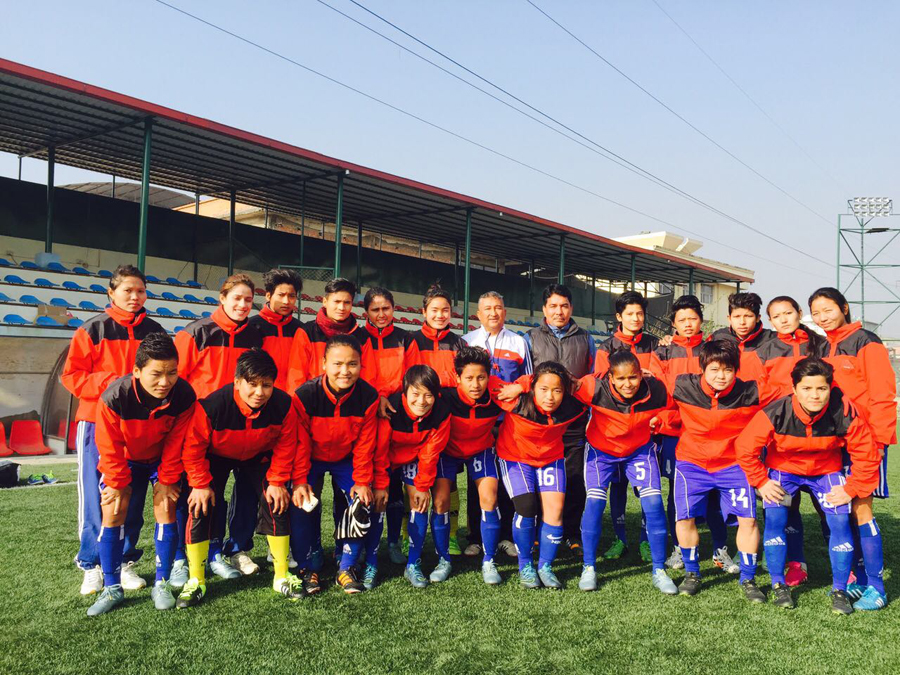
Finally, the dark cloud hanging over Nepal’s football had been lifted, analysts said. But what was forgotten amidst the celebrations and extensive coverage of the men’s victory was that Nepal’s women’s team was also competing in the Games, taking silver. But there were few fans at the airport and no victory parade through the streets of Kathmandu.
“Of course, we would have loved to be in their place and have the support of the entire nation with us,” says team captain Anu Lama, who isn’t really surprised by the subdued welcome. “That’s just the way things have always been.”
In the absence of private football clubs for women in Nepal, it is the departmental clubs of the Armed Police Force, Nepal Police and Army, which provide job opportunities for women footballers. More than half of the players including Lama who were selected for the SAG are associated with these clubs.
“People don’t want to invest in women’s football because they don’t think they can make money out of it,” explains Sanjeev Mishra, a football analyst and development director at ANFA (All Nepal Football Association). “But, initiation should be taken by big clubs. Only then will performance improve and result in increase in quality and quantity of good players.”
Currently, as national players, each female player receives a monthly salary of Rs 10,000 from ANFA, Nepal’s prime football governing body, compared to Rs 15,000 for male players.
Some male players earn up to Rs 70,000 a month playing for local clubs, others even more from endorsement deals. "That unforunately is not a possibility for female players," says Dhruba KC, coach of the women’s team.
KC suggests increased grassroots training for young women and girls, holding more women’s tournaments and offering football programs on par with those for male footballers to develop women's football in Nepal. Every year ANFA receives $250,000 in assistance from FIFA and less than 20 per cent goes towards the development of women’s football.
But KC believes lack of funds is not the main problem. “What’s lagging is a clear vision and dedication to improve women’s football,” says the coach.