
 |
 |
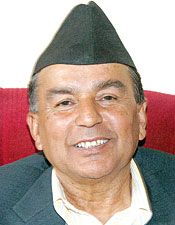 |
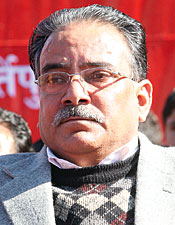
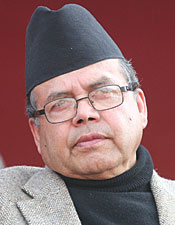
Now that Ram Chandra Poudel of the Nepali Congress has withdrawn his candidacy for the post of prime minister, the spotlight shifts back to Maoist Chairman Pushpa Kamal Dahal and UML chief Jhalanath Khanal, the two other men who want the country's top executive post.
The onus is also on these two men to provide a way out of the political impasse that has impeded progress on the peace process and drafting of the constitution.
There are two ways to go about power-sharing, concluding the peace process, and writing the constitution. One of which is perpetuating the current climate of mistrust and division among and within the political parties. The other is simply implementing what the leaders have been saying: strike a consensus.
With just four and a half months months left for the extended tenure of the Constituent Assembly, can we finally have a prime minister to replace our caretaker?
Let us look at Khanal's prospects. Powerful leaders within his own party, PM Nepal and KP Oli, will do everything in their power to scuttle their party chairman's chances of becoming prime minister with Maoist support. Dahal is willing to lend support since that meets his three objectives: ending an alliance between NC and UML; intensifying the division within UML, a rival communist party (after all, elections will have to be fought); and extracting a heavy price from a Khanal-led government.
Khanal will not only have to compromise significantly with Dahal's Maoists, he will also have to effectively relinquish UML's reins to Nepal and Oli. Will he risk this? It depends on how desperate he is to become prime minister.
Dahal knows he cannot become prime minister with the support of UML, which is sharply divided. He still can be the prime minister if a significant number of Madhes-based parties, which command 82 seats in the 601-member assembly (now 598 after the death of a UML lawmaker) lend support to his party, which has 238 seats.