
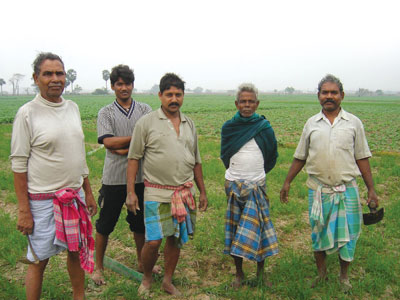
 BITS OF NEWS.COM ANTI-SEZ: Farmers in Singur stand firm on their land in protests in 2008 against the West Bengal government's decision to set up an economic zone there. |
The Special Economic Zone (SEZ) bill will be tabled in parliament this year, and has already received a special mention in the budget speech last week. The government is keen on SEZs as a last ditch effort to woo foreign investors and create jobs.
The government circulated the draft of the bill 'Special Economic Zones Act 2008' three years back. It was either silent or deliberately unclear on three basic points: the environmental guidelines for the proposed SEZ, the rights of the workers in the SEZ and compliance measures for multi-national investors.
The proposed bill gives enormous power to the autonomous corporation to be established under the act which would be responsible for managing and monitoring the SEZ. What is most concerning is that the act does not have regulations to guide the functioning of the corporation. For instance, Article 3 of the proposed bill gives the corporation enormous power to select and recommend any part of the country as a SEZ. Article 4 specifies that the corporation must ensure that the proposed area is economically and logistically viable but does not require the project to conduct an Environment Impact Assessment or Social Impact Assessment.
Similarly, Article 6 give the corporation power to transfer the establishment and administrative role of the SEZ to the private sector. In the absence of clear environmental and social guidelines, there is a danger that private management might turn indifferent to possible threats to local livelihood and biodiversity posed by future industries. The Bhrikuti Paper Industry in Narayangad is an example of failed safeguards that has led not just to massive pollution of the Narayani river just upstream from a national park but also the loss of livelihood of hundreds of fisherfolks and their families.