Four years after its Light Up Pokhara Campaign was launched, 23 high-mast lights and 2,000 ‘smart’ streetlights were installed in the tourist city.
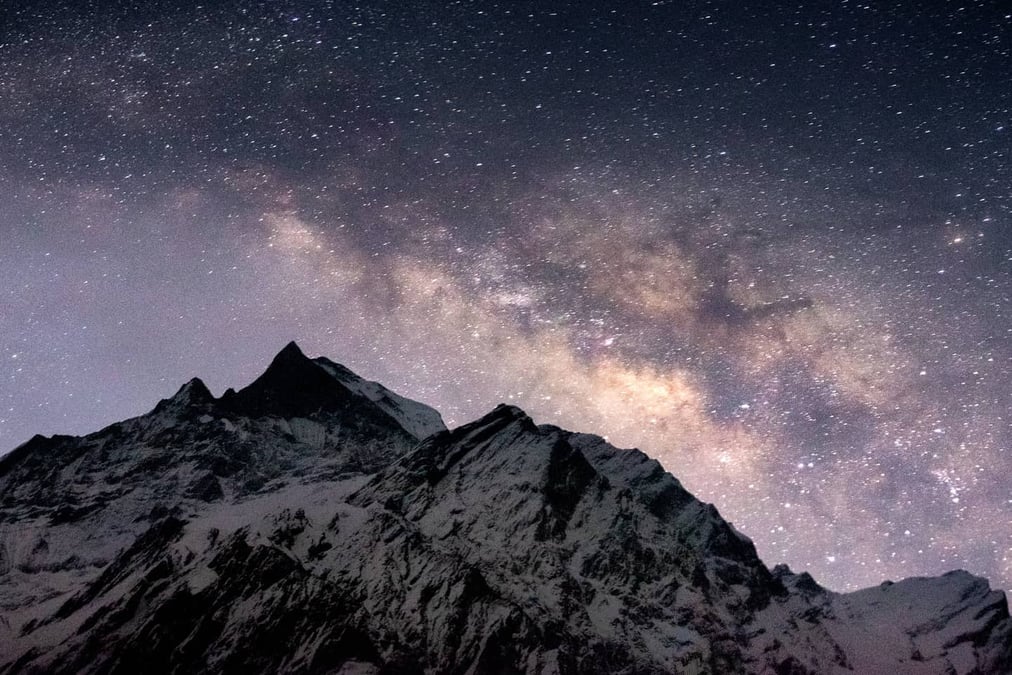
Since then, the Nepal Electricity Authority (NEA) has put up 200 high illumination poles all over Nepal, giving cities bright night lights. But the high lumen LED lamps have dimmed the night sky, veiling views of the Milky Way, constellations and mountains glowing in the moonlight, like Mt Machapuchre from the north (main photo) that people from all over the world come to see.
Street lights make cities safer, and are a sign of progress. But many now ask how much light do cities actually need, and is there a way to confine illumination strictly to the target ground area?
Across Phewa Lake is Raniban, a densely forested slope that used to be alive with fireflies and bats at night. It is the habitat for birds, butterflies and never before classified damselflies.
The bright glow of the city now illuminates the forest, and during Pokhara's many street festivals there is the added noise of blaring music and fireworks.
“We don’t have proper urban planning so that city lights do not disturb its nature areas,” says Hum Gurung of Birdlife International, who is based in Pokhara. “High-mast lights are intensely bright and are meant for stadiums, but they are increasingly being put up in core city areas.”
Numerous studies show that light pollution at night has far-reaching biological effects on living things, including humans, disturbing their circadian rhythms and internal body clocks. Artificial light at night is no longer just a city problem. A research paper on its biological impact notes that skyglow and even vehicle headlights also affect rural areas.
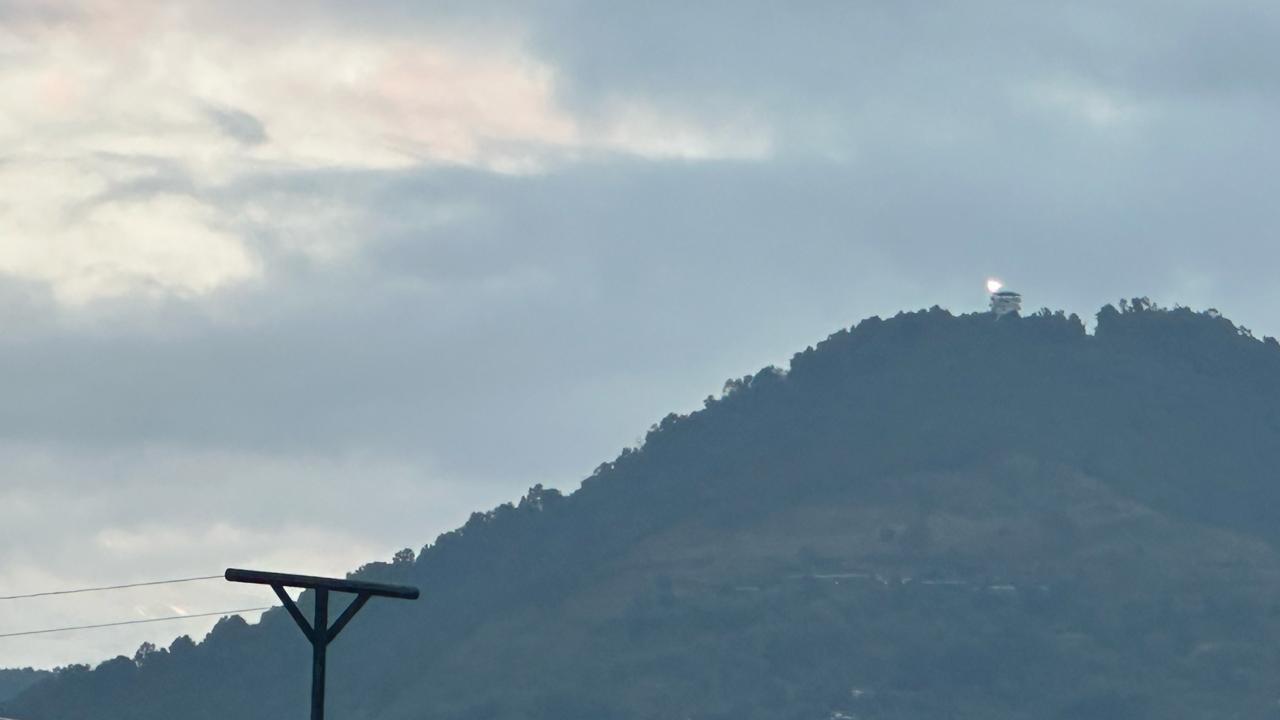
On Arwa Danda 40km east of Pokhara, the local Ward decided to put up a 16m high pole with a 60,000 lumen LED lamp. No one could explain why such a bright light was needed on an isolated and heavily forested hilltop. Hum Gurung posted a photo of the light on social media with the caption: ‘The Two moons of Pokhara’.
The high-mast light at Arwa Danda as seen in the early morning. Photo: HUM GURUNG
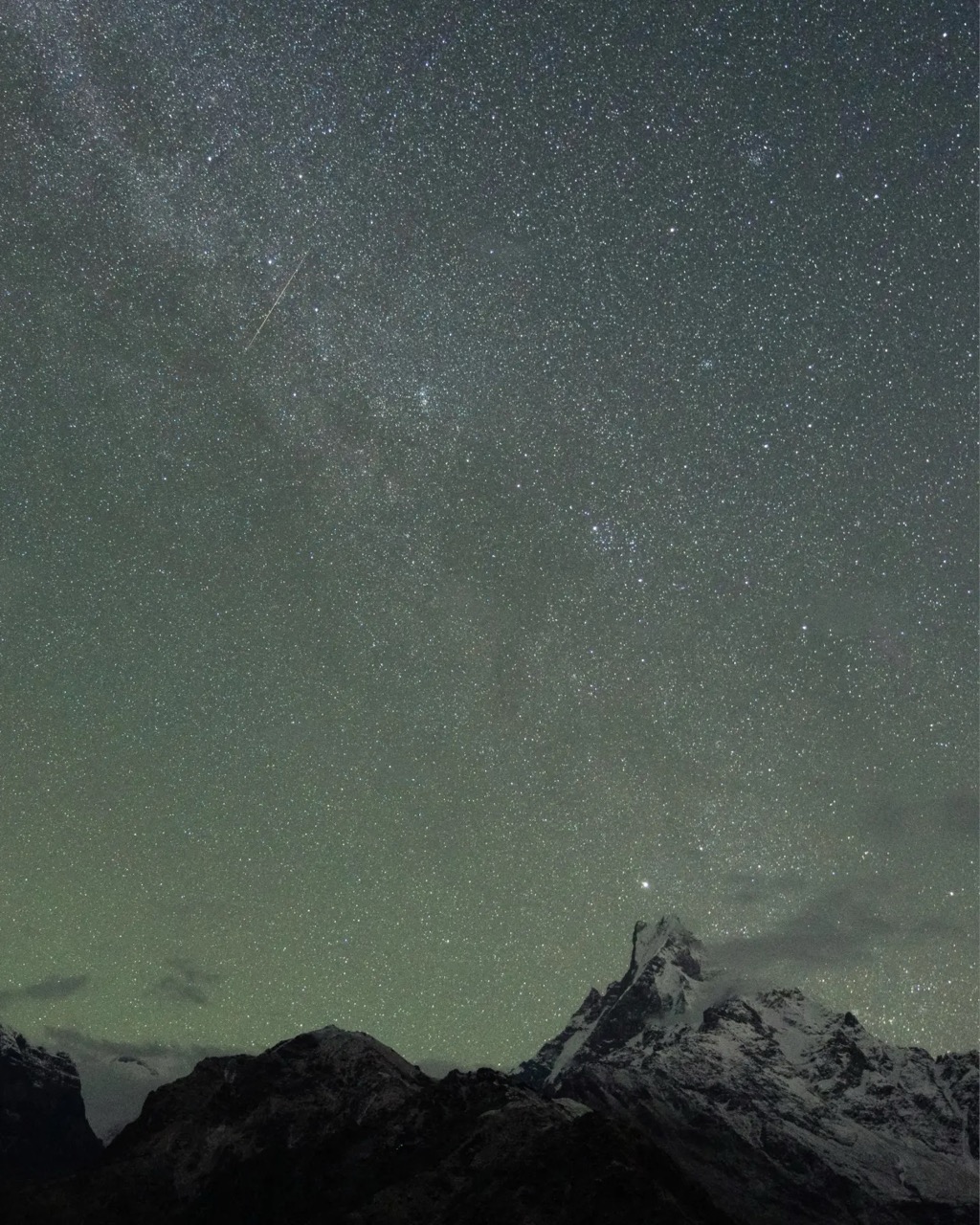
Following this, Pokhara mayor Dhana Raj Acharya said that if the bright light was so environmentally harmful, it could be switched off after 10PM, but he never followed through. One recent full moon night, the light disturbed the spectacular view of Annapurna by night for trekkers camped nearby.
TOWERING VIEWS
Many of Nepal’s hilltops now have viewtowers to promote tourism, and putting lights on top of them is seen as a trendy way to promote tourism — forgetting that many trekkers come to Nepal to admire the night sky and mountains glowing in the moonlight.
Most hilltops surrounding Pokhara host bustling tourist sites, including the World Peace Pagoda, Pumdikot, and Sarangkot. Officials in Arwa seem to have tried to be one up by installing an even brighter light, but even after three years the light has not attracted any tourists. Instead it has driven away wildlife and nocturnal creatures.
“Stargazing is a growing tourism attraction because many parts of the world are now too bright to see stars,” Gurung says. “We think artificial lights is progress, and do not care about how it actually affects tourism and harms the ecosystem of creatures great and small.”
In Chitwan, the urban sprawl of Bharatpur has spilled over into Jagatpur and Sauraha and right to the fringes of Chitwan National Park and its buffer zone. Under a Rs350 million Bright City Bharatpur Initiative, the metropolis installed street lights including 16 high-mast lights at key intersections. Another 6,000 halogen lamps have been installed along highways and ward boundaries at the edge of the forest.
Naturalists have already recorded a significant drop in the insect population in the buffer zone, and less insects means fewer birds in the daytime. The lights also affect night hunters like leopards and other nocturnal animals like pangolins.
“Lights attract insects for nuptial flights and for mating,” explains zoologist Rajendra Suwal. “But lights confuse fireflies and moths, disturbing their navigation, and trapping them in fatal orbits around artificial lights. It also disorients their foraging, interrupts mating and communication.”
Light pollution impacts the photoperiod, the daily ratio of daytime to nighttime, and alters nature’s calendar. Research has shown that nighttime lights even prevent plants from registering seasonal cues, leading them to retain greenery well into autumn.
In a recent column titled हाम्रा अँध्यारा रातहरू खोइ? (Where Have Our Dark Nights Gone?) in Setopati, journalist-turned-farmer Narayan Wagle writes lyrically about how bright lights affect biodiversity on which agriculture depends: ‘It is becoming difficult to make people even understand that fireflies and owls are our inseparable friends, and humans are connected to the natural world.”
Research on Nepal’s historic sites makes a similar point: uneven, excessive and inappropriate lighting puts off sightseeing tourists and local residents alike. None of this means cities like Pokhara or Bharatpur should go dark.
Says Hum Gurung: “Smart’ street lights should not just be about turning on automatically after sunset, they should direct lamps to the ground, so the illumination is not wasted and energy is saved.”