
 MALLIKA ARYAL |
RUPANDEHI - It's 3am and time to rise for a small Musahar community in Soiya, a few kilometres from the highway to Butwal. The men and women here work as daily wage labourers in construction sites in nearby towns, so leave home at the break of dawn. A few hours later their children get ready for school. If their parents found work the day before they eat rice and vegetables. Often they just have rice and salt. Many go to school hungry because they don't have anything to eat at home.
All the children here, for lack of choice, attend the government-run Singaha Primary School nearby. There are about 250 students at this school, and until last year less than 100 students used to attend regularly. Even those who showed up would run away by mid-afternoon. Students would repeat grades or quit school altogether.
The children from Soiya used to be extremely thin and small for their age, and their dark hair had lost pigment due to malnutrition. Going to school was not a priority - their hunger was. Little surprise that they would often run away rather than faint in class due to hunger.
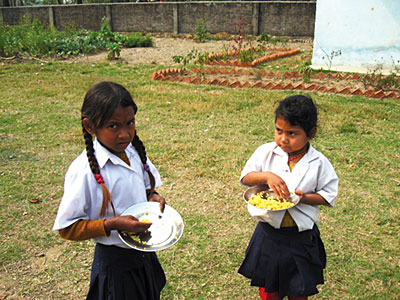
This changed last year when the school received some funds thanks to a development worker's initiative. The small amount provided by School Lunch for Nepal, monitored by the school administration and the community, pays for one meal a day for the kids, comprising fresh vegetables, fruit, lentils and pulses. Since the lunch program started, attendance in the school has increased by more than 30 per cent, new students have enrolled and students who quit have come back.
The changes speak more than enrollment numbers, however.
A year later, the children in the school look healthier and say they actually look forward to coming to school every day. They are also performing better in class; they do their homework, and are not running away in the middle of the day.