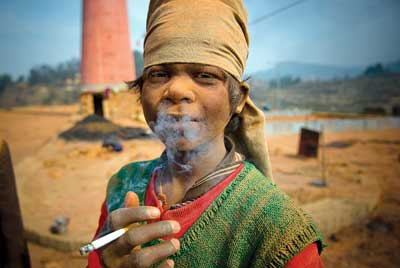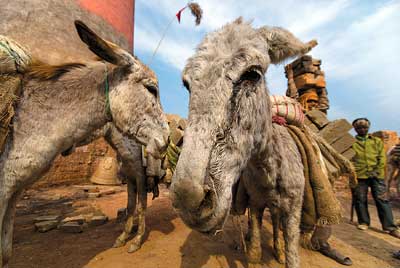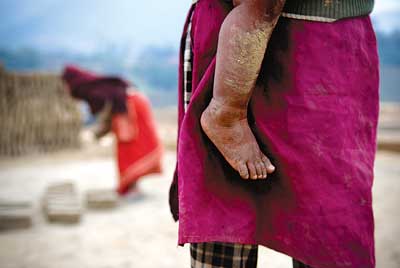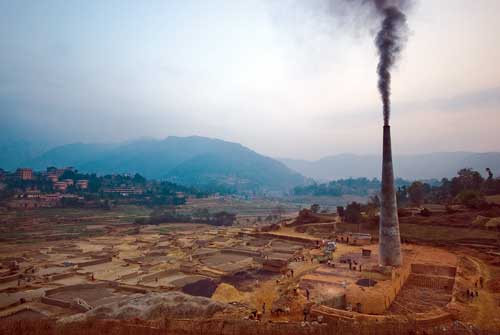
The dry season starts from November, but it will not last. To make the most of it, workers, usually Indians and rural Nepalis, toil in 24-hour shifts. Just above them, a flag carrying the symbol of Hanuman flies in the wind. It will bless them with strength, a factory owner says. They might as well be blessed with speed too, for time is also critical. Each day, the kiln gobbles up 50,000 rupees worth of coal. Slow production means greater losses.
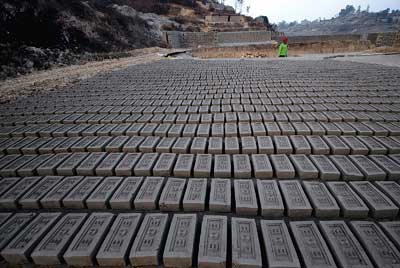
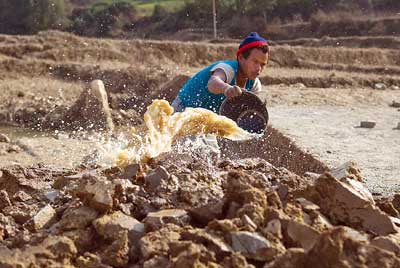
The main ingredients though, soil and water, cost next to nothing. Both are found on the very same land that the chimney sits on. They are mixed - by hands and feet - to form mud, which is cast into bricks and left to harden in the sun for several days. Once hardened, they are moved to the kiln to be baked at high temperatures for hours, gaining a reddish tint in the process. Above the kiln, workers stand amid hot air escaping the vents to seek warm comfort in the winter chill, some even topless.