
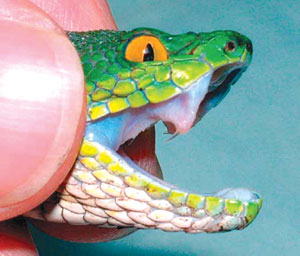
According to EDCD’s conservative estimates, about 12000 people are bitten annually by snakes, out of which 2000 bites are from deadly snakes in the Tarai: kraits, cobras, or vipers. Unlike the Tarai, these deadly snakes are not usually found in Kathmandu, the mid hills and higher areas. A probable underestimation, the EDCD concluded that 200 victims die annually as a result of snakebites, while many survivors have limbs amputated and may be permanently disabled.
Globally there are five million people bitten by snakes every year. Of these, 94,000 die and another 400,000 have limbs amputated. It is estimated that about 50 per cent of these snakebite victims are in South Asia. Clearly this is a neglected tropical illness affecting the poor, especially farmers.
Antivenin is the cornerstone of treatment in deadly snakebites. Amazingly it is manufactured in the same way French physician Albert Calmett first made it in the 1890s. The venom is milked from the fangs of the deadly snake into a cup. This venom is then diluted and injected into a horse or sheep. The animal after a period of time produces antibodies that are extracted from the animals’ blood, freeze dried, stored and used in the victim as needed. Not every snakebite victim requires antivenin.
When it is available the government administers this treatment for free, but it is expensive to make. In India the antibodies necessary for treatment cost at least $325. Antivenin may vary in effectiveness as well depending on the quality of the manufacturing, storage and other related issues. Finally risks like anaphylactic shock are also potential complications of the antivenin.
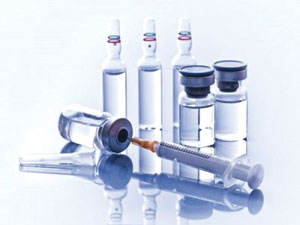
Besides antivenin, the World Health Organisation (WHO) has long recommended a class of drugs called anticholinesterase which can reverse the paralysis caused by deadly snakes like the cobra. Two robust studies carried out in the 1980s revealed that anticholinesterase drugs outperformed the antivenin, hence the recommendation by the WHO. But snakebite is such a neglected tropical disease that little additional research has been carried out in this area.
Finally while we wait for the availability of the antivenin treatment, another treatment modality Dr. Sharma highly recommends is using respiratory support like ventilators until the patient recovers. The real breakthrough however would be an antidote that is inexpensive and effectively used in the field without having to transport the patient to the hospital.
Read also: