
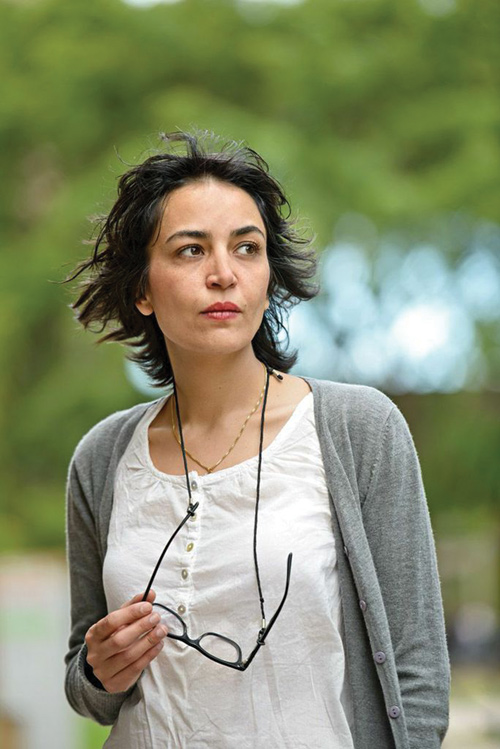
Azadeh Akhlaghi is an Iranian photographer and filmmaker, whose work - By an Eye-Witness - will be exhibited at the Photo festival in Kathmandu next month. She has been recreating Iran’s tragic past through conceptual and staged photography in a series of photographs reconstructing the deaths of prominent figures in Iran including poets, writers, politicians, activists and students, with the events leading to the Islamic revolution of 1979 as its main focus. Photo Kathmandu guest curator, Tanvi Mishra, spoke to Akhlagi about her project.
**Tanvi Mishra: What made you begin work on By an Eye-Witness? **
Azadeh Akhlaghi: It began with a political shock in the aftermath of post-election uprisings in Iran in 2009, and one of the astonishing consequences was that many old political figures, murdered intellectuals and journalists came into the spotlight after decades. They emerged from the ruins of history. Even though they died many years ago, their souls took part in the movement, you could feel their presence out on the streets of Tehran. I believe rising up for freedom is also an attempt to redeem the oppressed history of your past, it is a demonstration of our gratitude to them.
I also tried to mark out the turning points of Iran’s contemporary history. Most of the depicted killings are not only tragic, but crucial turning points in the particular kind of struggle they represent. My last criterion was this: At the moment of their death there was no camera to record the incident, thus there is no visual documentation of it. A kind of visual void is felt in each case, and this project was aimed at filling that void, with a historical delay.
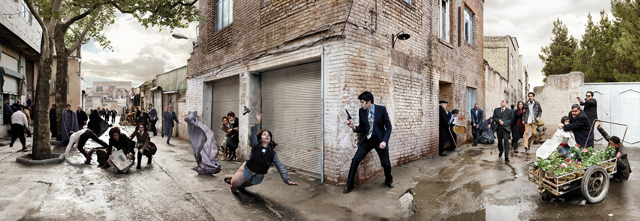
I looked at numerous cases of brutal murders in the recent history of Iran, between the constitutional revolution of 1908 till the Islamic revolution of 1979 and the eight years of Iran-Iraq war, and chose 17 characters. My main goal was gathering political activists of different parties like the national front or the leftists, to poets, writers, journalists, intellectuals, all the way to athletes, from ones who espoused armed struggles to ones who subscribed to non-violent resistance, to those whose weapon of choice were pens.During the research stage, I was working by myself. I went to libraries and archives and collected as much data as I could. I had to go through the newspapers, written words, confidential documents, witness reports, newspaper articles or radio reports and so on. I collected the available documents, brought them together and reconstructed the moment. These photographs represent the most likely scenarios of their death.