
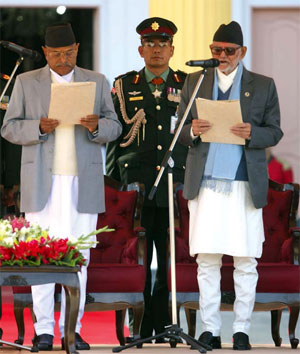
“Most institutions want the prime minister as their chairperson to simply take favors through affiliation,” says Chief Secretary Leela Mani Puoudel. “If the prime minister wants, he could make productive use of his time by stepping down from most of these positions.”
The practice of appointing the head of the country as the chancellor of universities began during Panchayat and has become the norm even after the monarchy was abolished. Nepal’s Prime Minister is the chancellor of nine universities. Besides universities, the executive head is also appointed at academies and several other ‘high-level’ committees.
Former finance secretary Rameshwor Khanal, who was also advisor to the prime minister, says, “Autonomous institutions like universities don’t even require education ministers as chancellors.” Khanal says institutions like High-Level HIV/AIDS Council and many other academies aren’t going to be more effective by simply affiliating themselves with the prime minister.
“The Prime Minister needs to devote all his time for constitution-writing and economic transformation by stepping down from ceremonial roles,” says Radhesh Pant, the chief executive officer of the Investment Board.
Nepal’s prime minister is the head of the following institutions: 1. Cabinet of ministers