
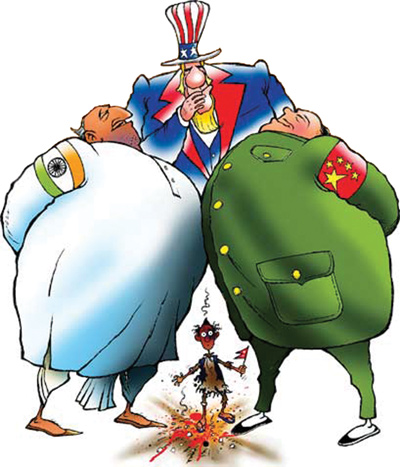
Now that the three festivals, the tamasha of Indian President Pranab Mukherjee’s visit to Nepal and the US elections upset are over, the government can get back to running this country again. There is a whole host of pressing problems: having the Constitution up and running with necessary amendments acceptable to all, rushing urgent bills through Parliament, playing catch-up with lagging development and economic goals.
The post-holiday and pre-winter season, however, will be dominated by the impeachment proceedings against CIAA Chief Lokman Singh Karki which was abruptly interrupted on 25 October. Headlines about Karki’s abuse of power in the media are not a ‘distraction’ as some have claimed. Karki epitomises a clear and present danger to the democratic project, and the mangled mechanism through which he was installed in office shows how easily the system can be twisted and expropriated. It must be said, the politicians only acted when the man they helped appoint CIAA Chief posed a threat to their own political existence.
Last year’s mishandling of the fast-track constitution, the recklessly confrontational manner in which both the Koirala and Oli coalitions thumbed their noses at India, and the ruinous blockade should have taught us all a lesson. But we didn’t learn it.
Nepal’s rulers still swing from one extreme to another: either needling neighbours needlessly or kowtowing to them. They seem incapable of being attentive to the sensitivities of our giant neighbours while minimising interference. Macho hyper-nationalism is futile in a country whose economy is in a shambles, where citizens have no trust left in government.
Last year, Nepal’s political leaders vanished in the weeks after the earthquake. The government spokesman was nowhere to be seen, there was very little coordination of international relief. When the government did speak, it was to render one gaffe after another that made Nepal an international laughing stock. Instead of thanking donors and couching statements positively to highlight relief that was really needed, the government came out looking mean spirited and uncaring.
To mask this prodigious incompetence the lame duck Koirala administration fast-tracked the constitution, and it was later promulgated without adequate consultation. Violence erupted in the Tarai, leaving at least 60 dead. Successive Nepali leaders visited India to reassure the Indians that Madhesi concerns would be addressed, and then came back and did just the opposite. India was miffed, and this turned to anger when Nepal’s leaders refused to put off promulgation by two weeks.