
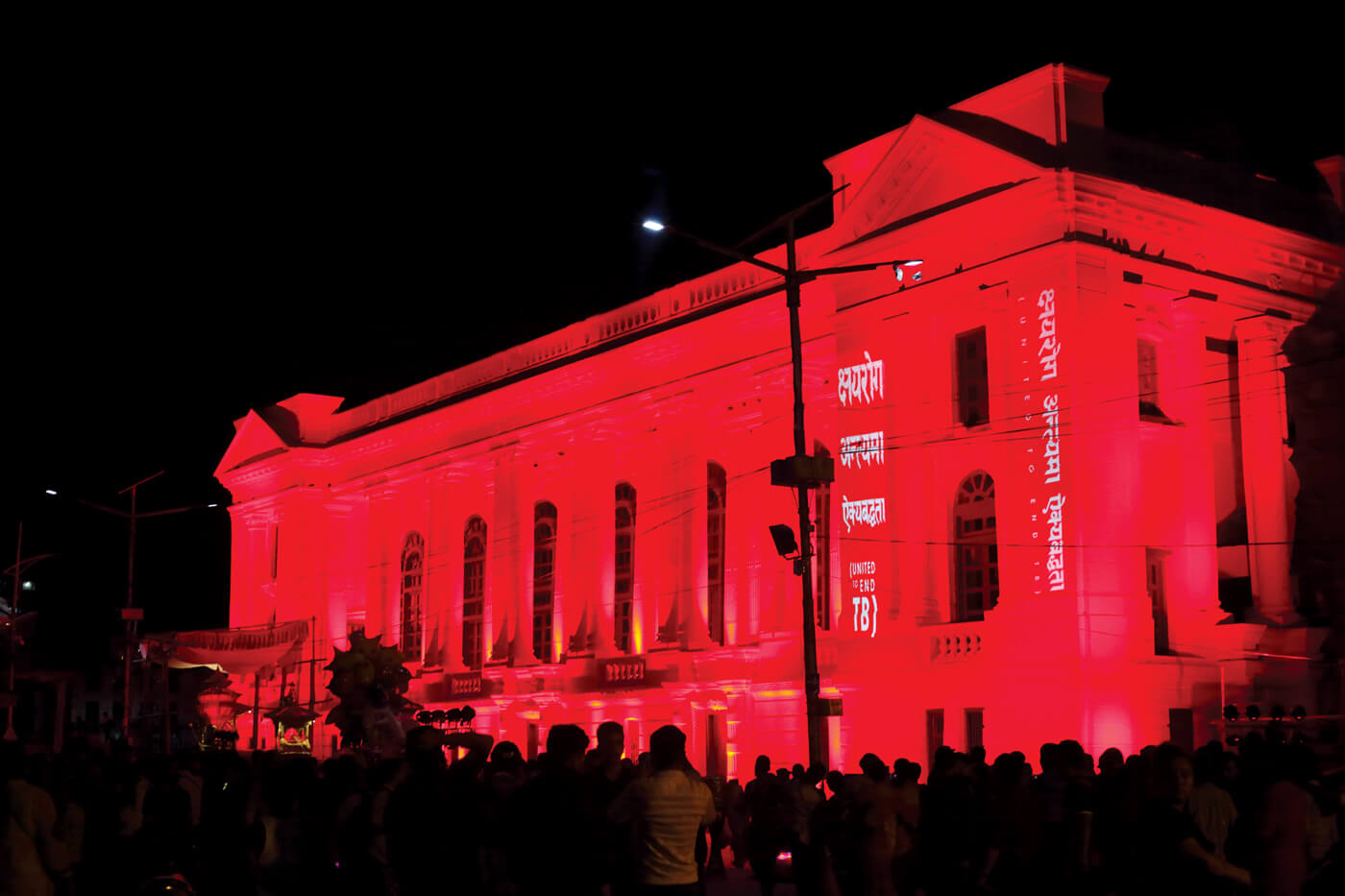
Neglect by Nepal's rulers of the poor, the disenfranchised and marginalised has been a given throughout our history. Royal or revolutionary, democrats or demagogues, upliftment of the underserved has always been a mere slogan. This chronic inattention has determined who gets to live, and who dies.
Till about a decade ago, Nepal’s main problem was with infectious diseases like diarrohea, pneumonia, typhoid, and insect-borne ailments. The first line of defence against communicable diseases is communication: and the government’s campaign for public health awareness through a network of female health volunteers yielded dramatic results.
Even though the emphasis has now shifted to non-communicable diseases, there is still one infectious disease that has fallen below the radar: tuberculosis. It is obvious why, TB afflicts the poorest in the remotest parts of the country.
Read also:
TB, Sonia Awale
This is true not just in Nepal but worldwide. Despite advances in medicine, TB is still the biggest infectious killer – 35 million people died of it in the past 18 years. If nothing is done, another 30 million will die of TB from now till 2030.
Tuberculosis is caused by a bacterium transmitted through coughing, and if left untreated, affects the lungs and leads to a slow and painful death. The fact that it is still killing millions every year despite the availability of antibiotics is an indictment of the global and national inequity in health care.
Most Nepalis are carriers of the bacillus that causes TB, but the disease is kept in check by our immune system. Chandra Shumsher had TB, and many of Nepal’s kings died of it. The bacteria proliferates when a person becomes weaker due to malnutrition, age, or other diseases like HIV. Last year, 45,000 new cases were detected in Nepal, and nearly 7,000 of them died.
Although Nepal is a role model in the community-based DOTS process that requires medical supervision of the administration of antibiotic treatment to patients, researchers say a more active case detection method is now required. This calls for an increase in Nepal’s annual TB control budget of $18million of which about half is met through donor contribution.
Last week in New York, the United Nations held its first ever high-level meeting on TB during which leaders adopted a historic UN Political Declaration on TB timed for World TB Day on 26 September. This largest ever gathering of world leaders hoped to do for TB what had earlier been achieved with such meetings for diseases like HIV and Ebola.
The declaration had a checklist that included reaching 40 million people by 2022 with diagnosis and treatment, and another 80 million with preventive therapy. It also committed to double the current $13billion to fund the World Health Orgnaisation (WHO) End-TB Strategy and the Stop TB Partnership’s Global Plan to End TB.
WHO developed the End-TB by 2035 strategy in 2014 but it was clear more investment and political commitment was needed. Globally and within countries, it is the poor who suffer, which means the disease is not a priority for pharmaceutical companies, the private health care industry and most governments. Tuberculosis and poverty go hand-in-hand: TB fuels poverty, and poverty in turn fuels TB.