
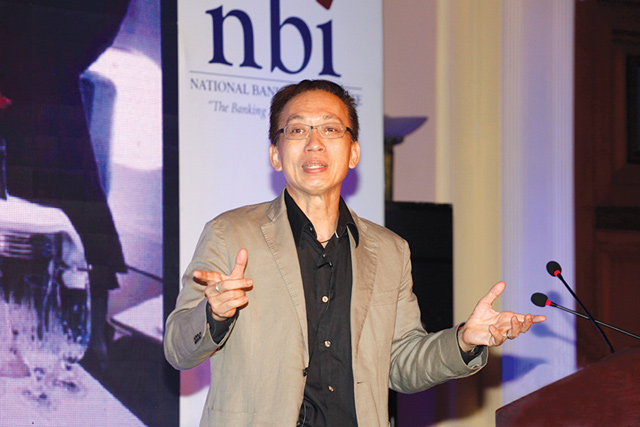
In 1998, Singaporean David Lim led his country’s first successful expedition to climb Mount Everest. Since 1999, undeterred by the effects of a rare nerve disorder, he has gone to lead more than 15 mountaineering expeditions around the world. Ashutosh Tiwari caught up with the sought-after mountaineer and motivational speaker at a leadership program hosted by the National Banking Institute (NBI) in Kathmandu.
How is leading a climbing expedition similar to leading teams in today’s corporate environment?
It’s similar in that you are coping with fast changing external environments while leading a team, often of disparate personalities, into a challenging situation. Over a longer time frame, leading an expedition requires several skills such as creating a motivational environment to thrive in, seeking debate and making decisions together, winning buy-ins for some of the unpopular decisions, and ultimately choosing the right people to spearhead the final summit attempt.
But climbers are also known to look out only for their own interests, and are not known to care whether others die or succeed. How does one reconcile this image of a climber with what climbing metaphors signal?
Some of the best mountaineers are indeed selfish, insofar as being primarily motivated to reach their own goals. You can see this manifest itself in solo expeditions, or sometimes in commercially driven expeditions where there is a far lower history of bonding among the team members. The paid guide is there primarily to fulfill each of the clients’ personal desires.
However, in other contexts where a peer group comes together with a set of shared values and agreed upon priorities and goals, you can have wonderfully enriching experiences which enable people to share the tribulations, and to support one another over the period of the expedition. Teamwork ultimately is an individual skill, where people who share similar goals work out their mutual expectations, and contribute towards making the work a good experience for everyone.
In your presentation, you mentioned that micro-behaviours tell us a lot about people. How can executives make use of this idea?
Instead of deciding or judging people on the basis of highly subjective criteria such as personalities, perceived promises or rumours, executives should borrow concepts from the coaching world – where we focus on transforming specific, observable behaviours (SOBs) when working with people to produce specific outcomes. By focusing on people’s SOBs, we move the emphasis towards actual behaviours that support a goal. This can defuse confrontational situations, especially when a party has agreed to do a task but their SOBs say otherwise.