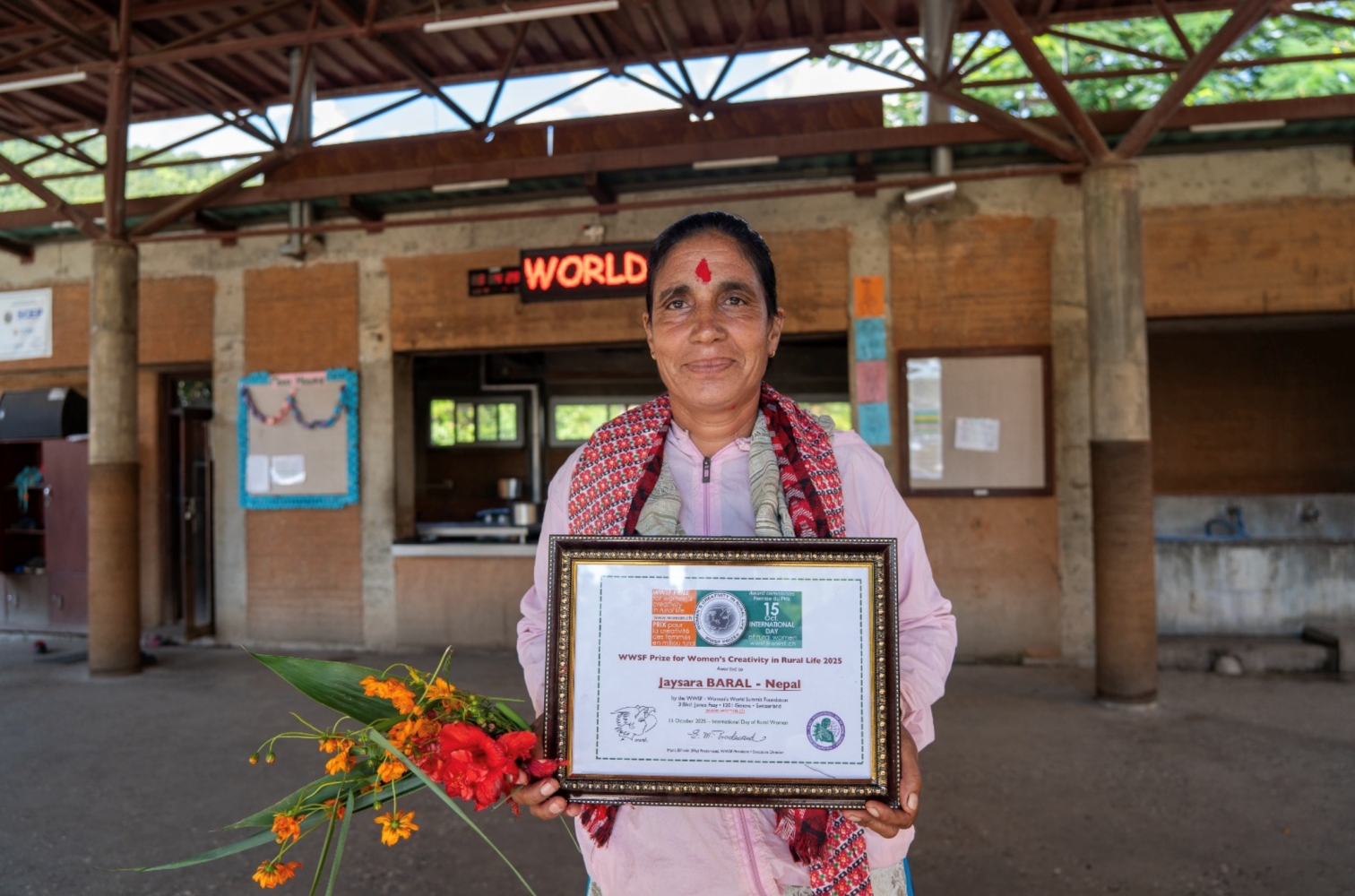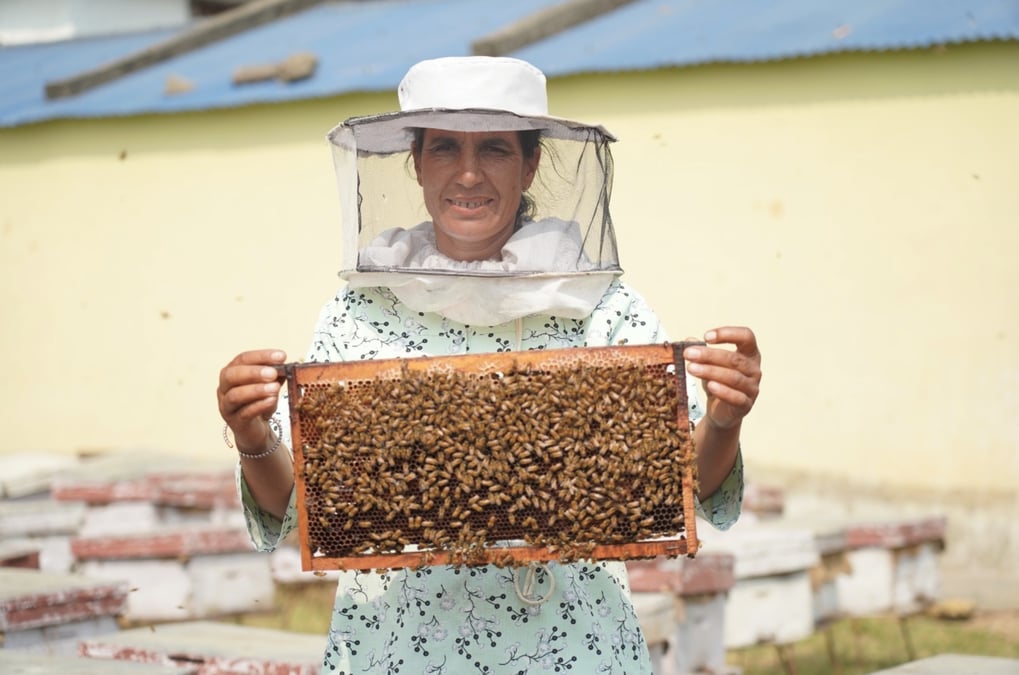
As a young girl, Jaysara Baral remembers trying to gently catch bumblebees buzzing around flowers at springtime, curious to know what they would feel like in the palm of her hand. Decades later, clad in her beekeeper overalls and hood, she looks out towards the rows upon rows of beehives stretched across her land, ready to start another day of work.
Baral is one of several women beekeepers in Surkhet, and she is among the local entrepreneurs leading the charge in her district and the province. She has tended the land ever since she was young, and began her career in agriculture as a mushroom farmer before she discovered beekeeping seven years ago.
Soon after, she participated in a short training at the Karnali Province Beekeepers’ Federation, and officially began her business with five hives. Seven years later, she has 100 hives, 42 of which she added in the last year. She does most of the work herself.
“Beekeeping is a more involved profession than other jobs,” she explains. “You need to know bee behavior intimately and be trained in handling them.”
When Nepali Times spoke with her last week, Baral had just returned to Surkhet after transporting all of her hives to Bardia, where her bees will graze on the nectar-rich mustard fields this time of year. While her bees are away, Baral is busy packing the latest round of harvested honey to send it off to waiting customers.
As her beehives increased, Baral went from selling jars of honey to her neighbours to supplying hundreds of kg at a time to customers in Pokhara, Kathmandu, and as far as Jhapa. She earns a profit of up to Rs600,000 every year despite challenges like market access.
“The personal and professional struggles of women are universal. We are just as capable as anyone to build and sustain businesses, or achieve whatever they aspire to,” she says.
Last year, her bees produced 2,500kg of honey. This year, with more hives, she expects that she will have a supply of up to 3,000kg.