

From the Nepali Press
Milijuli Nepali Episode 64, BBC Media Action, July 16
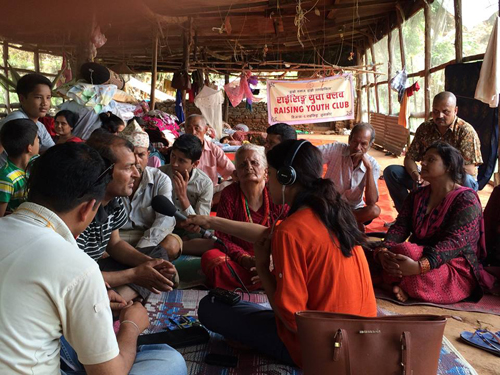 All pics: BBC Nepali
People in the earthquake zone are busy these days with rice planting, household work and rebuilding homes. That doesn’t mean one should careless about their health though. The people who suffered injuries during the earthquake are now gradually healing and getting back to their lives. Presenter Sabita Biswokarma and psychologist Jivan Kumari Bhattarai talk with Hari Maya Maharjan of Harisiddhi, Lalitpur. Maharjan was buried along with her other family members in the ruins of her house for more than four hours before being rescued. She stayed in hospital for a few days for treatment and is now living in a temporary tent set up near her maternal home. Maharjan’s sprained hand still hasn’t healed, but she hopes to start working as it recovers.
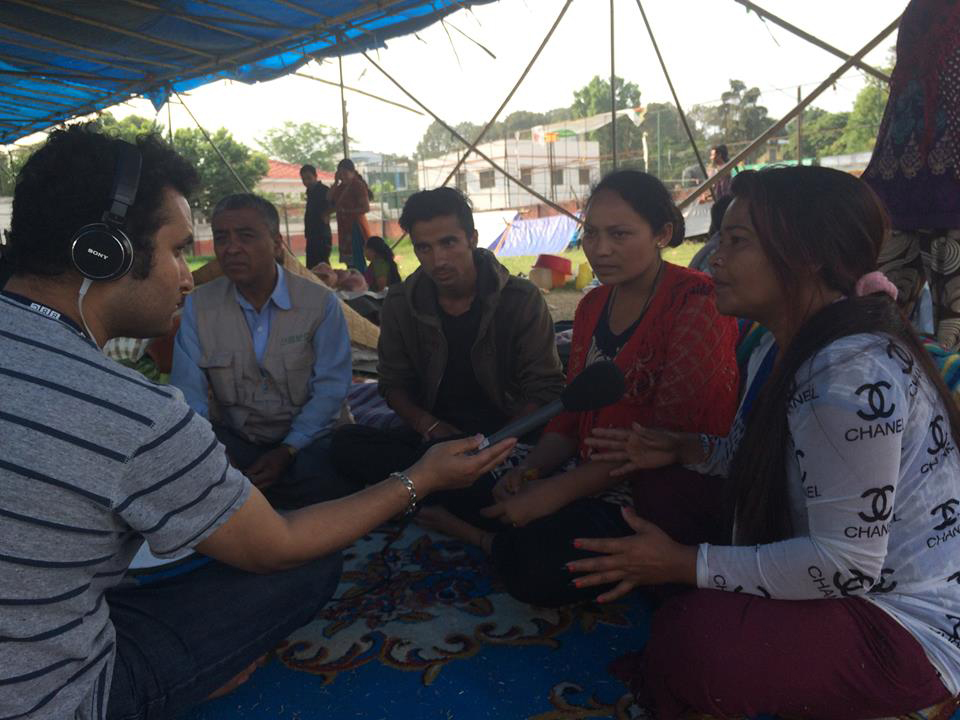
BBC Nepali: You were buried for four hours in the rubble after the earthquake and then rescued. Your son and a grandson were also rescued. How are you now?
Maharjan: My hand hurt a lot, bit is a lot better now. I want to get back to work, but what to do, I can’t. I have to work to feed myself. These days I don’t have any appetite, I can’t sleep either. I keep worrying about how to take care of my family, how we will survive this, raise children and where to get money to pay their school fees at the end of the month. I keep fretting about such things. I want to work. Otherwise how will we manage at home? We have to look after the household, we have to work.
What have you decided to do?
After harvesting the paddy if there is enough straw, I’ll make straw slippers to sell. I can make 5-6 pairs per day and sometimes even as many as 10 pairs. If my hands heal, I will find other work and if there isn’t enough straw to make slippers. If you stay and do nothing your mind will be only focus on pain.
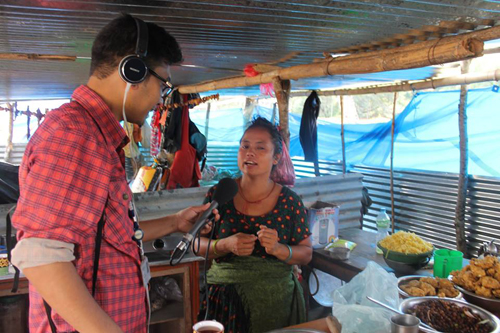
We now turn to psychologist Jivan Kumari Bhattarai for advice in the case of Hari Maya’s Maharjan. She has tried to change and adjusted quickly. Some people need a little more time to adjust.
What kind of a role should family members, neighbours and specialists like you play so that it will be easier to the survivors?
Jivan Kumari Bhattarai: We should see what can be done, what specific things are necessary in a particular locality, or the kind of skills that they would need. It could even be skills they had learnt in the past, and engage them in farm work. It doesn’t have to be paddy planting only, we could teach them to farm in different ways. We have to communicate, talk to them about their economic conditions what is required to be done and how to do it. If we talk with them and engage them to come up with solutions, they’ll adjust sooner.