

While the CA-2 election was drawing near last month, it was being lampooned widely as a waste of time and resources. Many, including in this newspaper’s op-ed pages, said it was going to be ‘the same parties, the same politicians, and the same agenda’.
It was widely felt that in no country with a respectable democratic tradition would a political party field the same disgraced politicians for re-election all over again. However, to the pleasant surprise of all, the ensuing result of CA-2 election has shown that the thought process of the voters was completely different.
Altering the combination of the parties in power sent out a very powerful and unmistakable message to the politicians that the people expect them to behave in a genuinely accountable manner and fully respect their aspiration for democracy and development.
The huge turnout itself was a message to the Baidya Maoists that terrorism and tantrums don’t work anymore. Wide media coverage of fatal petrol bomb attacks on buses and booby trap bombs in the city centre that maimed children did not deter the people from coming out to vote. Whoever said Nepalis are apathetic couldn’t be more wrong: they were willing to risk their lives to cast their ballots.
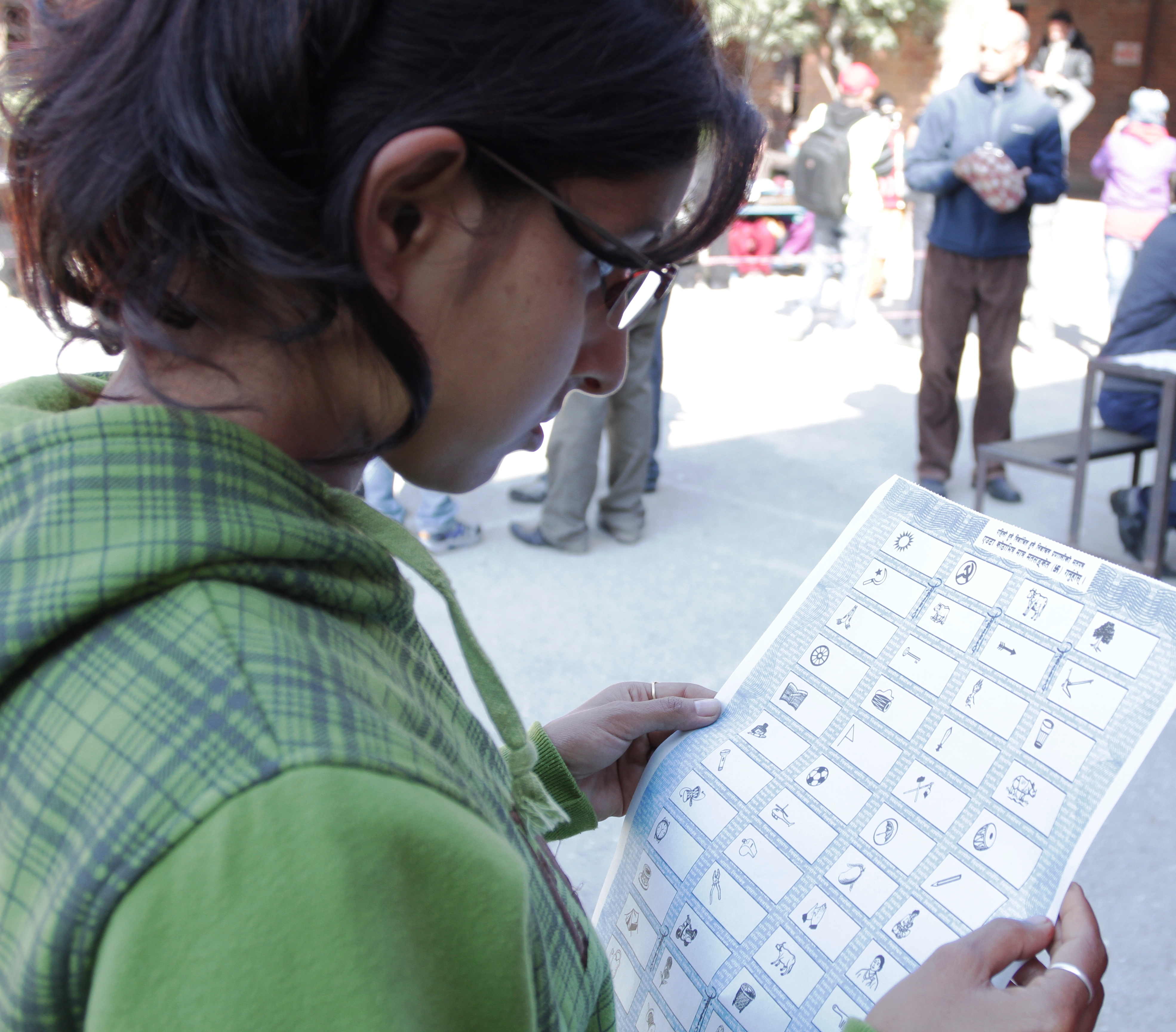 (PIC: Devaki Bist)
However, it is still inexplicable why voters should have gone back to the NC and UML, the two parties who are singularly responsible for the lost decade of the 1990s, which gave the Maoists the pretext to inflict a cruel and wasteful war on the people as a shortcut to power. The victory of the NC and UML was by default. They didn’t win because they were liked, but because the people hated the Maoists more.
Since the people had decided to vote against the Maoist and diehard Madhesi agenda for ethnicity and federalism, they went to the parties they have known and the individuals whom they trusted. For instance, the newly elected and widely publicised NC candidate from Kathmandu-10, Rajan KC is a native of Chobhar and has been a well-respected social worker in the area. When people rejected Pushpa Kamal Dahal, Rajan KC was a good fallback.
Similar has been the story in Kathmandu-5. When the UML's general secretary, Shankar Pokhrel, addressed his voters during the closing days of the campaign, he appealed to them as being the most accessible politician for the local people in their good days and bad and reminded them that he even unfailingly made it a point to grace their marriage celebrations. The NC and UML did not win on ideology, they just reaped a harvest of votes from those who were displaced by the Maoists and Madhesis.
Kamal Thapa's RPP-N, on the other hand, is a one-leader party. While it did not have its own local good guys to attract the displaced votes from the Maoists and Madhesis, as a nascent party it did very well in the proportional segment of the balloting. The party itself has been going against the current by not just standing up against federalisation of the country, but also rooted for a restoration of a constitutional Hind monarchy. More than half-a-million votes for a Hindu monarchy is not something to be sniffed at.
The distinctiveness of the CA-2 election has been that discerning voters have taught the parties a lesson or two in democratic governance. In specific terms, they totally repudiated the Maoist and Madhesi politicians' rather opportunistic stance on ethno-centric and divisive federalisation of the country and their reckless proclivity to mismanagement of state affairs including the dilution of national sovereignty.
They have spoken in no uncertain terms that the people are for peace, order, stability, ethnic harmony, and good governance in the country that assures inalienable opportunity for growth for all people irrespective of their caste, ethnic, gender status, and geographical situation. Most importantly, if the NC and UML in particular fail to deliver in their promise, come next election, they could be facing the same debacle of the Maoists and Madhesi parties.
Bihari K Shrestha