

House of Music leads the celebration of Black History Month in Nepal
Michael Nishimura
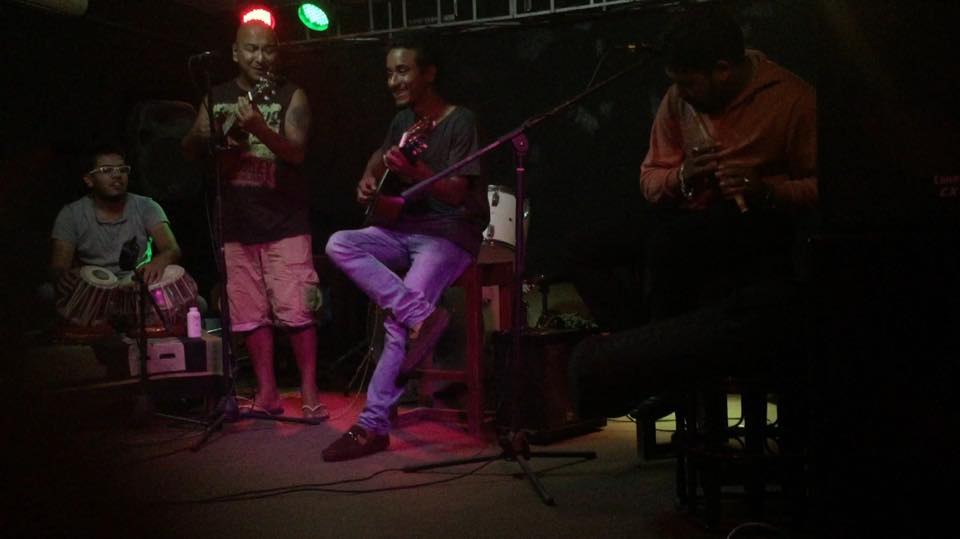 Pic: Santosh Ghimire
Every February since 2011, jazz, blues and funk have been bringing people in Kathmandu together to commemorate Black History Month, which is annually observed in the United States. Despite the fact that few African Americans and people of African origin live in Nepal, House of Music in Thamel has been leading the celebration of Black History Month here for the last five years.
“Before we first launched the event, I didn’t even know about Black History Month,” shares House of Music owner, Sanjay Shrestha. “But now a lot of people know about it since we have it every February.”
Shrestha, who is also a guitarist for the acclaimed rock band 1974AD, came to know about the month-long observation through his business partner, Nirjan Rai, who had studied and worked in the US for 12 years.
"BHM celebrated the contributions of African Americans to the making of the United States with quite a lot of enthusiasm," says Rai, who had recently launched House of Music to highlight local music. "I thought it would be a perfect way to pay tribute to all the black musicians as well as expose Nepalis to their contributions."
The two originally launched the event in collaboration with the US Embassy in Nepal, which provided supported for its first three years.
In the US, Black History Month highlights the accomplishments and resilience of black Americans, harkening back to the emancipation of slavery and the Civil Rights Movement. President Barack Obama shared in a statement this month that “we recognize these champions of justice and the sacrifices they made to bring us to this point, we honor the contributions of African Americans since our country's beginning.”
As music is an essential part of black history, the concert events here are paying homage to uniquely African American styles like blues, jazz and funk. Blues, rooted in the Deep South of the US, mixes spirituals and hymns with raw human emotion and originates from the experiences of slaves on plantations. Then came the birth of jazz in New Orleans, which featured a syncopated improvisational style that sought to break down normative structures in both music and society.
Among fans of these traditions that have remarkably created art out of years of oppression and struggle, there remain debates about how to acknowledge where the music came from. Though this topic is often stymied in the US, some in Kathmandu are hoping to widen the discussion beyond the stage.
“A lot of the young musicians play jazz and blues and are into hip hop, but not everyone is aware of the history,” says Shrestha. “The idea is to celebrate all the greats, to inspire more musicians and especially to engage the audience so they’re more aware of the origins of the music.”
Playing with three different bands this month, trumpeter Jacko Wacko (as he is known in music circles), also believes that jazz is more than the notes being played.
“People should enjoy the music but they should also know the history and what the originators were trying to do with funk and jazz,” says the band member of Mad Jazz and What the Funk. “They were working with their brain; the greats knew real music.”
Though the music is inherently political and is complicated by the ways in which race works in the United States, it is difficult to demand that concertgoers be aware of the history. To certain people it might be a non-issue, but because music developed by black artists has historically been appropriated by famous white musicians, connecting the music’s origins to exploitation is a way to start a conversation.
"In many ways, music (and art generally) best carries the history of its people and African American history is vibrantly portrayed in its music," says Rai. "I hope people have been able to go back with a little bit of more appreciation of the history of the music they have always been listening to do and that our musicians can be inspired to similarly ink our history in their music."
The performers at the event are also hopeful that Black History Month in Nepal is doing more than just providing people with a good time. “It can do a lot; it can make changes on a lot of issues,” says Jacko, who is planning to go to Mumbai with Mad Jazz in August, wanting to travel the world to expose people to jazz.