

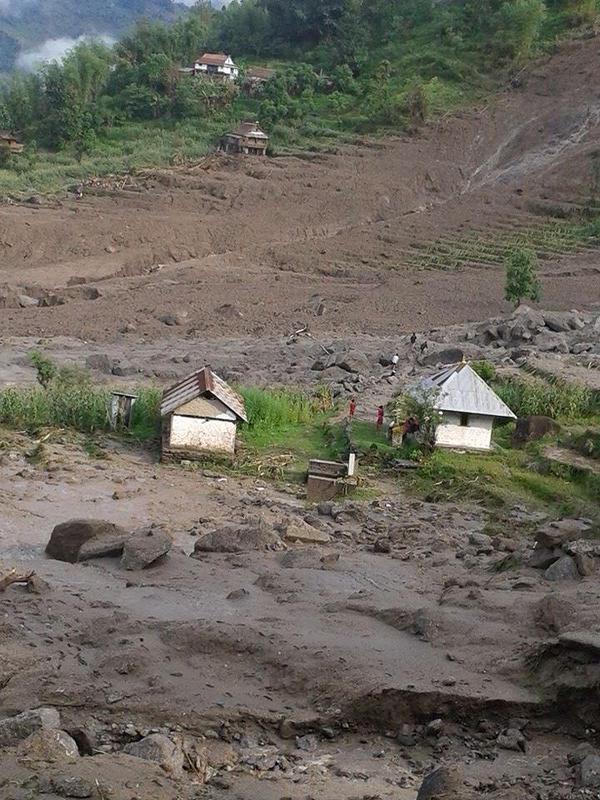
 Photo: @aksharkaka
More than 56 people are known to have died, dozens are still missing in the massive mudslide caused by a pre-monsoon squall that dumped 130mm of rain in a few hours in the village of Libang. That is the equivalent of a week of rain in one night.
Experts say that the landslides could get worse as the monsoons start in earnest in a week's time, and they could be bigger closer to the epicentres in Gorkha, Dolakha and the 14 districts worse affected by the earthquakes.
Researchers have used satellite data to map at least 3,000 significant slope failures in the 14 districts, and warn that may of these could get bigger and wider when the rains arrive. Many of the slides already threaten settlements, highways and hydro powerplants along the Tama Kosi, Bhote Kosi and Trisuli Rivers.
In Dolakha alone, 14 VDCs need to be immediately relocated because of the landslide damage during the quakes and the imminent danger of further rockfalls during the monsoon.
Although the earthquake seems to be one of the factors in Wednesday's landslide in Taplejung, it is probably related more to erratic monsoons and extreme weather events that scientists believe are on the rise because of climate change.
Eastern Nepal gets up to 4,000 mm of rain a year and 90 per cent of that falls between June and August.
Read also:
Quake from space Ayesha Shakya