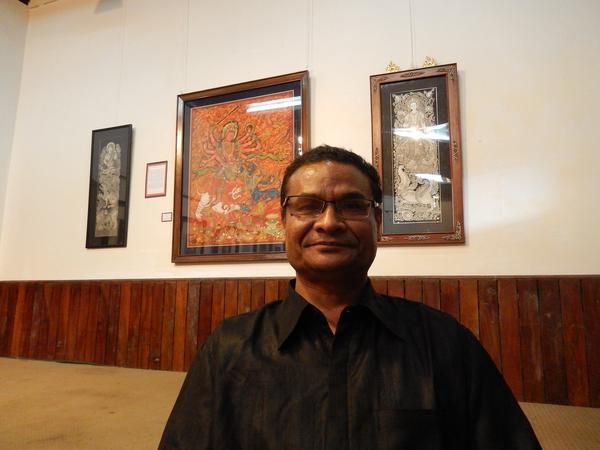
 Lok Chitrakar
Nepal’s paubha master takes Kathmandu’s traditional art to Japan
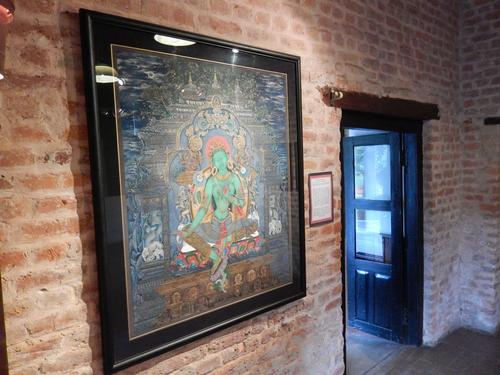
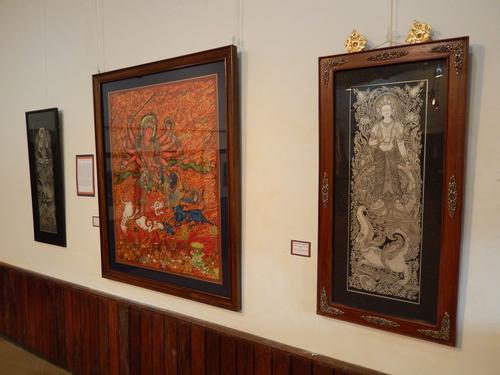
Lok Chitrakar, 54, is Nepal’s most famous painter of paubha, the devotional art form that went from Nepal to Tibet to become the thangka. Now, he is taking 32 of his paintings even further to Japan where it will be part of a larger collection on permanent display at a museum.
As an autodidact, Chitrakar came from a family of artists and started using brushes at 12. Today, his work is renowned worldwide with some of his paintings featuring in permanent exhibitions from Pakistan to Finland.
Chitrakar has been working with the Kanzouin Museum in Tokyo for the past 12 years which already has 30 of his paintings, and soon will be adding 32 more to complete a series that will ultimately have 108 paintings from Kathmandu.
Lok Chitrakar was working on a mandala for a Japanese client in 2000, and had to learn Japanese techniques to complete it. For this he got in touch with a Japanese friend who showed his work to people in the art scene there. There was no looking back, the Japanese were hooked.
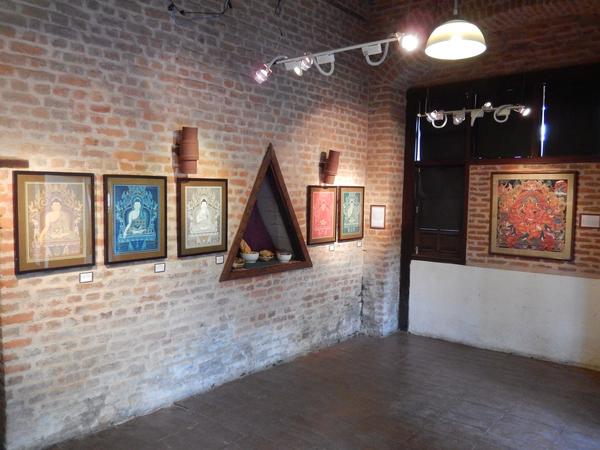
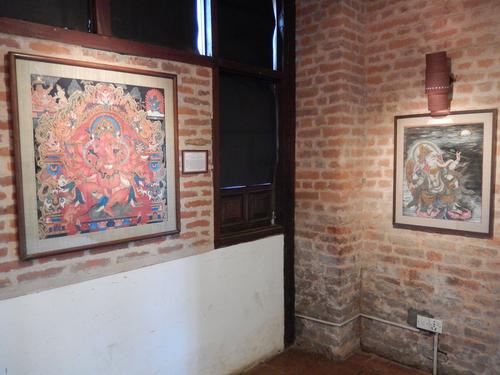 Ganesh
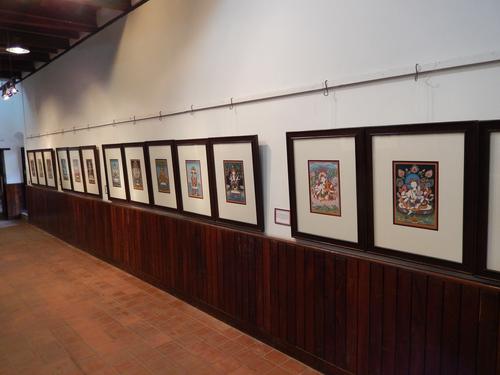
Paubhas were first taken from Kathmandu Valley to Tibet in the 8th century when Bhrikuti was married to king Sron Tsan Gampo. She took paubha artists with her to Tibet, and this style later evolved into the thangka, which is distinguishable by newer Chinese styles. Thangkas depict Buddhist subjects or even deities from the pre-Buddhist Bon faith, while paubhas contain Hindu and Buddhist deities, reflecting the ancient symbiosis of Hinduism and Buddhism in Kathmandu Valley.
Some of the Paubhas that will go to the Kanzouin Museum in Tokyo were on a brief farewell display at Yala Maya Kendra from 26-29 September. “I like to show my work to the Nepali public before sending them abroad,” Chitrakar says of the paintings that will be shipped out later this month.