

From the Nepali Press
Chandra Shekhar Adhikary and Jagdishwar Pandey in Kantipur, 22 November
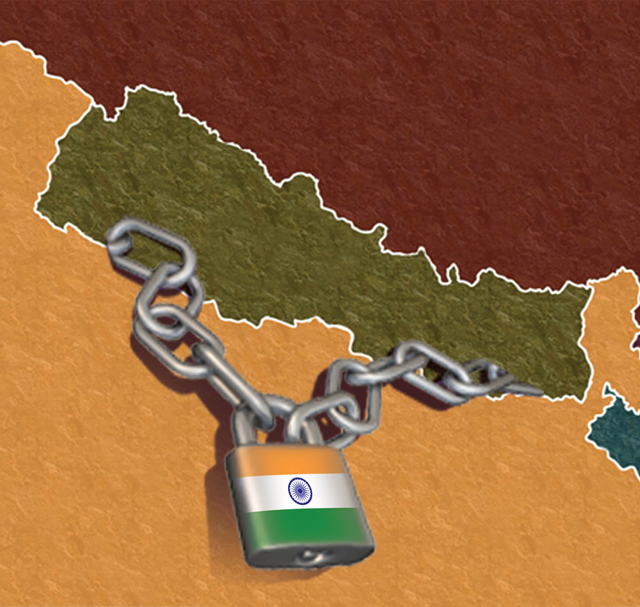 Illustration: Bhanu Bhattarai
Diplomatic missions in Kathmandu seem to be unaffected by the ongoing fuel crisis in Nepal.
The international community which has always been vocal about political developments in the country has surprisingly stayed silent on the Indian blockade.
A few countries have released individual statements expressing their concern over the humanitarian crisis due to fuel crisis but the missions here have yet to condemn India’s actions.
The government has made special provisions to supply fuel to the diplomatic missions. Each day the Nepal Oil Corporation receives more than a dozen recommendation letters requesting supply of fuel to various embassies.
According to an employee at Ministry of Foreign Affairs, had the government not made special provisions to provide fuel to the diplomatic missions, then they would have been forced to speak up against the blockade.
The United Nations mission in Nepal has also kept quiet on the issue.
The SAARC Secretariat is based in Kathmandu and is currently headed by Nepal. The Ambassador of Pakistan who is the dean of the ambassadors in Nepal is from a member country and so is India, who has imposed the unofficial blockade. Even then the Secretariat has remained silent.
According to experts on diplomatic affairs, Nepal has failed to open a discussion on the subject through the Secretariat. The government has shown no concern to make the diplomatic missions understand that the ongoing internal conflict and Indian blockade are two different things.
“It is up to Nepal to reach out to them, but we have not been able to do so,” says Bhesh Bahadur Thapa, former Minister of Foreign Affairs. “It is important the government pays attention to this,” he adds.