
Interview with the head of UNDP, Helen Clark
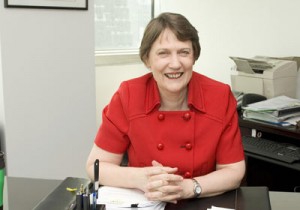 Helen Clark, the Administrator of the United Nations Development Programme (UNDP) and Chair of the UN Development Group will visit Nepal this week. Clark, who is a former prime minister of New Zealand, will be the first global head of UNDP to visit Nepal since 1986. Accompanying Clark will be Crown Prince Haakon of Norway, who is a UNDP Goodwill Ambassador. On the eve of her visit, Clark spoke to Nepali Times about the country’s prospects in meeting the targets for the Millennium Development Goals.
Nepali Times: With only two years to go for the MDG target date, how would you rate the chances of developing countries to meet the goals?
Helen Clark: The target date is 2015, so we still have four years. Over the past decade, notable progress has been made on each individual MDG, including in many least developed countries and under very challenging circumstances. Some 1.6 billion people have gained access to improved drinking water since 1990; under-five child mortality decreased from 12.4 million deaths annually in 1990 to 8.1 million in 2009, and enrollment in primary education in developing countries had exceeded 88 per cent by 2007. This kind of success shows that the MDGs can be achieved.
Business as usual, however, won’t get the world all the way to achieve the MDG targets. The right mix of policies, targeted technical assistance, institutional capacity, adequate funding, and strong political commitment are necessary to accelerate progress. UNDP supports country-led development based on inclusive growth strategies which benefit the poorest and most vulnerable. We advocate for the empowerment of women, investment in basic services such as education and health, scaled up coverage of social protection schemes, and expanded energy access. With these types of action, MDG achievement can be accelerated over the next four years.
How does Nepal's performance compare with the others?
Despite political and economic challenges, Nepal has made MDG progress over the past decade. According to Nepal’s 2010 MDG progress report, Nepal is on track to achieve most targets, with a few exceptions, if the current trends in progress continue. Achievements in reducing child mortality and improving maternal health are particularly encouraging. Poverty has gone down significantly, and Nepal is close to reaching the 2015 MDG poverty target. Nepal has already achieved gender parity in primary school enrollments, but the gender gap remains high at secondary and tertiary education levels. As a former political leader in my own country, I am particularly happy to note that one-third of the seats in the Constituent Assembly are now held by women.
Nepal has had the foresight to integrate the MDGs into its national
development strategies, as reflected in its Three Year Plan, and I have confidence that Nepal will continue its MDG progress.
A lot of the problems in the developing world need long-term structural and governance solutions, but the needs are so immediate. Does that frustrate you a bit?
Development is a long term process. UNDP works for decades in countries to support them building the capacity to lift human development. Some face greater challenges than others, but all can succeed. It is important to align meeting short term needs with the longer term direction established, in other words, each step taken should be in support of the goals to be achieved over time.