
Devendra Bhattarai in Kantipur Koseli, 15 July
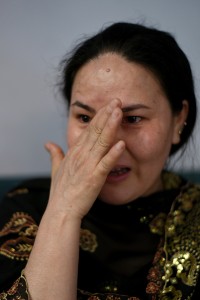 Pic: Angad Dhakal
Dolma Sherpa wipes tears from her lashes and recounts how she landed up in a Kuwait jail for 10 years. A lot has changed in that time. Like, she cannot speak in her Sherpa mother tongue very well anymore, or that the Nepali she learnt now has been Hindi-fied. She has picked up Arabic instead, and ends her sentences with “Insallah.”
Dolma was born in Chumchet of northern Gorkha, seven days walk from the nearest road. Remoteness and poverty prevented her from learning to read and write. At 15 she moved to Kathmandu in search of work and met Ang Tenzi Sherpa of Sindhupalchok, and got married. Her in-laws convinced her to go to the Gulf to work, so she left her two-year-old baby with relatives with a dream to earn enough to send him to a proper school. She was supposed to go to Oman, but recruiters took her across the border to Delhi, and then to Kuwait. The fatigue and trauma of ten years is evident in her voice: “All I remember is going far away in a big plane.”
She did not know the language, had no skills, and she had no experience of an alien land. She first worked night-and-day for a Kuwaiti family, but the employer returned her to the agency after five months. She was then placed in with another family where there was a Filipina maid named Mayleen who had also left her baby behind. It helped that Mayleen spoke Arabic, and she trained Dolma in the housework and practiced Arabic. “We became close, we even shared a comb,” she recalls.
One night while her employers were away on holiday, Mayleen and Dolma were going up to their room when someone put a gloved hand on her mouth, and three others dragged Mayleen to her room. Dolma remembers struggling, but the man was too strong. Mayleen was shouting “Help, help” from her room for about half-an-hour. “Then they pushed me to the other room, and forced me to touch Mayleen’s face and neck, by then she was quiet and her eyes were staring out,” she remembers, sobbing. All the men were wearing gloves and were pretending to be police. They tied her hands and pushed her into the boot of their car and drove off, and threw her out by the side of a road near a canal.
Shouting for help, she walked for a long time before finding herself among people who all just stared at her. Among them was a Nepali woman who spoke to her and told her employer in Urdu what had happened. He was a Pakistani named Sagir Ahmed and took Dolma to a nearby police station the next morning. Before leaving, he gave her his card and told her to contact him if she needed any help.