
Cynthia Choo
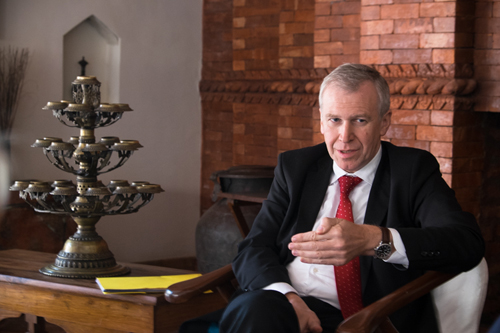 Pic: Kenji Kwok
Political power games need to take a back seat when debating the constitution because one is governed by personal short-term ambition, and the other is of long-term national importance.
Former Belgian Prime Minister Yves Leterme has first-hand experience of this because he had to resign in 2008 after being unable to pass constitutional reforms for great autonomy of Flemish-speaking areas in his country.
“Side agendas like scoring political points, enhancing electoral value and finding face-saving strategies hamper the rational approach needed in a process for constitutional change,” said Leterme, who was in Kathmandu this week as the new head of the Stockholm-based International IDEA.
Although no countries are alike, Leterme drew parallels between the constitution drafting in Belgium and Nepal. For instance, filibustering is common in both legislatures – while in Nepal CA members destroyed furniture last week, Leterme himself once gave a 7-hour speech as a delaying tactic in parliament.
Belgium also had a polarised polity that resulted in a deadlock. “Many of the words and concepts on federalism I heard in Nepal during my visit like constituencies, districts, autonomy, transfer of competencies were the same as we used in Belgium,” he added.
However, with 103 ethnic groups in Nepal and only three in Belgium, Leterme conceded that “the sheer number of religions, languages and ethnic groups in Nepal should not be underestimated, and are important challenges to consider”.
With the politics of identity being the single most contentious issue that Nepal is facing right now, Leterme suggested that lasting inclusive, consensus-based solutions would have to be sought.
Citing lessons from the Belgium experience, he said everything hinges on the art of negotiation. “While negotiating you have to be prepared with lots of issues so that when you strike a deal on, say, a territorial constituency the one that makes a concession has another issue on which he can win.”