
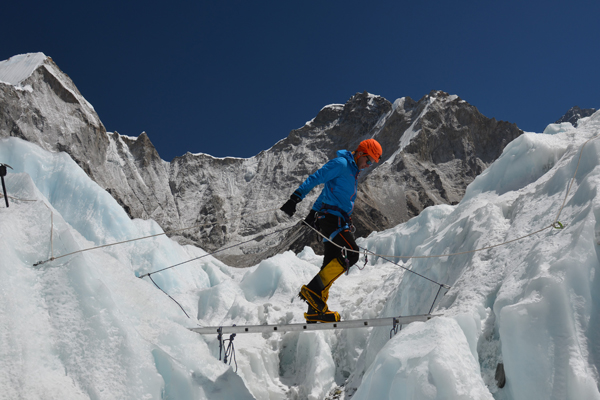
 Negotiating crevasses on the Khumbu Icefall. All pics: Jaco Ottink
Christopher Kelly
After a record season on Mt Everest that saw more than 400 people on the summit of the world’s highest mountain, climbers have called on the Nepal government to make it safer by reducing congestion on the route to the top and checking the competence of climbers.
Six mountaineers (three from India, and one Australian, Dutch and Nepali) died on the mountain with at least some of the deaths attributed to delays in climbing the mountain from the southern side due to overcrowding on the narrow southeast ridge.
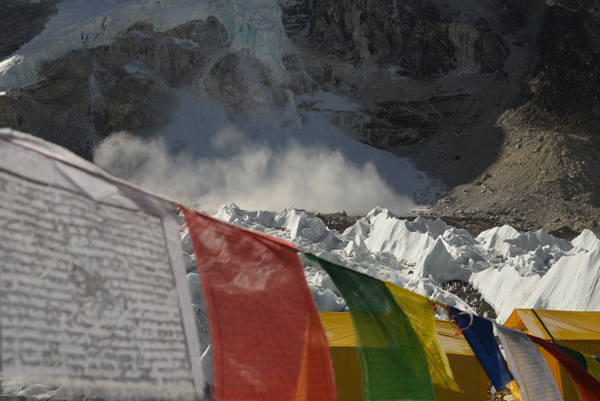 An avalanche seen from Base Camp of Mt Everest falling on the Khumbu Ice Fall last month.
“There should be someone from the Nepal government at Base Camp that will take care of you, or check if someone without climbing experience but lots of money has a permit,” said Australian climber Jaco Ottink, originally from Netherlands, who got to the summit on 13 May.
Ottink also criticised some expedition agencies that fail to follow the rules and put climbers and guides at risk. “There are a couple of organisations that should not be there because they don't follow the rules and send people up with 35-40 kg on their backs,” Ottink added, “if there is an avalanche, try to run with 40 kg backpack with a rope around your hips, it’s impossible.”
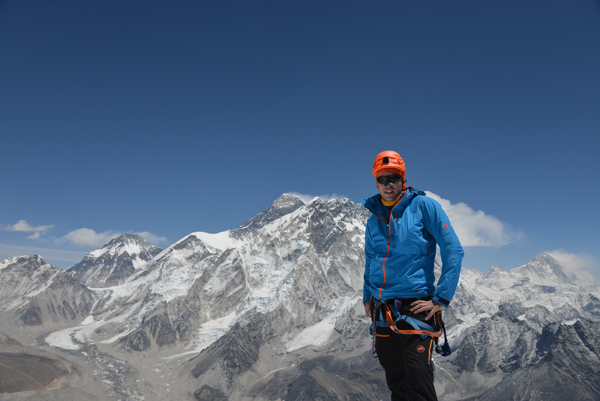 Jaco Ottink last month before his Mt Everest climb
As a rule, porters and guides are not supposed to climb with more than 17 kg. In 2014, 16 Nepali guides died in an avalanche while climbing up the Khumbu Icefall, the first obstacle all climbers must face when attempting to summit Mt Everest.
The overloading of backpacks that the guides and porters had up to 30kg on their backs, which made it difficult for them to escape the tumbling ice. This year, helicopters ferried mountaineering gear up to the top of the icefall, which meant that nearly 90 porters did not have to negotiate the dangerous icefall.
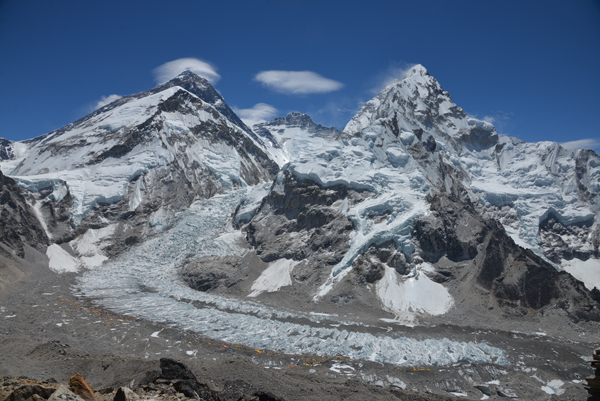 Mt Everest, Lhotse and Nuptse with the Khumbu Icefall and Glacier below.
The Nepali climber who died this year fell to his death because he was relying on ropes that were four years old from a previous expedition to Mt Lhotse.
“The mountain was not climbed for four years, so the ropes on that mountain were four years old,” Ottink said, “the Sherpa fell 3km down, he is dead because safety rules were not applied.”
Listen to Jaco Ottink