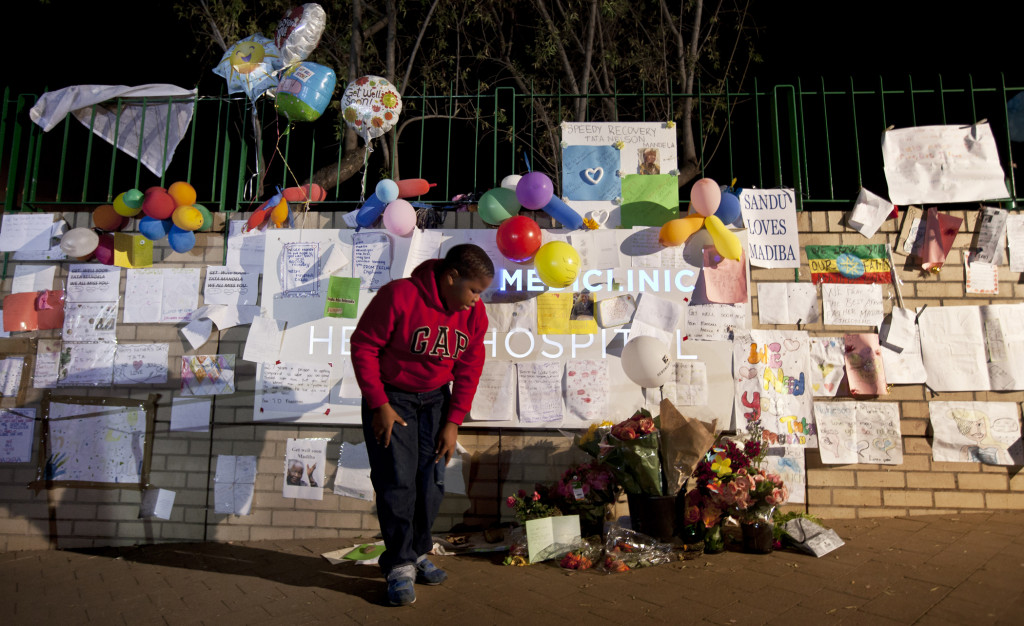
The death of Nelson Mandela on 5 December at the age of 95 has thrown the whole world into mourning like no other national leader has before. As an icon of the universal struggle against racism and discrimination, Mandela was loved and respected in Nepal as well, although he never visited the country. The guerrilla-turned-freedom fighter who believed in non-violent political struggle struck a chord among many Nepalis who also yearned for peace during the decade-long war 1996-2006.
South Africa’s post-apartheid struggle and its peace and reconciliation efforts have been used as a model for Nepal’s own post-conflict normalisation process, with many Nepali leaders visiting South Africa after 2006 to learn from its experience.
Lately, Nepal has sought to emulate South Africa’s model of public hearings without trial for perpetrators of human rights violations during the apartheid era. Both sides of the Nepal conflict who are now in power in Kathmandu say that raking up the past will endanger the peace process. The ordinance for the proposed Truth and Reconciliation Commission that was ratified by President Ram Baran Yadav essentially lets those involved in war crimes off the hook.
Kul Chandra Gautam, former UNICEF official who met Mandela in 1996 recalls his support for the welfare of children as well as his opposition to ethnic enclaves in South Africa. "We Nepalis would do well to remember how Mandela opposed the apartheid-era proposals for creating ethnic-based Bantustans, preferring instead the multi-ethnic, multi-cultural rainbow federation of a prosperous South Africa."
Nepal's ambassador to the United Nations in the 1990s, Jayaraj Acharya, who chaired the UN's anti- apartheid committee, had a chance to meet Mandela in New York and Pretoria. He remembers Mandela as being not just a great leader, but a humble human being.
Acharya told the BBC Nepali Service: "Nepali leaders have a lot to learn from Mandela's statesmanship, integrity, and lack of political ambition. His ability to cooperate with even his opponents is a pointer to us during the constitution making process."
In 1999 the Ganesh Man Singh Trust Award was given to Nelson Mandela, although he did not come to Kathmandu to receive it. The $10,000 award named after the Nepali Congress leader and democracy activist was given to Mandela to honour his sacrifice for freedom. Ganesh Man Singh died in 1997 at age 84.
Other Nepali leaders also tried to rub shoulders with Nelson Mandela, including ex-king Gyanendra Shah who during a safari visit to South Africa in 2005 lobbied hard to get an appointment for a photo opportunity. However, as media reported at the time, Gyanendra managed to meet Thabo Mbeki, but a Mandela meeting was not forthcoming.
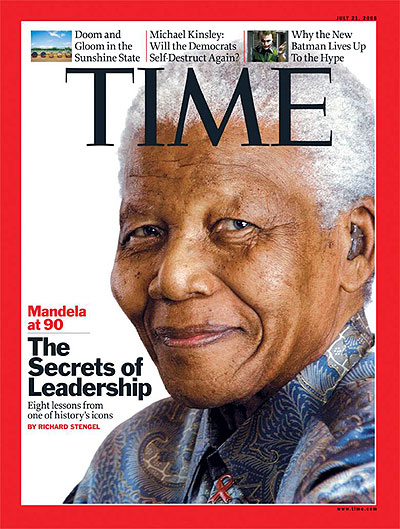 The former South African president was the cover of Times magazine in July 2008.
Nelson Mandela was perhaps one of the best-known and respected political figures in history and truly deserving of the title of world leader. History will remember him as the first black president in South Africa and a fighter against apartheid. But he will also be remembered in relatively small places because schools, hospitals, museums, stadiums, parks, flowers, a prehistoric woodpecker fossil, and even a nuclear particle were named after him.
People around the world valued his efforts for peace and equality. In his four decades of public life he held around 50 doctor honorius causa degrees from universities worldwide and received more than 250 awards, including the Nobel Peace Prize in 1993.
Rolihlahla Mandela was born on 18 July 1918 in Umtatu, South Africa. Baptised a Methodist, he was given the Christian name of Nelson by his teacher on the first day at school. His strong but conciliated personality was shown from early age.
As a child he was influenced by the anti-imperialism concepts of the time but he nevertheless considered the European colonialists as benefactors, not oppressors. Another point is that despite being taught the superiority of English culture and government at school, Mandela became increasingly interested in native African culture.