

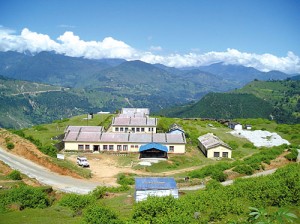
Beginning 6 September through 19 September, Nyaya Health will compete in the annual Chase Community Giving program, an online contest where supporters’ votes could translate into five expanded clinics for people living in one of the world’s poorest regions.
Nyaya Health has been nominated for a share of $5 million in grants, which will allow the expansion of access to free health care to thousands in rural Nepal. Supporters are encouraged to Tweet for Nyaya Health, either with the hashtag #Vote4Nepal or through the Community Giving Facebook page.
“Winning this contest means we can expand our work to five clinics to provide health care to the world’s poorest people,” said Mark Arnoldy, executive director of Nyaya Health. “Help us make health care a right with a single vote.”
Nyaya Health uses a forward-thinking model that’s building sustainable, long-term infrastructure for health care in Nepal’s Far-Western Region. In Nepal, 98 per cent of Nyaya Health’s staff is Nepali, and more than 80 per cent of team members come from the Far-Western Region where the organisation works. More than 101,000 people in the region have accessed free health care since 2008 thanks to the non-profit’s work.
The non-profit is one of the world’s most respected and impactful healthcare charities. Leading non-profit evaluator GiveWell called Nyaya Health a “standout organisation” because of its “unusual standards of transparency.” Only 10 of the more than 800 organisations GiveWell examined received that distinction, and GiveWell named Nyaya Health a recommended charity for the 2011 holiday season.
“Nyaya Health needs your help to continue its mission of realising health in the remotest part of the world,” Arnoldy said.
Follow Nyaya Health on twitter
Read also:
Remote control, BHRIKUTI RAI
Nyaya Health transforms a neglected hospital in Achham and gives locals a fighting chance
Resurrection Achham, PAAVAN MATHEMA
Nyaya Health is making the right to health a reality for the people of Achham
The power of three, DAMBAR KRISHNA SHRESTHA
Three young city-educated medical workers prefer to work in remote Nepal