

 Just a day after it banned Futsal in Kathmandu, Nepal Police has revoked its controversial decision that had prompted many, including a senior minister, to criticise the way the ban was enforced.
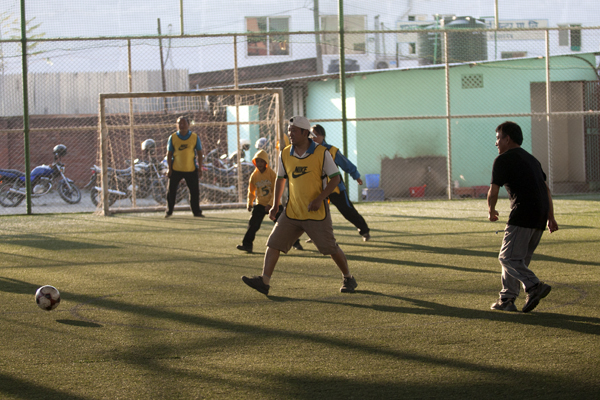
Increasingly popular with youth, Futsal is a scaled down, indoor version of football, played between two teams of five players for 40 minutes on artificial grass turf.
On Thursday, the police suddenly imposed a ban on Futsal activity without warning, saying Futsal centres had become a hotbed for social ills and illegal activity like gambling and drug use. The ban not only enraged Futsal centre owners but also prompted many community members to ridicule the police's action.
Just one day later on Friday, due to wide criticism, the police reversed their decision and agreed to re-allow Futsal following an 18-point agreement with the proprietors of 52 Futsal centres in Kathmandu.
As conditions for re-opening activities, Futsal centre operators agreed to install CCTV cameras, build toilets, introduce insurance policies for players, periodically publicize revenue records and adopt soundproof technology within a certain timeframe.
Deputy Prime Minister and Foreign Affairs Minister Kamal Thapa took to Twitter to criticize the police's decision, writing: "Social ills that Futsal are supposedly breeding need to be controlled through some measures. But it is not justified to ban Fusal itself."
Many said the ban on Futsal to deal with gambling and drug use was akin to 'closing down schools to stop some students from smoking cigarettes'.
With open spaces dwindling at a phenomenal rate in Kathmandu Valley, children today no longer have places to play or meet with friends. The growth of Futsal is a bright spot in gradually filling that gap.
Also read: