
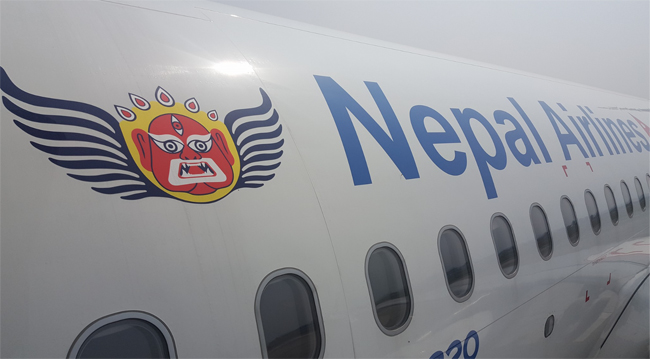
 Photo: Vijay Lama
There is a mood of cautious optimism at Nepal Airlines after Finance Minister Bishnu Poudel announced in his budget speech on 28 May that the government is setting aside the money required for the purchase of two new wide-body aircraft.
If the state-owned airline goes ahead with the planned acquisition, possibly of Airbus 330-200 jets, the $460 million deal would be the largest-ever in Nepal’s aviation history. The long-range version of the plane is capable of flying to Europe and Japan non-stop from Kathmandu with up to 250 passengers.
“We need the larger planes to remain competitive on our Asian routes, to restart direct flights to Europe, and to meet the growing volume of Nepalis and tourists flying to and from Kathmandu,” Nepal Airlines CEO Sugat Kansakar told us this week.
While the long-term prospects for Nepal Airlines look good, it needs to urgently upgrade a bloated management, streamline international operations, and decide on its domestic fleet. The airline also faces heavy criticism for its poor ground-handling services at Kathmandu airport, especially slow baggage delivery.
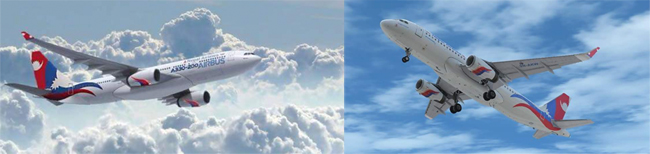 Artist's rendition of an A330 (left) and A320. Credit: Aircraft Livery Nepal
But the airlines has seen a turnaround since adding two Airbus 320s to its fleet. Punctuality and reliability of flights improved and passenger volume increased by 30 per cent this year. However, Nepal’s own national airline is still number 5 after Qatar Airways, Jet Airways, Air Arabia and Fly Dubai in terms of passengers flown.
Says Capt Srawan Rijal who flies the airline’s new Airbus, “After one year of successful operation of 320s we now have the experience to upgrade to widebodies.”
The biggest challenge now is a severe shortage of pilots. Twice in the past month, while both Airbus 320s sat on the tarmac at Kathmandu Airport, fully-booked flights to Hong Kong and Bangkok were scrubbed because the crew had reached maximum flying hours per week.