

Emotions ran high inside the Supreme Court premises on Monday afternoon when 15 to 20 women, mostly mothers and sisters of detained Tibetan students broke down in tears after their petition was turned down by the divisional bench. “They are kids, not criminals. They should be home studying for their exams, not thrown in jails.” cried an inconsolable mother whose son (see pic) was among the detained.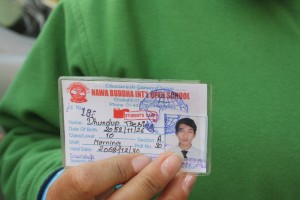
Two girls and eleven boys were arrested by Lalitpur sub-metropolitan police on 24 February at 2:30 PM from outside UN building in Pulchowk where they had gathered to submit a 5-point memorandum to international
body,drawing its attention towards deteriorating human rights situation in Tibet. Ten prominent lawyers of the country argued their case, stating that in absence of a complaint from the UN body or any individual, and with no credible evidence of violence or obstruction to public life, there was no legal basis for their detention. “The detention violates individual’s freedom and right to peaceful gathering since the area was neither a restricted zone nor under any emergency law. The state cannot use a vague term of ‘public offense’ to make a case of detention.”, says advocate Pawan Jaiswal who among others represented the students.
There is sufficient ground to question intentions of Lalitpur administration which twisted the details of the case and made a unilateral decision without providing a legal defense to the accused. The students were released late on Tuesday after their parents submitted the bail amount but not without a subtle warning to 'lay low' until March 10. “ The CDO lied that we were creating disturbance in a restricted zone but we had only gone there to submit a piece of paper. We went on a hunger strike for a day questioning the detention but they threatened, if we don’t call off our strike ‘anything could happen’. They did not even give us a chance to present our case before slapping 27,000 rupees bail.”, one of the detained students told me.
In absence of a clear legal status about their identity, young Tibetans have become vulnerable to easy prosecution. This was evident even during the hearing where the sitting judges refused to entertain judicial precedence of the 2006 Thakur Gaire case citing difference in the legal identity. The court was also oblivious to the fact that 27 lawyers who were protesting infront of its gate, a restricted zone, obstructing the traffic on the same day that the students were arrested faced no charges.
Nini Gurung of UNHCR told Nepali Times, ” In principle, Tibetans who arrived in Nepal prior to 1990 and their descendants are entitled to refugee cards attesting to their right to reside in the country. However, the issuance/renewal of such documents has been inconsistent and UNHCR has advocated with authorities at all levels for the issuance of refugee documents to every refugee residing in this country.”
The shifting geo-politics and transition has forced subsequent governments in the last few years to adopt an appeasing policy towards its neighbors. The increasing Chinese concern has prompted the government to clamp down on any kind of gathering by the Tibetans fearing ‘untoward’ incident.
It has become futile to draw attention to International conventions like ICCPR and UDHR to which Nepal is a party state. Even the numerous appeals from right groups and international reports expressing concerns over country's poor human rights record, particularly its treatment of refugees, have failed to raise alarm. In a more disturbing trend, a section of mainstream media has now jumped into the state bandwagon, creating a fear mongering about another 'Khampa Revolution'.
The uncritical endorsement and promotion of supposedly 'leaked' intelligence document has not only brought media's own credibility under scanner, it has internationally exposed the hostile condition under which refugees live in this country. According to a news published in a mainstream daily, the classified report even claims to have a list of media houses and media personnel in its 'watch list'. Needless to say, such implicit are only aimed at putting a media self-censorship on the issue which must be condemned from all sections of democratic society.
The legal experts say the absence of refugee law is not so much of a problem than the dubious policy under which systematic persecution of the Tibetans is taking place. But the real puzzle is, how come, the police which has failed spectacularly over the years to foil terror attacks on public almost never misses when it comes to stopping ‘anti-Chinese’ activities? It’s a question worth ‘millions of dollars’, which neither the Home Ministry nor the Nepal Police would want to answer.
Nepal needs all the good-wishes and support of its neighbors at this critical political juncture but it should earn them on its own terms. As a friendly neighbor we uphold 'one China' policy but providing everybody with a space to express legitimate concerns must be non-negotiable in a democratic society.
Anurag Acharya