

 Pics: Bikram Rai
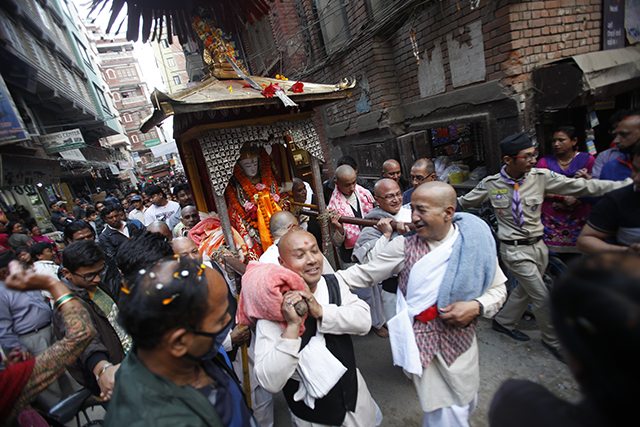
The jatra of the Rato Machindranath, the red rain god is perhaps one of the most visually striking and fervently celebrated festivals of the Kathmandu Valley. Less well known is the festival of Seto Machindranath also known as Karunamaya and Arya Awalokiteswor, which will soon set out on his own journey travelling through the narrow lanes of old Kathmandu.
The festival aims to end the sorrows of all those living in the three 'loka'. This year the jatra starts on 4 April and will continue till 6 April.
“The Seto Machindranath jatra fosters communal harmony as many people from the community are involved in one role or other,” says Purna Bhakta Bajracharya, one of the priests involved in organising the festival which is believed to have started in the 17th century during the reign of King Pratap Malla.
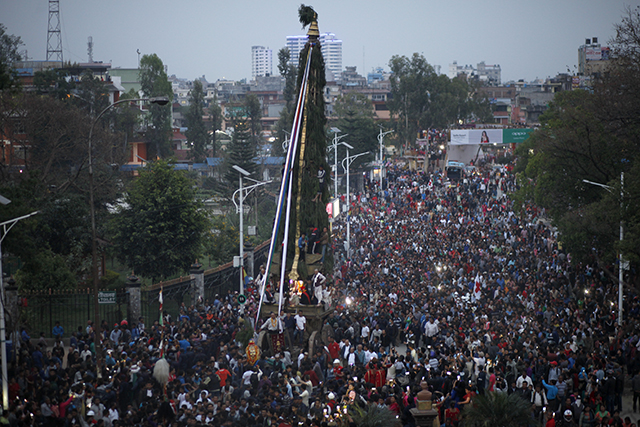
The chariot is pulled every year for three days across the town so that the infirm who cannot travel to the temple can worship the god who blesses them with happiness and long life.
On the first day of the festival on 4 April, the idol of Seto Machindranath was taken on a palanquin to Jamal to a 13 storey high chariot made of 365 pieces of wood of nine varieties.
“The construction of the chariot is very scientific,” says Bajracharya.“Originally nine different types of timber were used with the lighter ones on the top and heavier one on the bottom. But now due to lack of resources mostly hardwood is used which are joined and tie with vines. No nails are used, and this makes it flexible."
On the first day, the procession covers the Jamal, Ratnapark, Bhotahity and Ason area. On the second day, the procession starts from Ason to Balkumari, Kel Tole, IndraChowk, Makhan and rests in the Hanuman Dhoka. On the last day, the procession moves to Maru, Chikan Mangal, Jaisidewal, Jya Baha and finally reaches Lagan Tol where it ends.
But with many modern amenities being built along the procession route, the festival hasn’t gone without hitches. In 2008, after the Ratnapark-Bagbazaar overhead was built, the chariot had to be taken
from the footpath, where because of a steep inclination, the chariot toppled.
The outmigration of young people has threatens to erode the culture. “Only a handful of young people here are actually interested to continue, but a festival like this holds communities together and provides a window to our past," says Bajracharya.
Sahina Shrestha
Read also
Cultural evolution, Kunda Dixit
Makers of Machindranath, Cynthia Choo