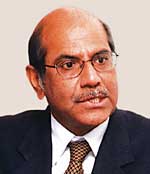
The Indian government has sent former ambassador to Nepal, Shyam Saran, to Kathmandu to make a fresh effort to get the political parties to patch up differences that have deadlocked the election of a new prime minister. Saran was the architect of the 12-point understanding between the Maoists and the seven parties in November 2005, and later became foreign secretary. He had been sidelined from his role in Nepal’s peace process since, but his return to Nepal indicates growing frustration in New Delhi with the political disarray in Kathmandu.
Parliament failed to elect a prime minister for the third time on Monday with neither NC’s Ram Chandra Poudel nor Maoist chairman Pushpa Kamal Dahal able to get the required 300 votes. However, the Maoists did manage to get 11 Madhesi MPs to cross the floor and 18 MPs from anti-Maoist camp stayed home. The NWPP’s 5 MPs also voted with the Maoists.
Dahal got 259 votes with 114 MPs voting against him, and 208 did not vote. Poudel got 124 votes with 246 MP votes against and 186 abstaining. The Maoist strategy now seems to be to try to aim for the magic 300 votes by Friday’s fourth round by cajoling other smaller parties and getting members of the UML to also cross vote. Meanwhile in the NC camp, efforts are afoot to patch up the differences within the UML and the Madhesi parties ahead of Friday’s vote. The UML’s Jhalanath Khanal has urged the two other parties to step down and back a consensus prime ministerial candidate, possibly himself.
In a front page editorial on Wednesday, Kantipur said: “The reputation of the political parties is now at the lowest ever, all parties are equally responsible for holding the country hostage. The political impasse has affected the economy, development and security. There is no alternative to the politics of consensus.”
The Indian government has sent former ambassador to Nepal, Shyam Saran, to Kathmandu to make a fresh effort to get the political parties to patch up differences that have deadlocked the election of a new prime minister. Saran was the architect of the 12-point understanding between the Maoists and the seven parties in November 2005, and later became foreign secretary. He had been sidelined from his role in Nepal’s peace process since, but his return to Nepal indicates growing frustration in New Delhi with the political disarray in Kathmandu.
Parliament failed to elect a prime minister for the third time on Monday with neither NC’s Ram Chandra Poudel nor Maoist chairman Pushpa Kamal Dahal able to get the required 300 votes. However, the Maoists did manage to get 11 Madhesi MPs to cross the floor and 18 MPs from anti-Maoist camp stayed home. The NWPP’s 5 MPs also voted with the Maoists.
Dahal got 259 votes with 114 MPs voting against him, and 208 did not vote. Poudel got 124 votes with 246 MP votes against and 186 abstaining. The Maoist strategy now seems to be to try to aim for the magic 300 votes by Friday’s fourth round by cajoling other smaller parties and getting members of the UML to also cross vote. Meanwhile in the NC camp, efforts are afoot to patch up the differences within the UML and the Madhesi parties ahead of Friday’s vote. The UML’s Jhalanath Khanal has urged the two other parties to step down and back a consensus prime ministerial candidate, possibly himself.
In a front page editorial on Wednesday, Kantipur said: “The reputation of the political parties is now at the lowest ever, all parties are equally responsible for holding the country hostage. The political impasse has affected the economy, development and security. There is no alternative to the politics of consensus.”