 An amicable Iranian man in his 50s puts finishing touches to the meeting of the World Peoples Resistance Movement (WPRM) in Dalston, North London.
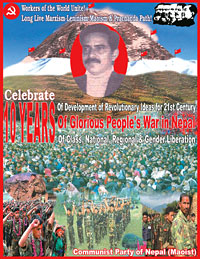
A Polish man sells T-shirts with the message 'Revolution-Making It Happen in Nepal'. A stout Chinese man thinks that picketing in front of the Royal Nepali Embassy in London "doesn't make much sense". A hirsute young Nepali holds forth in faltering English about "our final strategic offensive against the dictator King".
Welcome to the Maoist European roadshow which is raising money and trying to generate support for the Nepali Maoists. A mandatory donation of a minimum of ?5 sometimes gets participants a seat at one of these monthly meetings on Nepal.
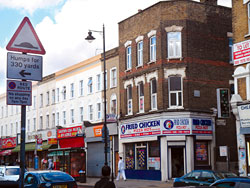
Revolution can mean many things on the first floor of the Hundred Flowers Cultural Centre in Dalston. But amidst dreary British weather and a sharp whiff from the greasy chicken shop downstairs, a crowd congregates every first Sunday of the month in this decaying neighborhood with the persistence of evangelists.
It is difficult in this day and age to come across an organisation that admonishes both the Iranian regime and the US president in the same breath. But the WPRM does it and it also supports the Palestinian struggle, the urban uprising in France and it has been organising a campaign across Europe to muster 'urgently needed support for the people's struggle for liberation in Nepal'. The next meeting supported by WPRM is on 18 May at the School of Oriental and African Studies and will include the South Asia Solidarity Forum and the Friends of Africa group.
Nationality is no bar. In the audience are leftists and Mao nostalgists from Italy, Britain, Iran, Ireland, Turkey, China, India, the Philippines and even Tibet. 'A new world is possible' is the WPRM's motto and the rhetoric and jargon that floats thickly across the room is more Dickensian than Marxist.
No issue is out of bounds and one of the subjects at a recent discussion was even 'what to do with Narayanhiti palace when our comrades seize it'. WPRM markets the conflict in Nepal as 'the most advanced struggle against imperialism in the world today' and seemingly has no difficulty in finding an audience. It is usually a friendly crowd of up to 25 people but attendance goes up whenever there is a prominent speaker. Some are Nepali migrant workers scraping by in London, some are students and others reply "kam gardai" or "accountant" when asked what they do.