
|
|
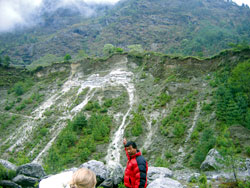
| WASHED AWAY: Norbu Sherpa points to the spot where his house once stood before it was destroyed by the Dig Tsho flood in 1985. |
Just over 20 years ago I saw a glacial lake outburst flood destroy my home. This summer I saw a forest fire. In between we've seen numerous other changes, incremental rather than dramatic-less winter rain, fewer mushrooms in the forest, the snow line moving up-that we now know are the result of climate change.
When Langmoche glacier, also known as the Dig Tsho glacial lake, broke its banks at 3PM on 4 August, 1985, in just two hours our little village was shattered. We lost houses, cattle, and arable land. The damage amounted to Rs 1.2 million back then. Also destroyed were the almost-completed microhydropower plant in Thamo, which cost $1.5 million and hundreds of hours of lobbying, planning, and work. Bridges were damaged and communications cut off.
After two decades of hard work, we've bounced back. One of my jobs is working as a tourist guide in season. When I was a child, we'd get two to three feet of snow in the village, and it would stay for days. Now I count myself lucky that I can see something like that when I go trekking and climbing in the high mountains.
Winter rain, so important for agriculture and our water supply, has become also become unpredictable. The dry winter we had last year is what caused the forest fire, something we've never seen. The forest behind our village is drying up. The spring the village uses for drinking water and irrigation is also drying up, and the water mill between Ghat and Phakding is no longer functional.