

As the Arab Spring picked up momentum in 2011, some activists in Nepal tried to engineer what they wanted to call the 'Chameli Movement' named after the Nepali word for jasmine.
There were op-eds suggesting that Nepal was ripe for another revolution and why the youth of this country should overthrow obsolete and incompetent leaders.
There were imitations of the occupy movements, social media campaigns and even some street demos. But it could not pick up critical mass, and the dark forces of corruption, selfish brinkmanship, cronyism just got stronger. After having suffered ten years of war, it looked like Nepalis did not have the appetite for another revolution.
The country was going through a nerve-wracking and prolonged political transition with demands for ethnicity-based federalism threatening to cleave the country. All Nepalis wanted was an end to the instability and turmoil. We survived chaotic times, the failure of the first Constituent Assembly, the second election for the CA, a devastating earthquake, the promulgation of the new Constitution that led to violence in the Tarai and the additional unexpected 'surcharge' in the form of the Great Indian Blockade.
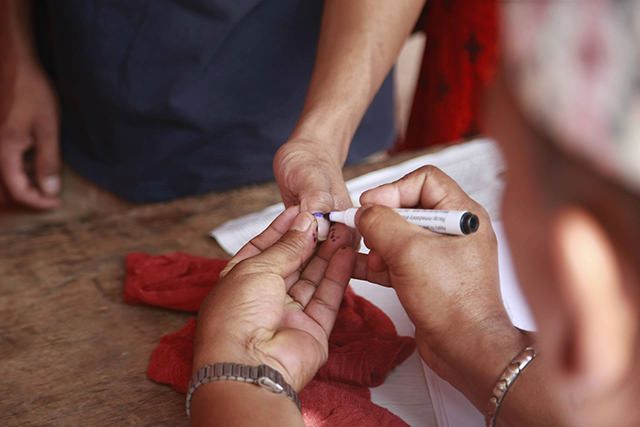
Now, as we prepare to complete elections for three levels of government (local, provincial and national) under the new Constitution, the transition phase of Nepal's politics is hopefully finally coming to an end. Nepalis are now getting ready to elect provincial and national assemblies on 26 November and 7 December.
Our votes should be used to transform the system, but do we have a real choice in the forthcoming elections? Nepal's post-conflict politics has seen all pretenses of morality and ideological sanctity blown away, without any shame and regret. We have seen the Maoists forming a government with the Nepali Congress, collaborating in the local elections and now fighting each other again in the provincial and parliamentary elections. Voting for principles and ideology makes no sense anymore.