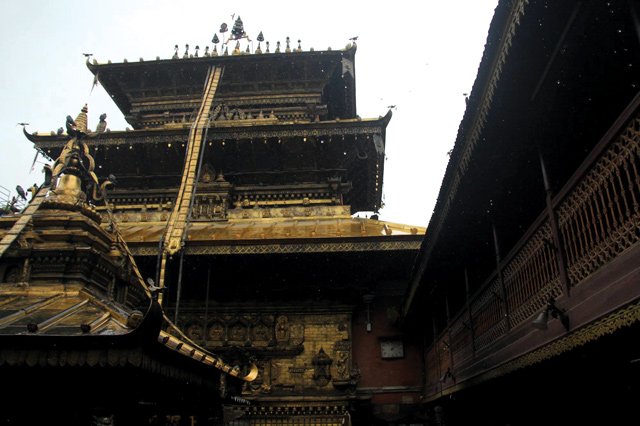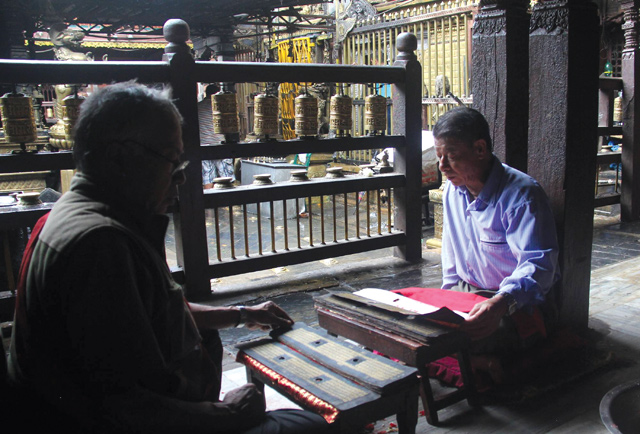
The full moon in the holy month of Gunla is when Buddhist Newars have flocked to the bahals of the Valley to listen to priests read ancient sacred scriptures. The teachings of Lord Budda is in a book written in gold and silver letters in the sacred texts of Pragya Paramita.
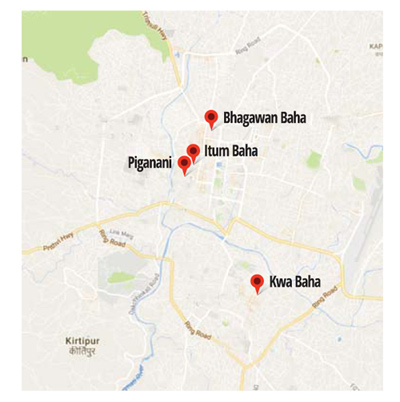
The four known places that house the important texts are Bhagwan Bahal, Itum Baha and Piganani of Kathmandu along with Kwa Baha of Patan (see map). Each of the books with identical stories were written during different times, and there are different rules governing their ritual public readings.
The four volumes in Bhagwan Bahal, for instance, are displayed during the festival to be read by the priests. This is the monastery looked after by the Pradhans, the only Buddhist seshya (Newar administrative class) of the valley. The other monasteries are usually managed by Shakyas, Bajracharyas and Tuladhars.
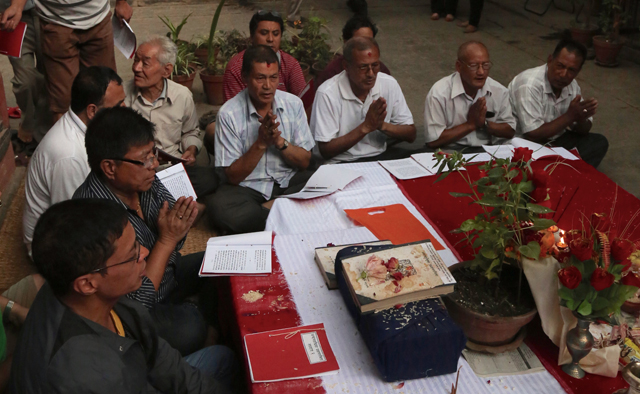
Different venues have different practices during Gunla. The text in Itum Baha is no longer read and is only kept on display with the members collectively reading a printed version in Devnagari every evening throughout the holy month. Although it is one of the oldest and most important monasteries in Kathmandu, the tradition of reading the original text was probably lost because of squabbles among priests.
The book in Piganani, a courtyard of the Tamrakar community, is only brought out on the day of Panchara in Juga Chharey, the annual alms-giving event that falls on the 14th day of the dark half of the month.
Probably the most easily accessible and best preserved is the one in Kwa Baha where the members of the monastery wait for their turn for as long as eight months to have the priests read the book in their names. The tradition of book reading is thought to have started 400 years ago during the time of Kulapad Bajracharya of Nyakhachuka, who had six sons: four from the first wife living in Nyakhachuka and two from the second wife in Tangal Baha along with one priest in Kwa Baha reading the script.
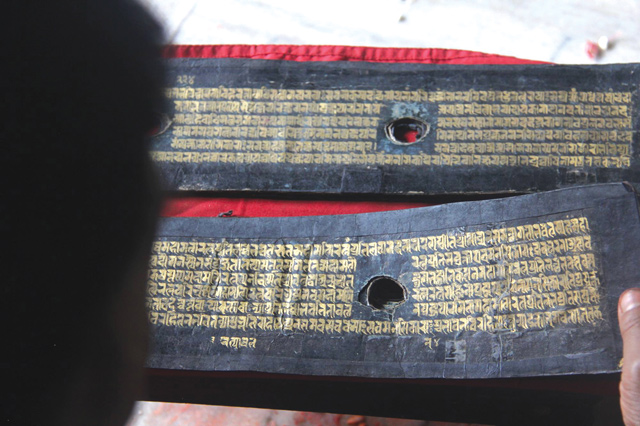
Later on, the Kwa Baha guthi decided to add three more priests making it easier to distribute the 300 page book among themselves. Although the text was initially only read at certain times of the year, nowadays it is read for almost as many as 300 days. The books are not in constant use and the priests use the month of Purshottam Mas (the leap year month according to the lunar calendar) to restore and rewrite the document. The few gurju priests who know the script get the job of restoring the books, and the gold ink is donated by the community.
One of the main reasons for the inaccessibility of the Pragya Paramita books is the fear of losing it. The one at Bhagwan Bahal is dated back to 1223 BCE, and the Piganani book is almost as old. The books at Itum Baha and Bhagwan Bahal are written in gold and silver letters while the one at Piganani is written in banana leaves. The fragility and value of the books means that they are kept away for safekeeping, read and are read only during Gunla so they aren't handled frequently. But what the guthis are overlooking is how accessibility helps in preservation and promotion of the tradition, as shown by Kwa Baha.