
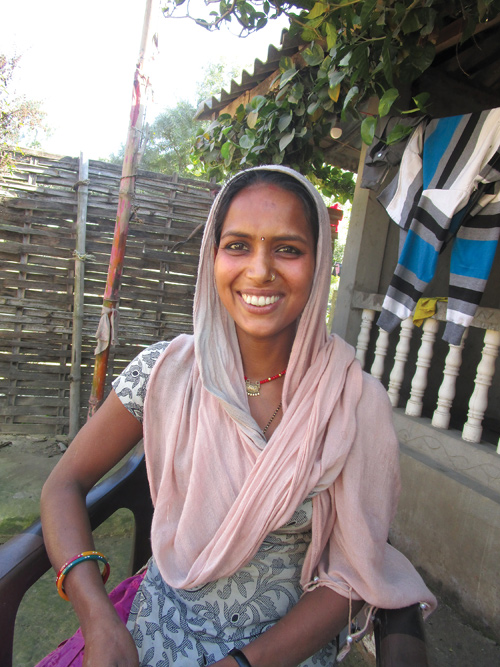
Binita Devi (pictured) lost her husband, Sohan Sah Kalwar, during last year’s Madhes movement. She now runs a tea shop in Birganj to feed her children. On a recent winter morning, the 23-year-old widow asked rhetorically: “What did the Madhes gain from my husband’s martyrdom?”
The Madhes certainly faces discrimination in terms of political representation and access, and the region exploded twice in 2007-8 to assert its identity. But the uprisings did not help raise living standards, though it catapulted a few Madhesi leaders to power. These leaders spearheaded another movement in 2015 that was accompanied by a crippling five-month border blockade that wrecked Nepal’s economy.
The people in Madhes have no doubts that the constitution is is always work in progress, and its implementation is the key to the future, but their opinions have been ignored by the leaders who claim to be representing them.
Jahur Mubarak, 58, runs a shoe shop near the clock tower in Birganj. He feels Madhesi leaders have cultivated a culture of political polarisation. “There is no gain from hostility, only if we stand united will we prosper.”
Rakesh Singh, a Birganj-based politician, says the Madhes will not prosper without tapping the vast natural resources of the Chure hills to the north. Madhesi leaders only talk of rights, and not development, he says.
Subhas Kumar, a civil society member in Birganj, says the Madhesi people’s anger was fueled by rumours, and not the actual content of the constitution. “Madhes can enjoy all the rights even from this constitution,” he says, “we perhaps need a few amendments, and the right intent to make the laws that would ensure our rights. But the leaders are not trying to solve the problem this way.”