
 BIKRAM RAI |
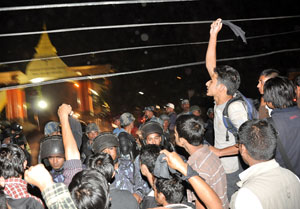
After three days of marathon diplomacy in the Indian capital, Prime Minister Baburam Bhattarai returned home with Indian goodwill, only to be greeted at the airport with bad will from his fellow comrades.
Bhattarai exuded confidence, but where does it come from? He couldn't have cared less about the black flags at the airport gate. "I expected this, he told the press, "but it needed to be done because it is in the interest of the nation."
Beyond the rhetoric and polemic, the India visit was a refreshing departure from previous ones. For the first time, the two countries issued a joint statement agreeing to review and revise the 1950 treaty which will provide a window of opportunity for Nepal to establish ties with its southern neighbour on an equal footing. While the Indian side is known to be very sensitive about its security concerns, the Nepali side also secured Indian commitment not to allow its land to be used against its neighbour.
Bhattarai's statement that Indian security cannot be addressed in isolation reflects that Indo-Nepal relationship has gone through a paradigm shift.
Not long ago, during the war, the Indian government looked the other way while Nepal's Maoists went in and out of Delhi. Then, when they won the election and Pushpa Kamal Dahal became prime minister they became conspicuously and overtly "anti-Maoist". So much so that its ambassador made blatantly provocative statements and was in turn greeted with shoe projectiles. Both the Maoists and the Indians tried to play each other down. While Delhi tried to assert its presence in Nepali politics ignoring the changing ground realities, for their part the Maoists overlooked the changed geopolitical context of their revolution.
If the deal in New Delhi last week is anything to go by, both sides seemed to have learned their lessons. The $250 million line of credit is an indication that India is ready to ratchet up its economic involvement in Nepal. This is strategic: a poor and chronically unstable Nepal is not in India's national interest. New Delhi has decided to help Baburam Bhattarai try to be the architect of Nepal's economic transformation by encouraging investment, creating jobs.