Franz Kafka’s Report to an Academy is first and foremost about conflict which operates on several levels: from the obvious similarities between the simian and human, to the three-point tug-of-war between memory, identity and assimilation.
Studio 7’s adaptation of the story for the Vajra Hotel stage titled Red Peter preserves this motif to the t, turning the first-person narrative into a theatrical performance where past and present intermingle.
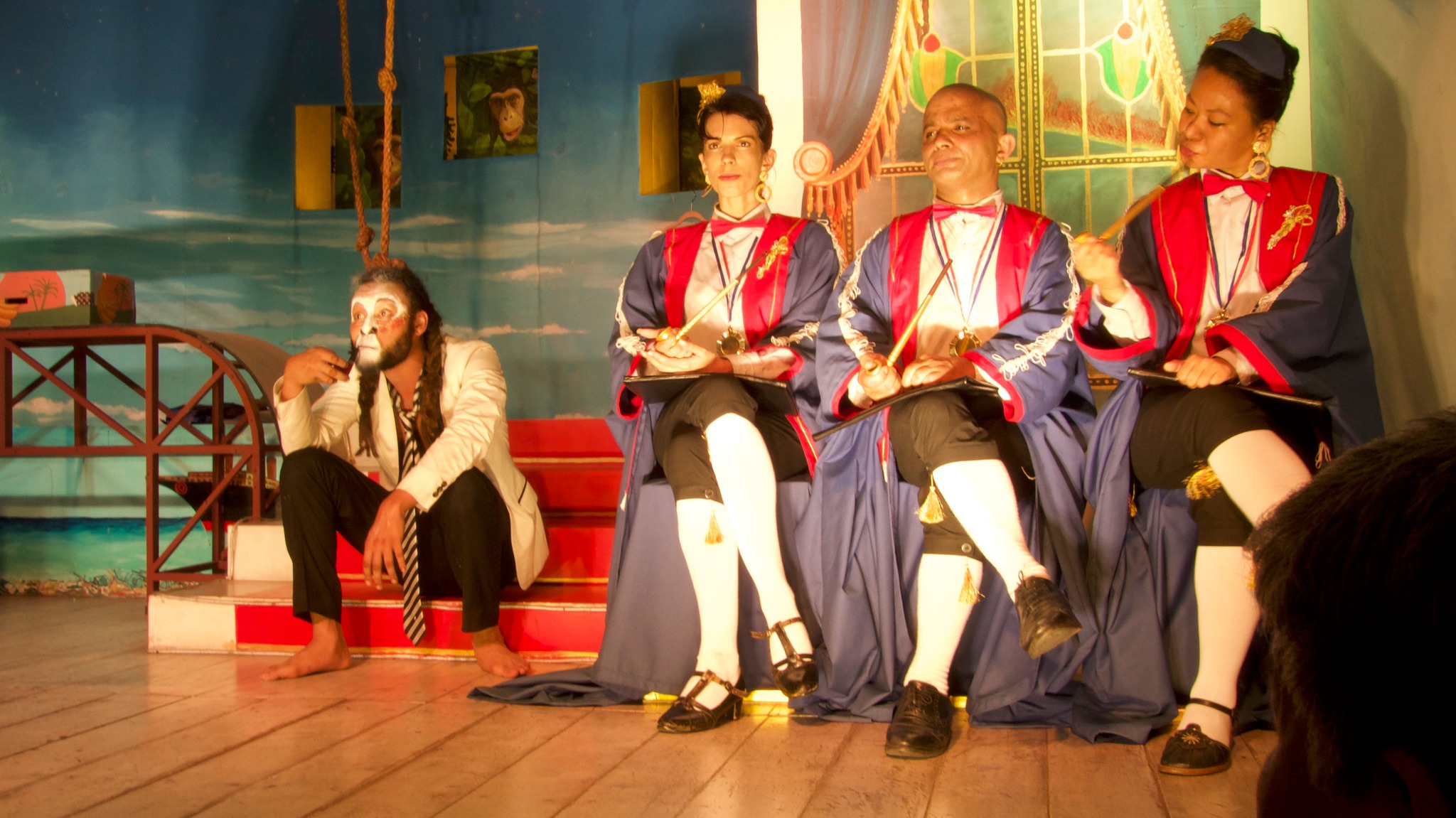
Directed by Sabine Lehmann (The Conference of the Birds, The Little Prince), the play begins in a warmly-lit room, awash with blue, designed by Ludmilla Hungerhuber. In the back, three images of the same chimpanzee stare at the audience through narrow windows.
A long, sturdy rope is looped into a swing upstage beside a ladder that appears to connect the ground with the heavens, a symbolic ascent, or descent, of evolution. It is at once a ship, a jungle, private bedroom, and the academic stage, a space that exists almost as a mental landscape, in fantasy and reality. Then, behold: an ape appears.
In tailored pants and a white shirt, Red Peter the eponymous monkey puts on a tie. He is readying himself for an appearance at the Academy where he is to present a paper on how he ‘transformed’ into a human.
But he is more than an exotic evolutionary specimen, as we find out later. He huffs and puffs, letting out guttural sounds: aspirated “Hon’ble” which then slowly becomes “ono’ble”, but he is not entirely satisfied and the time is running out, the appointment drawing close. It has been five years since he began this miraculous journey and yet he trips over an H.
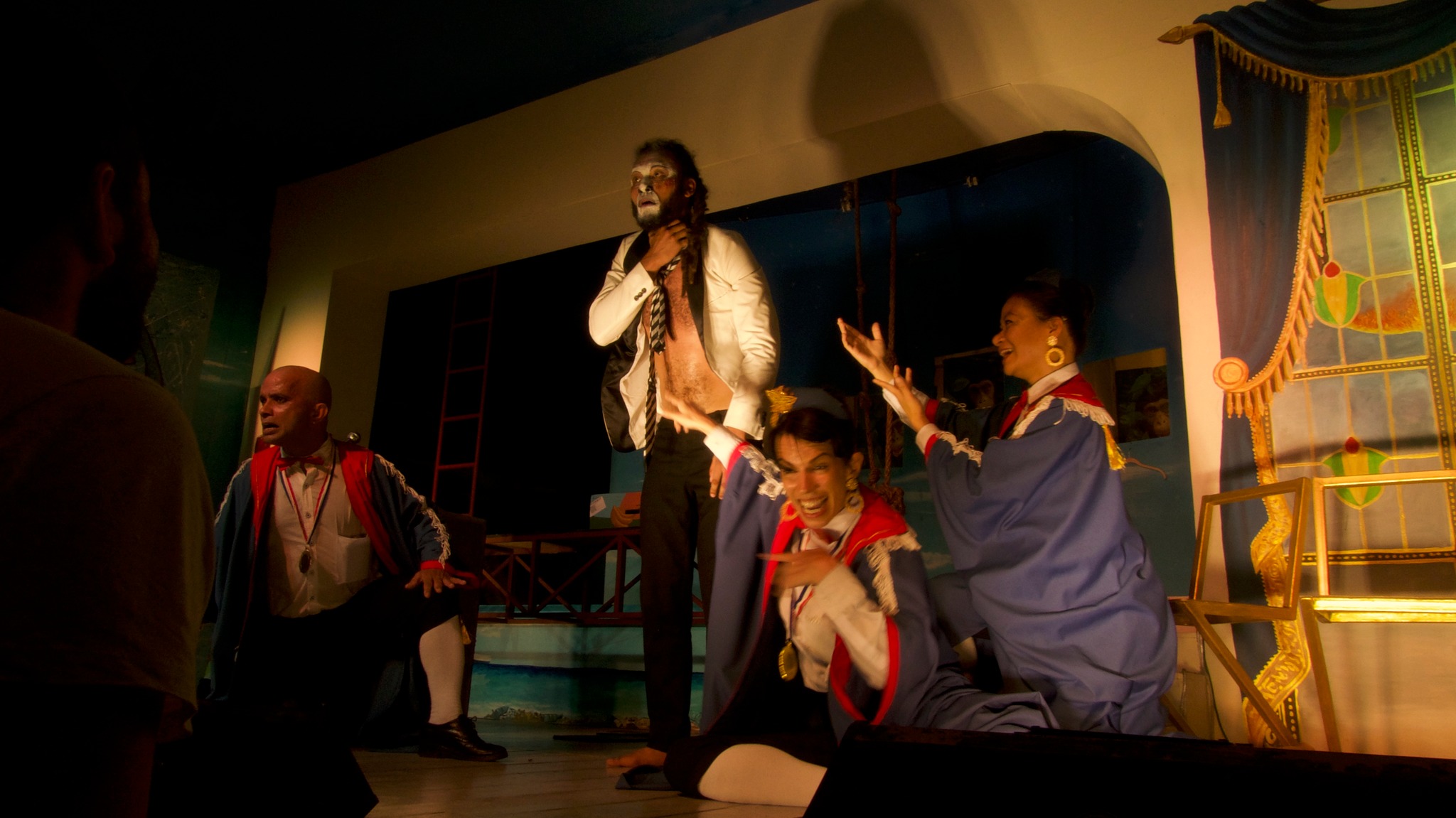
Enter three academicians in brightly coloured gaudy robes looking more like circus performers than serious philosophers and scientists they insist they are. The air of self-import, colonial and imperial in its smell, contrasts strikingly with Red Peter’s own retrained disposition. After all, they have millions of years of evolutionary divergence at their disposal, while Red Peter only five. “The report?” they ask pointedly, for that is really all they care about.
“Members of the Academy,” says Red Peter, gently bowing. He thanks the National Geographic for a recent cover, and adds turning towards the audience: “Gentleman, ladies, dear guests.”
Immediately, we are also transported to the same liminal landscape, metaphysical and postmodernist, as Red Peter breaks the fourth wall, as if to remind us that whatever happens in the story is as much our concern as it is his, no exceptions.
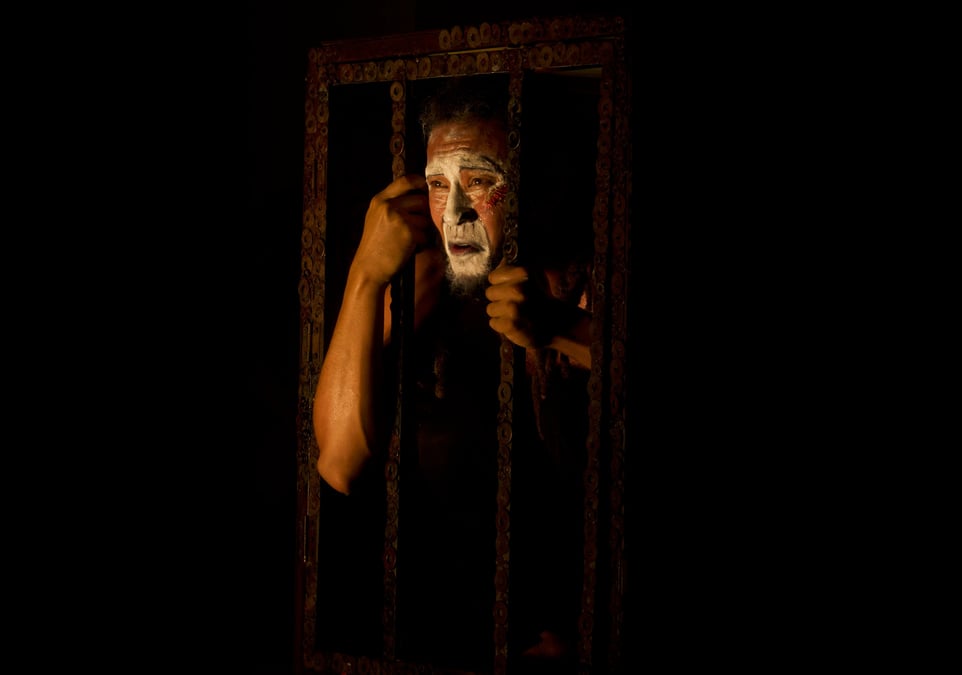
We learn of his past in the West African forest, where he was shot and wounded one day by the human employees of a Research Centre + Circus. It is the ensuing bloody scar that earns him his name. Captured and locked in a tiny cage on a cargo ship, he was then transported to Europe. For the first time, he remarks to the Academy and to us, he was without a way out.
And no, he does not mean freedom by this, as ‘freedom’, he explains, drawing analogy with trapeze artists in the variety shows, is nothing but a self-controlled movement, and all too deceiving a notion.