
 FOREIGN AID DIVISION, MINISTRY OF FINANCE |
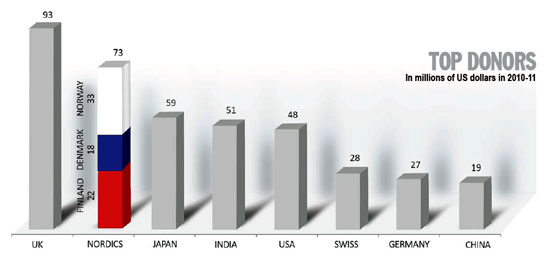
However, because Nordic aid is confined to 'soft' sectors such as human rights, gender, and social justice the three countries are often in the background compared to geopolitically important players such as the United States, India and China. In pre-holiday interviews, the three Nordic ambassadors in Kathmandu showed impatience with the lack of progress on issues like transitional justice, impunity, constitution and government formation. (See box)
"Nepal is right between two of the fastest-growing economies in the world, and it should be able to do much better than it is doing now. So why doesn't it happen?" Danish ambassador to Nepal, Morten Jespersen, asks rhetorically.
To be sure, despite a decade-long conflict, Nepal has seen remarkable progress in poverty reduction, and is close to achieving its Millennium Development Goal targets by 2015, especially in health and education. Much of this was possible because of sustained behind-the-scenes support from Nordic donors.
However, the emphasis of European and other donors to reach the disenfranchised and marginalised, and their advocacy in favour of federalism has provoked a backlash in Kathmandu with the government putting unprecedented pressure on them to channel aid to approved sectors.
The Foreign Ministry and the National Planning Commission are more assertive and want roles in vetting projects. Foreign Minister Naryan Kaji Shrestha has told donor representatives that they should concentrate on infrastructure, agriculture and energy. A landmark report on exclusion supported by the World Bank and DFID has not been released because of government pressure, and a five-year UN Development Assistance Framework report was finally approved after references to discrimination and citizenship were excised.
Norway, Finland and Denmark have surprisingly put special emphasis on the structural roots of poverty and discrimination by supporting projects on inclusion, constitution, human rights and the rule of law. And despite the government's new emphasis, they say they are going to stay on track.
Nordic representatives say they will continue to work with the government on structural areas that have a bearing on poverty and inequality. However, there will be a transition from social sectors to infrastructure in the coming years with Finland dropping human rights as a key area, and Denmark moving from education to growth and employment in 2014.
The Finnish ambassador to Nepal, Asko Luukkainen, believes a well-functioning democracy is essential for the future development of Nepal and efficiency of donor programs. "When we don't have locally elected bodies in rural areas, we don't have a counterpart to discuss with. Local elections would be very important," he told Nepali Times.
Alf Arne Ramslien, Norwegian ambasador to Nepal agrees. "If this political stalemate continues, it will be disastrous for development. In the present situation there is no willingness to invest in this country," he says. "There is great interest from Norway, but why invest in an unpredictable situation when there are other countries wide open for investment?"
The three ambassadors interviewed for this article agreed that Nepal has great potential if it can implement elections in 2013 to pave the way for a new constitution. They also feel that sustainable growth, equity and inclusion can only be achieved through true political decentralisation and inclusion which is why Nordic development assistance is also being channeled to these areas.
However, Nepal wants to see more emphasis now on aid and investment on transportation and energy in order to ensure growth and create jobs. Madhu Marasini at the Finance Ministry's Foreign Aid Division told Nepali Times this week: "The Europeans and the Nordic countries are more concerned about democracy and institution-building, but we wish to broaden the scope of cooperation in hydropower, infrastructure as well as sanitation." Marasini admits, however, that besides political instability, transparency needs serious attention.
International donors, including the Nordics, have often been criticized for relying too much on government channels for implementation which makes them inefficient and prone to corruption. Yadab Bastola from National Alliance for Human Rights and Social Justice, a nation-wide network of grassroots rights groups, says donor resources would be best used by channeling it directly to the community level.
"Most international aid has been handled by bureaucrats or NGOs due to the lack of local elected bodies at the community level," explains Bastola. "Even aid to the districts is divided up by the all-party mechanism and doesn't go to communities. It is a huge problem."
The three Nordic envoys are aware of this, but can barely hide their impatience with the political disarray. They want to balance the social sector with alternative energy, forestry and agriculture. They say Nepal's problems have to be dealt with in a country-specific fashion, and a timeframe that will work for a post-conflict Nepal.
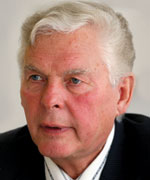 |
Alf Arne Ramslien,
Norwegian ambassador
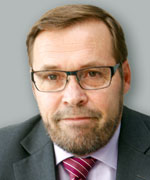 |
Asko Luukkainen,
Finnish ambassador
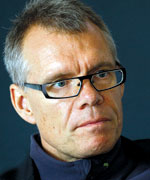 |
Morten Jespersen,
Danish ambassador
Where is Sweden?
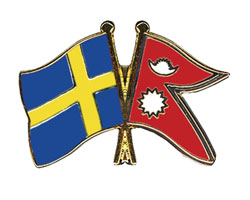 |
In 2007, the Swedish government decided to focus foreign aid to fewer countries in order to increase the quality and efficiency of aid. Nepal was not among the countries identified. However, Swedish aid reaches Nepal through multilateral donor projects, such as the UN and the Nordic Development Fund. Sweden was involved in supporting the Melamchi project but pulled out 10 years ago, and the country doesn't even have an embassy in Kathmandu. However, the Stockholm-based group, International IDEA, is present in Kathmandu.
Explains Norwegian ambassador to Nepal, Alf Arne Ramslien: "There is space for Sweden also, every country has its own focus...you lose some of the effect if you spread your resources too thin."