
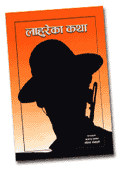
Lahurey ko Katha from Himal Books is a collection of memoirs based on oral testimonies of 13 retired Gurkha soldiers, all but one above 75 years. Translated from Nepali by Deb Bahadur Thapa for Nepali Times, this fortnightly column continues with Man Bahadur Rai's narration of fighting the Japanese in Burma during World War II. In the first excerpt, the British Gurkhas were attacked by Japanese forces on the Setang river in Burma. Casualties are very high and the Gurkhas are forced into retreat.
 When we retreated, we found that everyone had converged at the place allotted to our unit. The British escaped at night by plane, leaving the ration godown open with no one to control it. They left us a signboard saying surviving troops were to report at Pantola near Dumdum airport in Calcutta. The difficult task was getting there across Burma.
The number of retreating forces swelled from 10, 12, 25 to 275. We followed the routes used by the Nagas. Occasionally, we had chance meetings with Japanese troops. We left quietly, often at night. Many were killed and we lost count of the dead. If someone were to retrace our route, they will surely find it marked by piles of human bones.
A new regiment, the Fourth Gurkha Rifles, was raised at Indaugyi in Burma. A regiment normally has four companies and when auxiliary personnel like orderlies are included, it numbers five. Each company had 128 heads, a regiment, therefore, would have 640 people. Only five men survived from that entire regiment. The Japanese knew where the Fourth Gurkha Rifles were going so they hid in the forest and lay in wait. As soon as the troops got there they opened fire and killed everyone. Subedar Mitra Bahadur was among those killed in that action.
In order to get rid off the stench, the Japanese dug a ditch on a mound and buried them. Perhaps the weight of the bodies was too much because when we got there the mound had given way. The human skulls, ribs, shinbones looked like a riverbank. It still smelled of the dead.
On our retreat we saw corpses of army personnel and civilians all over the route, on the road, many more lay inside the jungle. Dead children were propped under tress by those who fled the carnage. We became like chicks without the protection of a hen. On our departure from Burma we were 375 soldiers, not all Gurkhas. There were Maharastrian, Sikh, Garhwali and Madras regiments. We were the last of our regiments, never more than 10 from a single one.
 When we reached Bhamo from Towdi our numbers swelled to form a battalion. The colonel commanding the regiment was Jocket. He was of Italian origin and had joined the British army merely to earn his bread and butter. There we were, fleeing from the Japanese and the colonel wanted ceremonial parades with music. About a dozen of us joined his regiment. He asked where we came from and we told him our story. The colonel assured us that we would be safe and then asked us to take part in the parade from the following day.