
 |
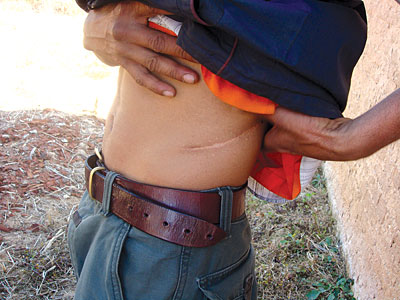
While the trade of human organs is a crime in Nepal, widespread poverty and a lack of education mean it is an everyday reality. The practice is so common in one village close to Kathmandu that the area is known as the "Kidney Bank."
Three years ago, 24-year-old Kanchha Budhathoki was working at a garment factory in Kathmandu when a fellow worker promised him a better job.
"He said he would find me a good job in India. When we reached New Delhi, we went to a hospital and they tested my blood. Another day they gave me alcohol then they gave me an injection. I became unconscious and when I woke up I was in hospital and they had already taken one of my kidneys," says Budhathoki.
Kanchha's mother Lalkumari Budhathoki says she is deeply upset that three of her sons have sold their kidneys. "If they had told me earlier, I would have stopped them. They told me that they wanted to earn more money. I never take one cup of tea from that money and in future I won't take anything from that money because it comes from organ selling," she says.
Badri Prasad Dhungana is a teacher at Kavre, and is trying to raise awareness against the growth of organ trade in the village.
"This is a serious problem in our village. Six years ago only four people had sold their kidneys in this place, but now I have recorded that 95 people have sold their kidneys in my village and close to this area. In some families there are four or five members who have sold their kidneys," he says.
There is no exact data on the numbers of people in this district who are engaged in the organ trade, but the estimate is more than 300 people have sold their kidneys here. Most Kavre residents are Dalits and Tamangs and live in abject poverty. Many are illiterate, so it's easy for the kidney brokers to take advantage of them. Gyan Bahadur Tamang unknowingly sold his kidney in India last year.